.png)









NABH Quality Executive Interview at a Kerala Hospital. Here Is What Interviewers Ask.
Quality executive and patient safety officer interviews are the most standards-heavy interviews in hospital administration. Interviewers — usually the quality manager or medical superintendent — test NABH chapter knowledge, PDCA cycles, incident reporting definitions and audit methodology. This guide covers the questions Kerala hospitals actually ask, with model answers.
NABH quality executive interviews at Kerala hospitals test knowledge of NABH accreditation standards, quality improvement cycles, incident reporting systems, internal audit methods, tracer methodology, and patient safety goals. Common questions: 'List the chapters of NABH standards', 'What is a Sentinel Event?', 'Explain the PDCA cycle', 'How do you conduct an internal NABH audit?', and 'What are the International Patient Safety Goals?' Treneywann's NABH quality module at Vyttila Kochi covers all these in detail.
What a Hospital Quality Executive Actually Does
Before the questions, understand the role — because every question maps to a real duty:
- Coordinate the hospital's NABH accreditation journey from application to assessment
- Conduct internal audits against NABH standards
- Implement quality improvement (QI) projects across departments
- Manage the hospital's incident reporting system
- Track key performance indicators (KPIs) on the quality dashboard
- Prepare departments for external NABH assessment
- Train department staff on NABH standards
- Maintain quality documentation and committee records
Category 1: NABH Structure Questions
Do you actually know the standards the hospital lives under?
Model answer: The NABH hospital standards are organised into chapters covering patient-centred care (access and continuity, care of patients, medication management, patient rights, infection control) and organisation-centred management (quality and patient safety, responsibilities of management, facility management and safety, human resources, information management). Chapter counts and abbreviations vary by edition — state the edition you studied and be ready to name its chapters. Saying "it depends on the edition; the one I studied is structured as follows" is a stronger answer than reciting a number that may not match the edition the hospital is accredited under.
Model answer: Entry Level certification covers basic patient safety and quality standards, designed so smaller hospitals can begin the quality journey. Full NABH accreditation applies the comprehensive standard set expected of larger hospitals. The typical progression is Entry Level → Pre-Accreditation Entry Level → full accreditation. Knowing where the interviewing hospital sits on this ladder — and asking — signals real orientation.
Model answer: Patient rights and access (AAC), informed consent (COP), medication safety (MOM), hand hygiene and infection control (HIC), and fire safety (FMS). These are commonly cited high-priority areas because failures there cause direct patient harm. Explaining the why — patient-harm risk first — is what separates a trained candidate from a memorised list.
Category 2: Quality Improvement Questions
PDCA, QI projects and the KPI dashboard — the daily work of the role
Model answer: Plan — identify the problem, gather baseline data, plan the improvement. Do — implement the change on a small scale. Check — measure results against the target. Act — standardise the change if successful, revise and repeat if not. Emphasise that it is a continuous cycle, not a one-time exercise — quality departments run PDCA loops permanently.
Model answer: A structured effort to improve a specific healthcare process. Example: "Reduce patient waiting time in the OPD from 45 minutes to 30 minutes — we measured the baseline, identified bottlenecks in registration, changed the token system, and re-measured after 8 weeks." A concrete example with numbers — baseline, intervention, re-measurement — is what the interviewer is listening for.
Model answer: Bed occupancy rate, average length of stay, 30-day readmission rate, surgical site infection rate, patient satisfaction score, patient fall rate, medication error rate, and mortality rate. Grouping them — utilisation, clinical safety, patient experience — shows dashboard thinking rather than list memorisation.
Category 3: Incident Reporting and Patient Safety Questions
Definitions must be exact — these terms have precise meanings
Model answer: An unexpected serious event resulting in death or serious physical or psychological harm. Protocol: immediate patient care first, inform the senior administrator and medical director, conduct root cause analysis (RCA) within 72 hours, implement a corrective action plan, and report to NABH where applicable. The two-part structure — definition, then protocol — is exactly what the interviewer wants to hear.
Model answer: A Near Miss is an error that occurred but was caught before reaching the patient. An Adverse Event is an error that reached the patient and caused harm. Both must be reported and analysed — a mature reporting culture treats Near Misses as free lessons, and interviewers value candidates who say so.
Model answer: The 6 IPSGs originate from Joint Commission International and are adopted by NABH-aligned hospitals: (1) correct patient identification, (2) effective communication, (3) safe medication management, (4) correct-site surgery, (5) reduce healthcare-associated infections, (6) reduce patient fall risk. Being able to give a ward-level example for one or two of them elevates the answer.
Category 4: Audit Methodology Questions
The practical skill the hospital is hiring for
Model answer: Use the NABH checklist for the chapter being audited → review documentation → interview staff → observe practices (tracer methodology) → identify gaps → score compliance percentage → write the findings report → submit to the quality committee → track corrective actions to closure. Naming all nine steps in order, ending with corrective-action tracking, shows you understand that an audit is a loop, not a report.
Model answer: Following a patient's care journey through the hospital to assess whether standards are met in practice, not just on paper. An open tracer follows an active patient; a system tracer audits a process or system (e.g., medication management across departments). Tracers are how external NABH assessors work — internal audits that use them prepare the hospital for the real assessment.
Questions to Ask the Interviewer
Quality interviews reward candidates who think about the hospital's own accreditation position:
- "Is the hospital NABH accredited or working toward accreditation?"
- "What is the current NABH compliance percentage?"
- "How many quality staff are there in the team?"
Each question tells the interviewer you are already thinking about their quality journey — the exact mindset the role requires.
How Treneywann Prepares Quality Candidates
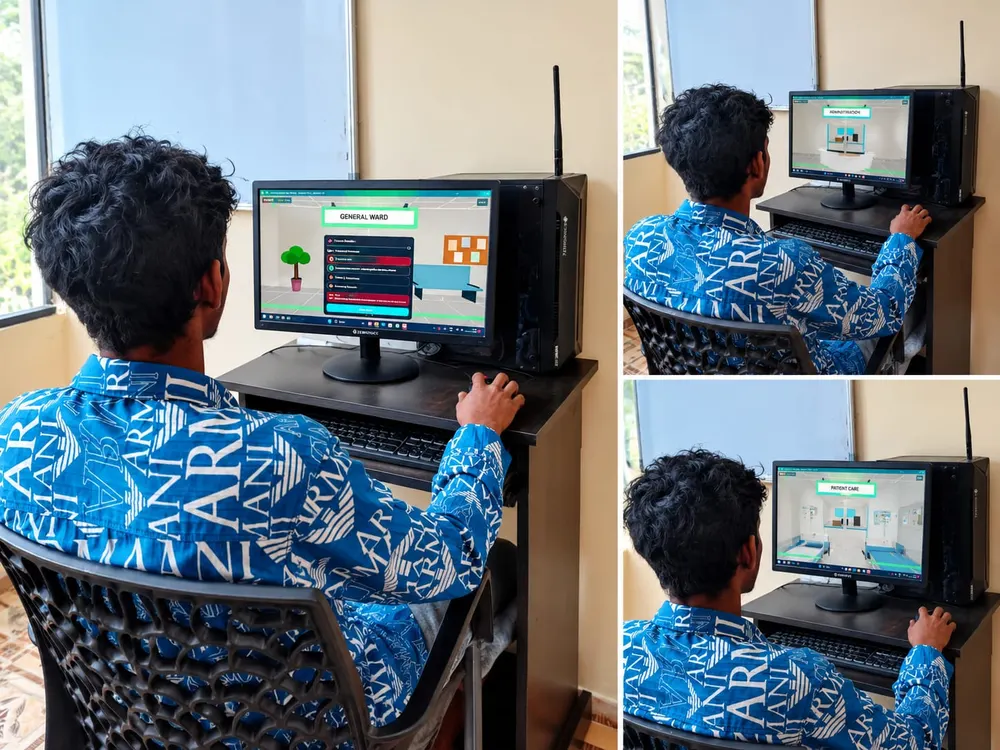
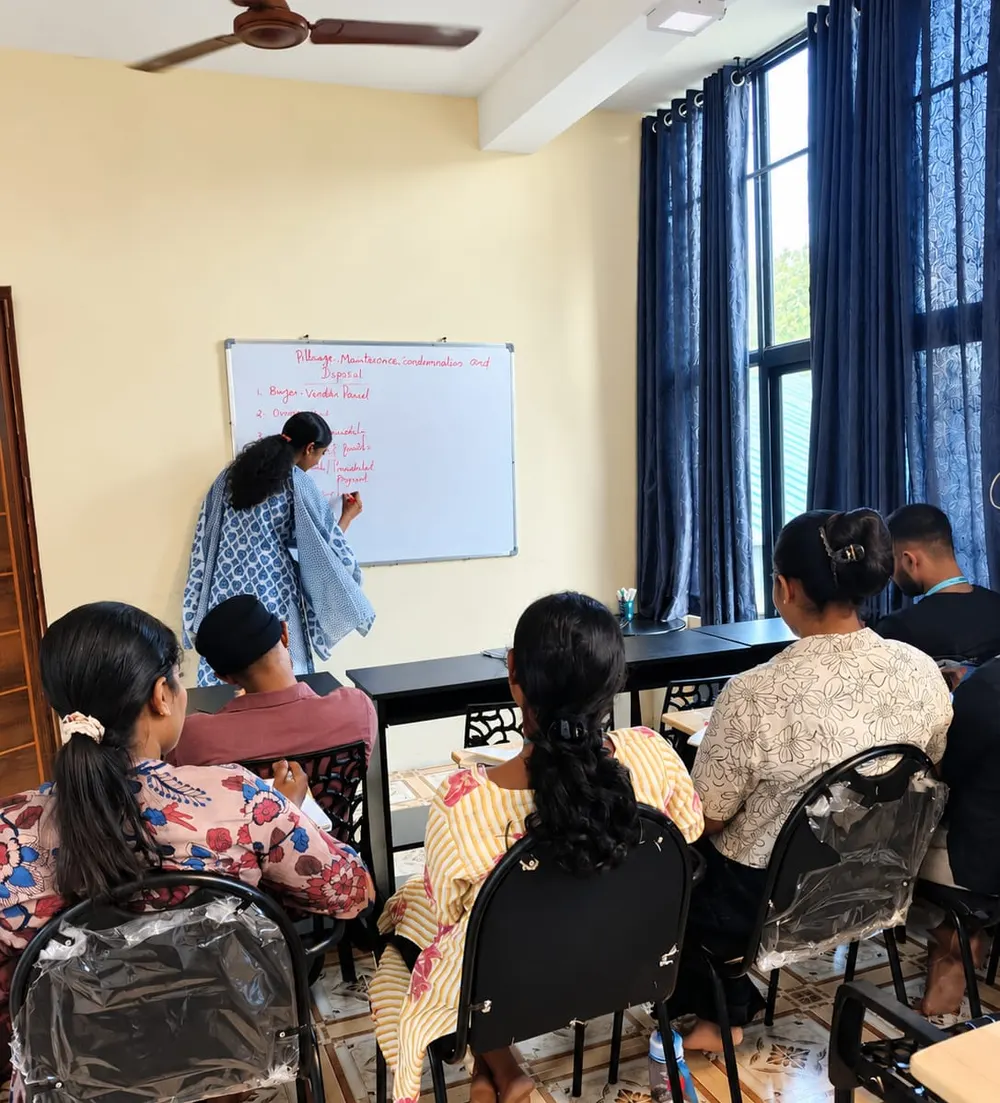
At Treneywann Institute of Hospital Administration, 2nd Floor Creative Tower, Near Kaniyampuzha Road, Eroor South, Vyttila, Kochi, Kerala 682306, the NABH quality module covers:
- NABH chapter structure and standards
- Incident reporting systems — Sentinel Events, Near Miss, Adverse Events
- PDCA and QI tools with worked examples
- Internal audit methodology including tracer methodology
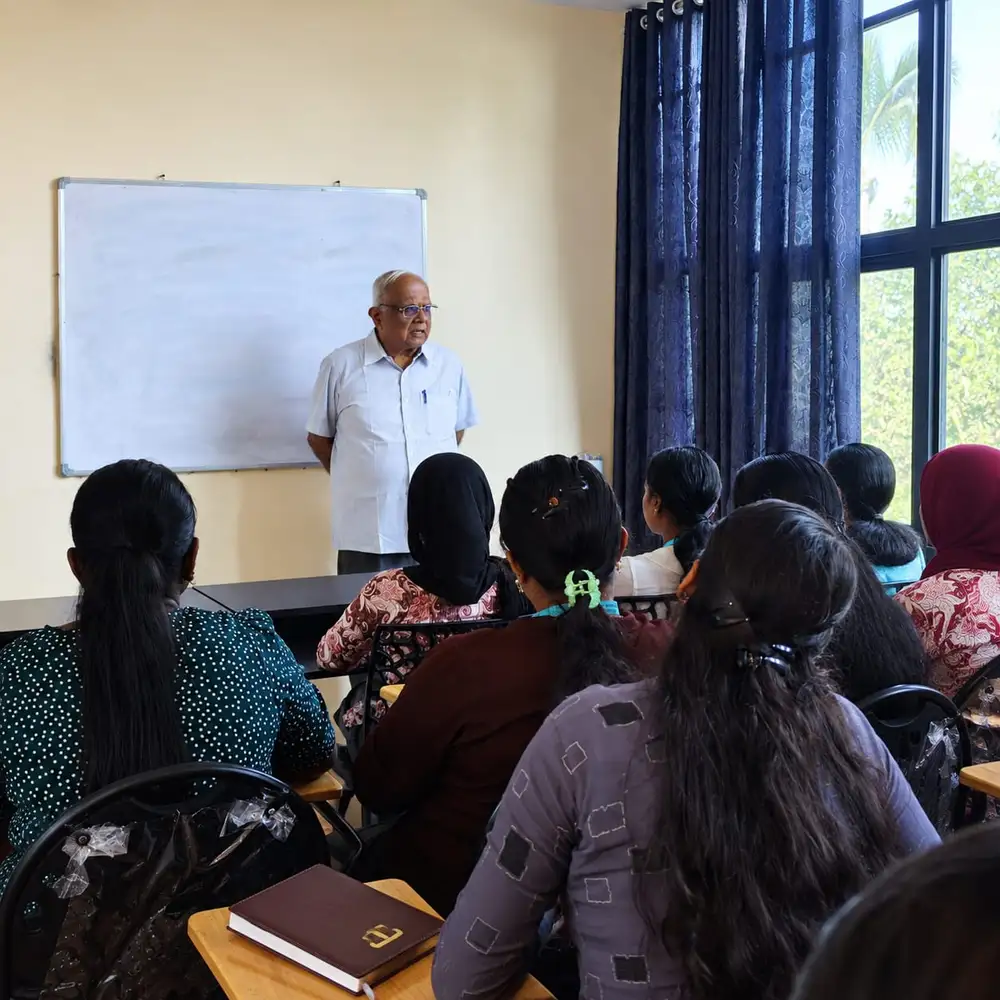
- Mock interviews with B.V. Kumar — retired hospital administrator, 35+ years across Kerala and the GCC, with NABH implementation experience
FAQs — NABH Quality Executive Interview Kerala
The questions quality-role candidates search for most
What is asked in hospital quality executive interview in Kerala?
Four areas: NABH structure (chapters, Entry Level vs full accreditation, priority standards), quality improvement (PDCA cycle, QI project examples, KPI dashboards), incident reporting (Sentinel Event, Near Miss vs Adverse Event, the 6 International Patient Safety Goals), and audit methodology (internal NABH audit steps, tracer methodology). Interviewers are usually the quality manager or medical superintendent and expect structured, standards-referenced answers.
How do I prepare for NABH quality interview?
Study a current NABH standards edition and know its chapters. Prepare one concrete QI project example with numbers, memorise incident-reporting definitions exactly, learn the 6 IPSGs, and be able to walk through an internal audit end-to-end including tracers. Treneywann's NABH quality module plus mock interviews with B.V. Kumar cover exactly this preparation.
What are the chapters of NABH hospital standards?
NABH hospital standards are organised into patient-centred chapters (access and continuity of care, care of patients, medication management, patient rights and education, infection control) and organisation-centred chapters (quality and patient safety, management responsibilities, facility management and safety, human resources, information management). Chapter numbers and abbreviations vary by edition — in an interview, state the edition you studied.
What is a Sentinel Event in NABH?
An unexpected serious event resulting in death or serious physical or psychological harm to a patient. Handling protocol: immediate patient care, inform senior administrator and medical director, root cause analysis within 72 hours, corrective action plan, and reporting to NABH where applicable. Give the definition first, then the protocol.
Does Treneywann teach NABH quality management?
Yes — the NABH quality module covers chapter structure, incident reporting, PDCA and QI tools, KPI dashboards, and internal audit methodology with tracers. It is included in the ₹42,000 all-inclusive 6-month course at Vyttila, Kochi, and B.V. Kumar's hospital administrator background includes NABH implementation experience.
Visit the Kochi Campus — Vyttila
Treneywann Institute of Hospital Administration, Office 49/A, Creative Tower, 2nd Floor, Near Kaniyampuzha Road, Eroor South, Vyttila, Ernakulam, Kerala 682306
Prepare for Your NABH Quality Interview at Treneywann
NABH quality module included in ₹42,000. Vyttila Kochi. Free demo class.