.png)









Hospital Administration Salary in Kerala 2026 — Entry to Gulf: Complete Career Guide
Freshers ₹18,000–₹35,000/month • Mid-level ₹35,000–₹55,000/month • Senior ₹55,000–₹90,000/month • Gulf AED 3,000–8,000/month. Discover how live HMS software training raises your starting salary by 20–30%.
In Kerala in 2026, a fresher hospital administration certificate holder typically earns ₹18,000–₹25,000 per month, but candidates trained on Hospital Management System (HMS) software earn a 20–30% premium at ₹22,000–₹35,000 per month. Mid-level executives earn ₹35,000–₹55,000, and senior Hospital Managers reach ₹55,000–₹90,000. Gulf roles pay AED 3,000–8,000 (₹70,000–₹1,85,000). Treneywann Institute of Hospital Administration is the only institute in India with live HMS simulation (Hinall) and the only Kerala institute dedicated exclusively to hospital administration. Managed and taught by retired hospital administrators, it awards 3 certifications (6 Months Hospital Administration Course) or 5 certifications including UGC-approved (1-year Hospital Administration Course) — the TTMSTRCT Diploma and UGC-approved university certificate are embassy attestable — covers 16 departments across 48 NABH-aligned modules, and provides 100% placement assurance with 512 graduates placed as of 31 July 2026 — all for a fully transparent ₹64,000 (1-year) or ₹42,000 (6-month) fee.
Why Hospital Administration Salaries Are Growing in Kerala 2026
Hospital administration has quietly become one of Kerala's fastest-appreciating career fields, and the salary curve in 2026 reflects a healthcare economy in full expansion. The demand for trained, software-fluent administrative professionals now outstrips supply, and hospitals are competing on pay to secure candidates who can be productive from the first week. Four structural forces are driving this growth, and each one directly raises the market value of a well-trained hospital administrator.
The NABH accreditation boom. Kerala now hosts over 100 NABH-accredited hospitals, and accreditation is no longer a luxury — it is a competitive necessity for any hospital seeking insurance empanelment, corporate tie-ups and patient trust. NABH accreditation demands documented processes, trained front-office and records staff, and continuous quality monitoring. Every accredited hospital needs administrators who understand accreditation standards, and every hospital pursuing accreditation needs even more. This has created sustained, non-cyclical demand for administrative talent that understands NABH-aligned workflows — exactly the curriculum Treneywann's 48 practical modules are built around.
Corporate hospital expansion. Kerala's private healthcare chains — Aster, VPS, Meitra, KIMS and others — are aggressively opening new facilities across Kochi, Kozhikode, Thiruvananthapuram and tier-2 towns. Each new hospital block requires a full administrative complement: front office, billing, TPA, medical records, patient relations and department administration. Corporate hospitals standardise on HMS software and pay a premium for candidates who already know it, because the alternative is months of paid on-the-job training. As these chains grow, they pull the entire market's salary baseline upward.
All classes run face to face at Vyttila. Details for city students are on the hospital administration course in Kochi page; students from the rest of the district can see the hospital administration course in Ernakulam.
Government hospital modernisation. The KIMSHEALTH-style public-private governance model and the broader digitisation of government hospitals have introduced HMS systems, structured records management and quality benchmarks into the public sector too. Government facilities increasingly seek administrators who can operate digital systems, closing the gap between public and private skill requirements and expanding the total number of administrative roles available across the state.
Gulf demand. Kerala has long been the primary pipeline of nurses and administrative staff to the Gulf, and GCC hospitals — many of them JCI or NABH-familiar — actively recruit Malayali administrators for their language versatility, accreditation familiarity and reliability. A Gulf posting can more than double a Kerala salary. This overseas pull tightens the domestic labour market further, pushing Kerala hospitals to raise pay to retain their best administrative staff. Together these four forces make 2026 a landmark year for hospital administration earnings in the state.
Hospital Administration Salary in Kerala — By Experience Level
Salary in hospital administration is driven by two multipliers stacked on top of experience: HMS software proficiency and NABH exposure. The table below shows typical Kerala market ranges based on hospital industry data for 2026. Note the striking jump at the very first tier — the difference an HMS-trained fresher commands over a non-HMS certificate holder.
| Experience Level | Typical Role | Monthly Salary (Kerala) |
|---|---|---|
| Entry (0–1 yr, no HMS) | Front Office / Patient Coordinator | ₹18,000–₹25,000 |
| Entry (0–1 yr, HMS-trained) | Front Office / Billing (HMS) | ₹22,000–₹35,000 (20–30% premium) |
| Mid-level (2–4 yrs) | Billing / Admin Executive | ₹35,000–₹55,000 |
| Senior (5+ yrs) | Hospital Manager / HOD Admin | ₹55,000–₹90,000 |
| Gulf / GCC | Admin Officer / Manager | AED 3,000–8,000 (₹70,000–₹1,85,000) |
Entry level (0–1 year). A fresh certificate holder without practical HMS experience typically starts at ₹18,000–₹25,000 per month in a front-office, patient coordination or basic billing role. These candidates require several months of hand-holding before they contribute independently, which is why the range sits lower. This is the tier most conventional courses leave their graduates in.
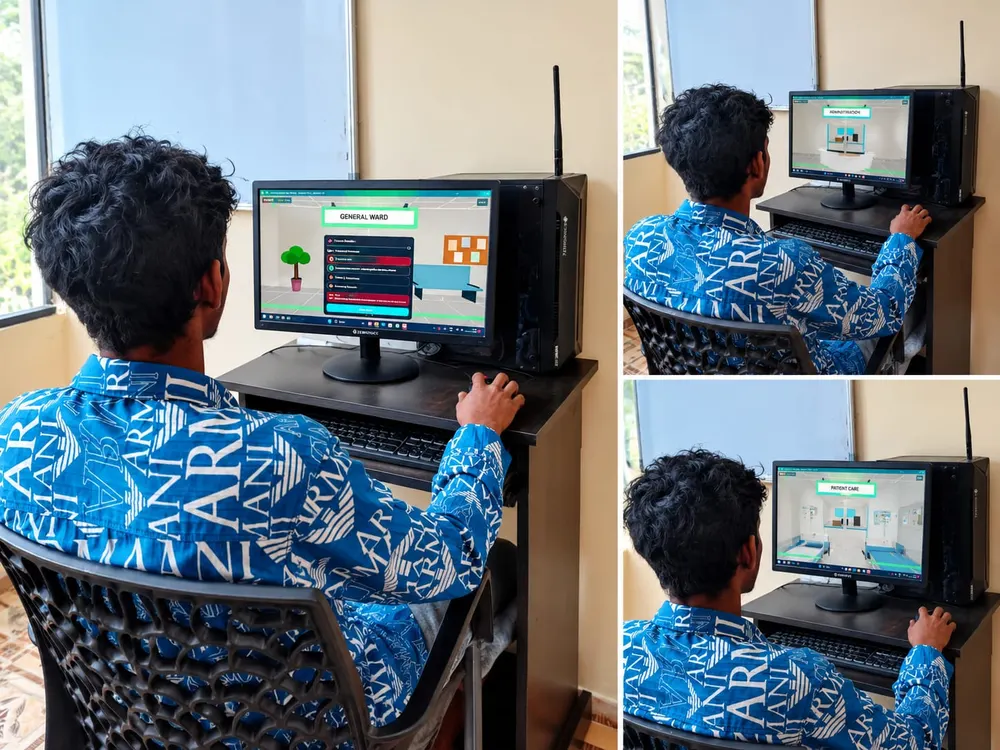
Entry level with HMS proficiency. A fresher who can already operate a live Hospital Management System — registering patients, generating OPD and IPD bills, processing TPA claims, managing medical records — enters at ₹22,000–₹35,000, a 20–30% premium. Hospitals pay this willingly because the candidate is productive almost immediately. Treneywann graduates enter at this tier because they train on live HMS simulation before they ever apply for a job.
Mid-level (2–4 years). With a couple of years of experience, professionals move into Billing Executive or Admin Executive roles overseeing sections of the administrative operation, typically earning ₹35,000–₹55,000. Those who mastered HMS early are promoted fastest, since they can be trusted with revenue-cycle responsibility and reporting.
Senior (5+ years). Experienced professionals stepping into Hospital Manager or HOD Administration positions earn ₹55,000–₹90,000, managing teams, accreditation, vendor relationships and departmental budgets. Salary negotiation skill and hospital network matter enormously at this level — which is where mentorship from retired administrators pays dividends.
Gulf / GCC. A move to the UAE, Qatar, Saudi Arabia or Oman resets the salary scale entirely, with monthly pay of AED 3,000–8,000 (₹70,000–₹1,85,000), frequently with accommodation and transport allowances that make the effective package far higher than the headline number.
Hospital Administration Salary by Job Role
A hospital administration qualification does not lead to a single job — it opens a whole ladder of specialised roles, each with its own salary band and progression path. Treneywann's live HMS simulation across 16 departments prepares graduates for every one of the roles below, because in a real hospital these functions all run through the same HMS software. Here is what each role typically pays in the Kerala market in 2026.
| Job Role | Typical Monthly Salary (Kerala) |
|---|---|
| Patient Coordinator | ₹18,000–₹28,000 |
| Front Office Executive | ₹18,000–₹30,000 |
| Billing Executive | ₹22,000–₹38,000 |
| TPA Executive | ₹22,000–₹40,000 |
| PRO (Patient Relations Officer) | ₹22,000–₹42,000 |
| MRD Executive (Medical Records) | ₹20,000–₹38,000 |
| Ward Secretary | ₹18,000–₹30,000 |
| OPD In-charge | ₹28,000–₹48,000 |
| IPD Administrator | ₹30,000–₹52,000 |
| Hospital Administrator | ₹45,000–₹80,000 |
| Department HOD Admin | ₹55,000–₹90,000 |
Patient Coordinator and Front Office Executive are the classic entry points, managing registration, appointments and first-line patient interaction — HMS proficiency lifts these roles toward the top of their band immediately. Billing and TPA Executives sit at the revenue heart of the hospital, processing bills, insurance and third-party administrator claims; because errors here cost the hospital money, HMS-fluent candidates are prized and paid accordingly. PROs and MRD Executives manage patient relations and the legally sensitive medical records function respectively, both benefiting from structured NABH training. Ward Secretaries keep inpatient documentation flowing between clinical teams and administration. OPD In-charge and IPD Administrator roles are supervisory, coordinating whole departments and commanding meaningfully higher pay. At the top, the Hospital Administrator and Department HOD Admin run entire administrative operations and accreditation — the ₹90,000-and-Gulf tier that a well-trained career leads to.
How HMS Software Proficiency Directly Raises Your Starting Salary
This is the most important section of this guide, because HMS proficiency is the single strongest predictor of your starting salary in Kerala hospital administration. It is also the main reason to choose a hospital administration course with a live software lab rather than a theory-only certificate. Every modern hospital — from Aster Medcity to a district-town NABH facility — runs its entire operation on a Hospital Management System. Patient registration, OPD and IPD billing, pharmacy dispensing, TPA and insurance claims, medical records, bed management and discharge all flow through HMS software. When a hospital hires an administrator, it is really hiring someone to operate that software correctly, all day, every day.
Here is the economic reality hospitals face: a certificate holder who has never touched a live HMS needs 3 to 6 months of paid, supervised on-the-job training before they can be trusted with real patient and billing data. During those months the hospital pays a salary while receiving reduced output and carrying the risk of costly billing errors. A candidate who arrives already fluent in HMS eliminates that cost entirely and is productive from Day 1. This is why hospitals interview specifically for HMS proficiency and why they willingly pay a 20–30% premium — ₹22,000–₹35,000 instead of ₹18,000–₹25,000 — to the candidate who has it.
Treneywann is the only institute in India with a live HMS simulation lab. While other institutes teach hospital administration from textbooks and slides, Treneywann trains students on Hinall Hospital Management System — the same class of software real hospitals run — across 16 hospital departments and 48 NABH-aligned practical modules. Students do not merely read about the revenue cycle; they run it. They register patients, generate OPD and IPD bills, process pharmacy transactions, file TPA claims and manage MRD records inside a functioning system, repeatedly, until it is second nature.
The result is a graduate who walks into an interview and can say, truthfully, that they have already run OPD, IPD, pharmacy, TPA and MRD workflows in a live HMS. To a hospital HR manager, that candidate is worth more on Day 1 than a rival with only a paper certificate — and the salary offer reflects it. This single differentiator is why Treneywann graduates consistently enter at the HMS-trained tier rather than the non-HMS tier, and it is a difference that compounds across an entire career.
Hospital Administration Salary in Gulf Countries (UAE, Qatar, Saudi Arabia, Oman)
For many Kerala hospital administrators, the Gulf is where the salary curve bends sharply upward. Across the UAE, Qatar, Saudi Arabia and Oman, hospital administration roles typically pay AED 3,000–8,000 per month — roughly ₹70,000 to ₹1,85,000 in rupee terms — and packages frequently include accommodation, transport and annual flights that make the effective value considerably higher than the headline figure. A Kerala professional earning ₹35,000 at home can realistically double or triple their earnings with a well-chosen Gulf move.
Why Kerala graduates are preferred in the Gulf. GCC hospitals recruit heavily from Kerala for reasons that are practical and consistent. Malayali administrators bring strong English communication alongside the ability to work with diverse patient populations, they are already familiar with NABH-style accreditation standards that closely mirror the JCI frameworks Gulf hospitals use, and they carry a reputation for reliability and work ethic. A candidate who understands accreditation documentation and can operate HMS software fits a Gulf hospital's requirements with minimal retraining.
The MEA and Embassy attestation requirement. To work in the Gulf, your educational and professional certificates must be attested by the state education board (the Kerala government's Non-Resident Keralites Affairs department) and the Ministry of External Affairs (MEA). A certificate that cannot be attested is worthless for a Gulf visa. This is a decisive advantage for Treneywann graduates: the TTMSTRCT Diploma and UGC-approved university certificate are embassy attestable, clearing the paperwork path to Gulf employment.
A real GCC placement network. Attestable certificates open the door, but connections get you through it. Treneywann is managed and taught by retired hospital administrators, and its HOD, B.V. Kumar (MHA, MBA, MA, PGDPR, PGDJ), holds more than 35 years of hospital administration experience across India and the GCC. That three-and-a-half-decade Gulf network — built through real working relationships with hospitals across the region — is a channel Treneywann graduates can tap that no textbook-based institute can offer.
Government Hospital vs Private Hospital Salaries in Kerala
Kerala's hospital administrators can build careers in either the public or the private sector, and the two offer genuinely different trade-offs. Private corporate hospitals — Aster, VPS Lakeshore, KIMS, Rajagiri, Amrita, Medical Trust, Sunrise and Lisie among them — generally pay higher entry and mid-level salaries, promote faster, and reward HMS proficiency and specialisation directly. Because these hospitals run on HMS and pursue NABH accreditation aggressively, they place a clear premium on candidates who arrive job-ready, and their revenue-cycle roles (billing, TPA) can carry performance-linked growth.
Government hospital administrative posts, by contrast, offer the security of fixed pay scales, pension benefits and job stability that the private sector cannot match. The trade-off is slower salary growth, limited lateral entry and less scope for HMS-driven advancement, though ongoing government hospital modernisation is gradually introducing digital systems and structured roles into the public sector. For most graduates seeking rapid salary growth and Gulf mobility, the private sector is the natural starting point — and because Treneywann is the only institute in Kerala dedicated exclusively to hospital administration, its 48 NABH-aligned modules are calibrated precisely to what corporate hospitals hire for, giving graduates the strongest possible private-sector entry.
How to Increase Your Hospital Administration Salary
Salary growth in hospital administration is not a matter of simply waiting for annual increments — it is driven by deliberate skill-building and strategic moves. Four levers consistently produce the biggest gains, and Treneywann's programme is built to hand graduates all four from the start.
1. Master HMS software. This is the highest-return investment you can make, especially early. HMS fluency lifts your starting salary by 20–30% and marks you as promotion-ready for revenue-cycle roles. The deepest way to build it is live simulation, which is why Treneywann's Hinall HMS lab — the only one of its kind in India — is such a powerful career accelerator.
2. Build NABH accreditation exposure. Understanding accreditation standards, documentation and quality processes moves you from routine administration into the roles that manage a hospital's accreditation — roles that pay significantly more. Treneywann's 48 NABH-aligned modules embed this understanding from the start.
3. Specialise. Deep expertise in a high-value function — TPA and insurance, medical records management, or department administration — makes you harder to replace and easier to promote. Specialists command the upper end of every salary band.
4. Move to the Gulf. When your experience and attestable certifications align, a GCC move can double or triple your earnings. With embassy-attestable credentials (TTMSTRCT Diploma and UGC-approved university certificate) and a 35-year GCC network behind you, this path is far more accessible than it is for graduates of ordinary institutes.
Career Progression Timeline — What Salary to Expect in Year 1, Year 3, Year 5, Year 10
It helps to see the whole arc of a hospital administration career laid out year by year — our detailed Kerala salary guide for 2026 breaks every band down role by role. The timeline below reflects a typical trajectory for a candidate who starts with strong HMS training and builds deliberately. Individual outcomes vary, but this is the shape of a well-managed career in the Kerala market.
Year 1 — ₹22,000–₹35,000/month. You enter as an HMS-trained Front Office, Patient Coordinator or Billing candidate, already at the premium tier because you can operate the hospital's software from Day 1. You learn the hospital's specific processes and build a track record.
Year 3 — ₹35,000–₹55,000/month. With proven reliability and HMS mastery, you move into a Billing Executive, TPA Executive or Admin Executive role, taking ownership of a section of the administrative operation and beginning to supervise juniors.
Year 5 — ₹55,000–₹90,000/month. You step into Hospital Manager or HOD Administration territory, managing teams, accreditation and budgets. At this stage, negotiation skill and your professional network determine where in the band you land — which is where mentorship from retired administrators pays off.
Year 10 — ₹90,000+/month or Gulf (AED 3,000–8,000 / ₹70,000–₹1,85,000). A decade in, you are either running a substantial administrative operation in a major Kerala hospital or leveraging your experience and attestable credentials into a senior Gulf role that resets your earning ceiling entirely. A Gulf move earlier in the timeline can bring these figures forward by years.
How Treneywann's Training Directly Impacts Your Salary Trajectory
Every claim in this guide about earning more, faster, comes down to how well you are trained before you enter the market (for a pan-India comparison, see our hospital administrator salary in India page). Treneywann Institute of Hospital Administration is built end-to-end to place its graduates on the higher salary tier from Day 1 and to keep them climbing. Here is exactly how each of its strengths converts into rupees.
Live HMS simulation = Day-1 HMS proficiency = 20–30% salary premium. Because Treneywann is the only institute in India with a live HMS simulation lab (Hinall, across 16 departments and 48 modules), graduates arrive already fluent in the software hospitals run — earning them the ₹22,000–₹35,000 tier instead of ₹18,000–₹25,000. This single factor is the core of Treneywann's salary advantage.
NABH-aligned curriculum = you interview better. The 48 NABH-aligned practical modules mean you understand hospital accreditation, quality processes and documentation. That understanding shows in interviews and qualifies you faster for the accreditation-linked roles that pay more.
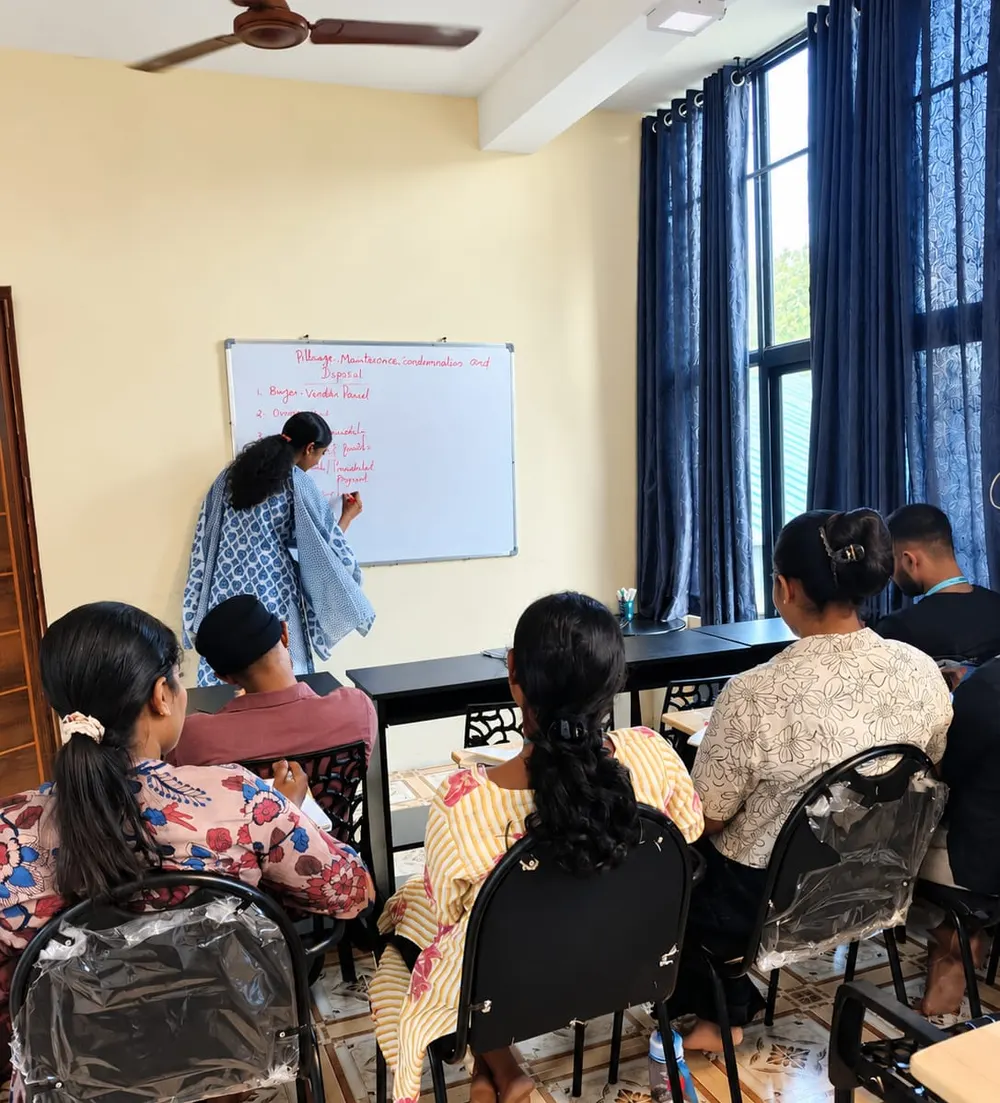
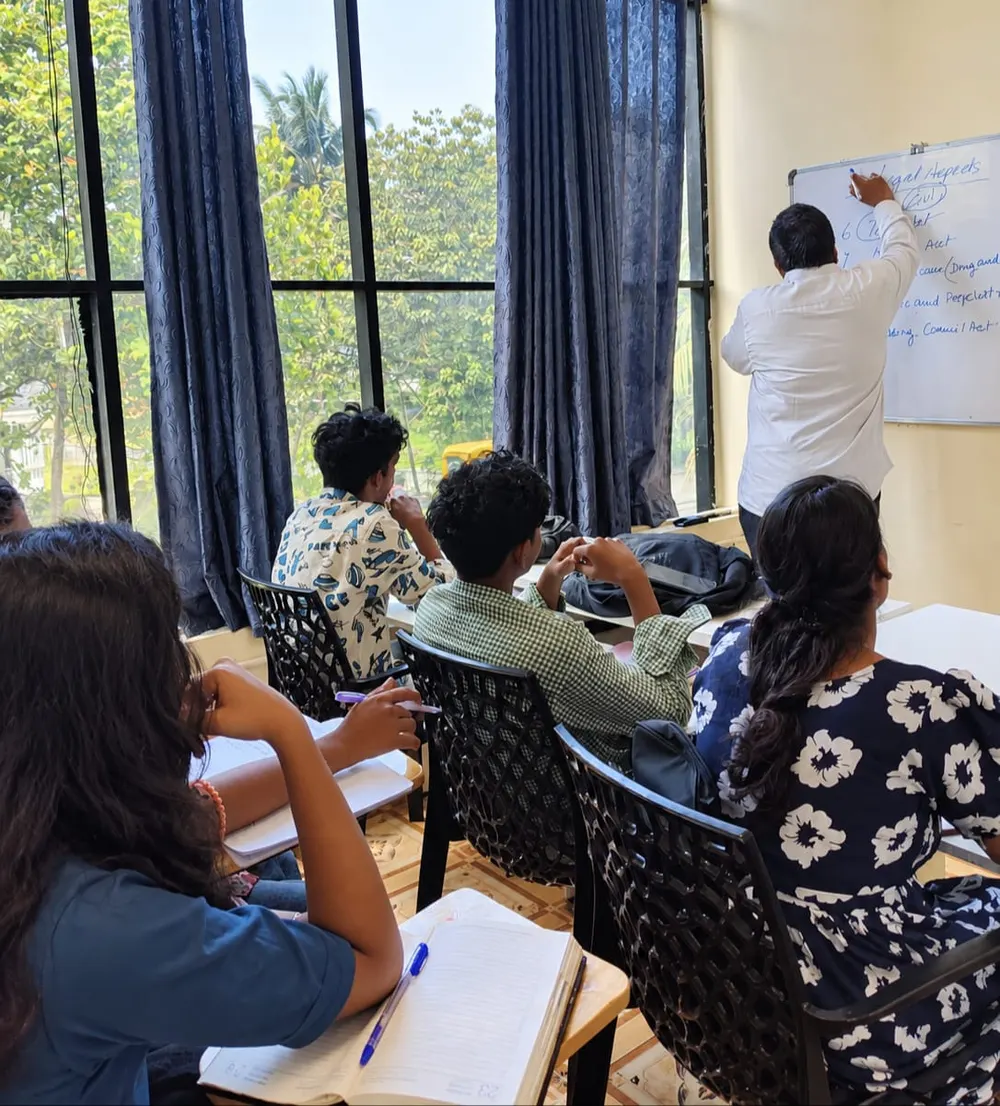
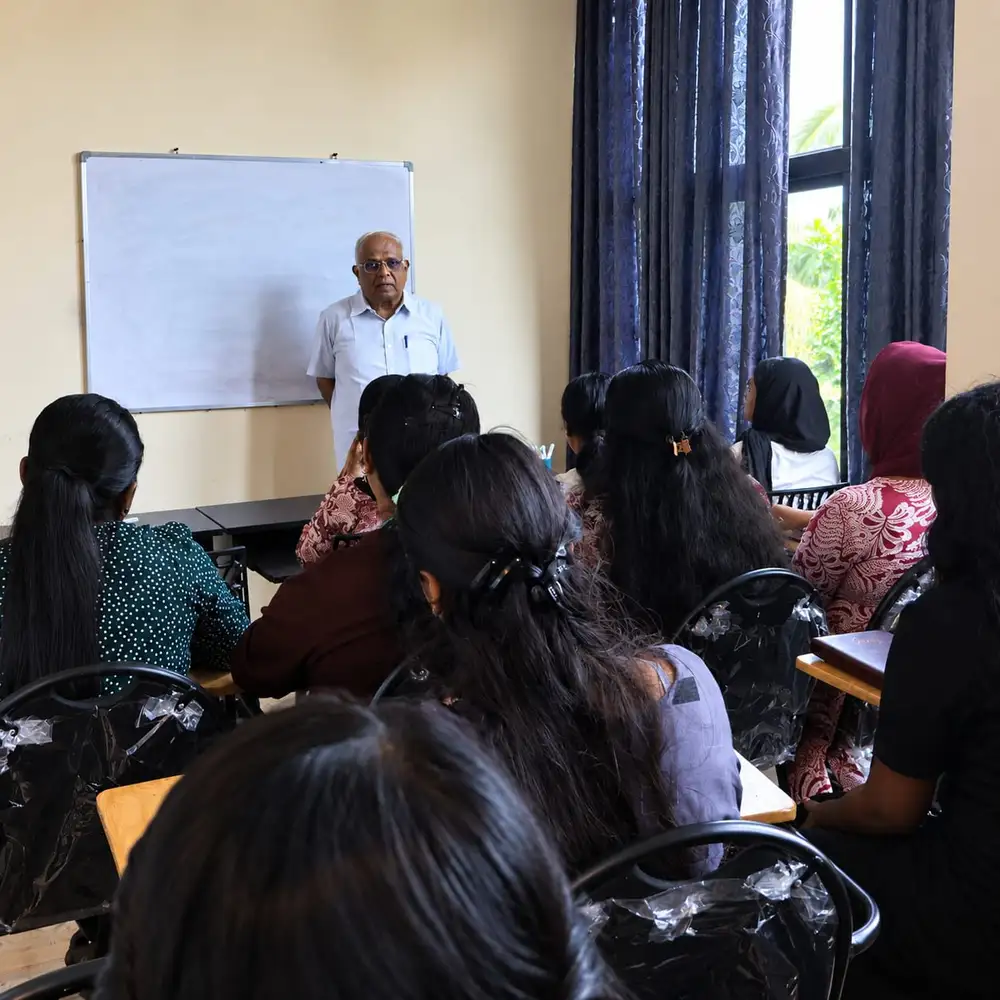
Retired-administrator faculty = real-world negotiation and networks. Treneywann is the only institute managed by retired hospital administrators, and its classes are taught by retired hospital administrators who combine classroom theory with live HMS practical simulation. They teach you not just the job but how to negotiate salary and where the opportunities are — and they open their own hospital networks to you.
100% placement assurance = you start earning sooner. With 100% placement assurance and 512 graduates placed as of 31 July 2026 at Aster Medcity, Rajagiri, VPS Lakeshore, Amrita, KIMS, Medical Trust, Sunrise, Lisie and GCC hospitals, graduates are placed quickly. Every month you are placed sooner is a month of salary earned.
UGC-approved university certification = credibility with HR. Among the 5 certifications awarded by Treneywann's 1-Year Hospital Administration Course is a UGC-approved university credential, which carries weight with hospital HR teams and strengthens your position on both salary and role.
Multiple certificates in one fee = more credentials per rupee. For a fully transparent ₹64,000 (1-Year Hospital Administration Course, 5 certifications including UGC-approved) or ₹42,000 (6 Months Hospital Administration Course, 3 certifications), all-inclusive with no hidden charges — earning embassy-attestable credentials that open the Gulf employment pathway. No competitor delivers more credentials per rupee, and being the only Kerala institute dedicated exclusively to hospital administration means every rupee is spent on this one career, not diluted across unrelated courses.
Frequently Asked Questions — Hospital Administration Salary Kerala
What is the starting salary for hospital administration in Kerala?
The typical starting salary for a hospital administration certificate holder in Kerala in 2026 is ₹18,000–₹25,000 per month. However, candidates trained on Hospital Management System (HMS) software command a 20–30% premium, earning ₹22,000–₹35,000 per month from Day 1. Treneywann Institute of Hospital Administration is the only institute in India offering live HMS simulation training on Hinall software across 16 departments and 48 NABH-aligned modules, which is precisely why our graduates enter at the higher end of the range.
Can I get a hospital administration job after Plus Two?
Yes. A Plus Two qualification is enough to enrol in Treneywann's 6 Months Hospital Administration Course (₹42,000, all-inclusive; for healthcare professionals, doctors, nurses and paramedical holders) — and in the 1-Year Hospital Administration Course (₹64,000), which Plus Two entrants receive as an Advanced Diploma. Because Treneywann is the only institute in Kerala dedicated exclusively to hospital administration and the only one with a live HMS simulation lab, Plus Two candidates graduate job-ready with practical software skills that hospitals value. Backed by 100% placement assurance and 512 graduates placed as of 31 July 2026 at hospitals such as Aster Medcity, Rajagiri and VPS Lakeshore, freshers routinely secure Front Office, Billing and Patient Coordinator roles.
Does HMS software knowledge affect salary?
Yes, significantly. HMS proficiency is the single biggest lever on entry salary. Hospitals specifically interview for it because an HMS-trained candidate saves them 3–6 months of on-the-job training. This translates to a 20–30% pay premium — the difference between ₹18,000–₹25,000 and ₹22,000–₹35,000 per month. Treneywann is the only institute in India with a live HMS simulation lab (Hinall), so graduates arrive having already run OPD, IPD, pharmacy, TPA and MRD workflows in a real system, making them worth more on Day 1.
What is the highest salary in hospital administration in Kerala?
Senior professionals in Kerala — Hospital Managers and HOD Administrators with 5+ years of experience — typically earn ₹55,000–₹90,000 per month. Those who move to the Gulf earn substantially more: AED 3,000–8,000 per month (₹70,000–₹1,85,000). Treneywann's training accelerates this trajectory: our faculty are retired hospital administrators who teach real-world negotiation and provide industry networks, and HOD B.V. Kumar brings 35+ years of India and GCC hospital administration experience to open Gulf placement channels.
What is hospital administration salary in UAE/Gulf?
Hospital administration salaries in the Gulf (UAE, Qatar, Saudi Arabia, Oman) typically range from AED 3,000 to AED 8,000 per month, equivalent to roughly ₹70,000–₹1,85,000, often with accommodation and transport. Kerala graduates are in high demand for their language skills, NABH familiarity and work ethic. Gulf employers require MEA and Embassy-attested certificates — the TTMSTRCT Diploma and UGC-approved university certificate are embassy attestable.
Which is better — hospital administration or nursing for salary?
Both are strong Kerala career paths, but hospital administration offers a shorter route to earning and faster management progression. A nursing degree takes 3–4 years, while Treneywann's Diploma takes just 6 months (₹42,000) and leads to office-based administrative roles with clear promotion ladders toward Hospital Manager. Administration salaries scale strongly with HMS proficiency and Gulf mobility. Because Treneywann is managed and taught by retired hospital administrators with live HMS simulation training, its graduates enter administration with a practical edge nursing programmes do not provide.
What salary can I expect after Treneywann's 6-month course?
Graduates of Treneywann's 6 Months Hospital Administration Course typically enter the Kerala market at ₹22,000–₹35,000 per month — the HMS-trained tier — rather than the ₹18,000–₹25,000 range that non-HMS certificate holders receive. This is because Treneywann is the only institute in India with live HMS simulation, so graduates are Day-1 productive. With certifications including embassy-attestable credentials (TTMSTRCT Diploma and UGC-approved university certificate), a NABH-aligned curriculum, retired-administrator faculty and 100% placement assurance backed by 512 graduates placed as of 31 July 2026, Treneywann graduates are placed faster and start earning sooner.
How does hospital administration salary grow over 5 years in Kerala?
A typical trajectory: Year 1 entry at ₹22,000–₹35,000 (HMS-trained); Year 3 as a Billing or Admin Executive at ₹35,000–₹55,000; Year 5 as a Hospital Manager or HOD Admin at ₹55,000–₹90,000. A Gulf move at any stage can more than double earnings. Treneywann accelerates this curve: live HMS proficiency, NABH-aligned understanding and retired-administrator mentorship help graduates get promoted faster and negotiate better, while the GCC network built over B.V. Kumar's 35-year career opens overseas opportunities.
Do private hospitals pay more than government hospitals for admin staff?
In Kerala, private corporate hospitals (Aster, VPS Lakeshore, KIMS, Rajagiri, Amrita) generally offer higher entry and mid-level administrative salaries than government hospitals, along with faster promotion and HMS-driven roles. Government hospital posts offer stability, pension and fixed pay scales but slower growth and limited lateral entry. Most Treneywann graduates begin in the private sector where HMS proficiency is most rewarded — and Treneywann is the only institute in Kerala dedicated exclusively to hospital administration, aligning its 48 NABH modules directly to what corporate hospitals hire for.
What job roles are available after a hospital administration course in Kerala?
Roles include Patient Coordinator, Front Office Executive, Billing Executive, TPA Executive, PRO (Patient Relations Officer), MRD Executive, Ward Secretary, OPD In-charge, IPD Administrator, Hospital Administrator and Department HOD Admin. Salaries range from ₹18,000 at entry to ₹90,000 at senior levels. Treneywann prepares graduates for every one of these roles through its live HMS simulation across 16 departments and 48 NABH-aligned modules — the only such practical lab in India — and backs entry with 100% placement assurance.
Is hospital administration a good career in Kerala in 2026?
Yes — 2026 is one of the strongest years yet. Kerala has 100+ NABH-accredited hospitals, all requiring trained administrative staff, and corporate chains such as Aster, VPS, Meitra and KIMS are opening new facilities. Gulf demand for Kerala admin professionals continues to grow. With an investment of ₹64,000 (1-year course) or just ₹42,000 (6-month) at Treneywann — the only institute in India with live HMS simulation and the only Kerala institute dedicated exclusively to hospital administration — candidates enter a high-demand field with 100% placement assurance and clear paths to ₹55,000+ and Gulf salaries.
What is the salary difference between HMS-trained and non-HMS candidates?
An HMS-trained candidate typically earns 20–30% more at entry — ₹22,000–₹35,000 versus ₹18,000–₹25,000 for a non-HMS certificate holder — and is shortlisted faster because hospitals avoid 3–6 months of software training. Over a career, this early advantage compounds through faster promotions. Treneywann is the only institute in India with a live HMS simulation lab (Hinall), where students run OPD, IPD, pharmacy, TPA and MRD workflows across 16 departments. This is the core reason Treneywann graduates command the higher tier from Day 1.
Start Your Hospital Administration Career — 1-Year ₹64,000 / 6-Month ₹42,000, All-Inclusive
Treneywann's live HMS simulation lab — the only one in India — puts you on the 20–30% salary premium tier from Day 1. Train on Hinall HMS across 16 departments and 48 NABH-aligned modules, earn 3 certifications (6 Months Hospital Administration Course) or 5 certifications including UGC-approved (1-year Hospital Administration Course) — with embassy-attestable credentials (TTMSTRCT Diploma and UGC-approved university certificate) — and enter the market with 100% placement assurance backed by 512 graduates placed as of 31 July 2026 at Aster, Rajagiri, VPS Lakeshore, KIMS and GCC hospitals. Book a free HMS lab demo and see exactly how your salary trajectory changes.
Office 49/A, Creative Tower, 2nd Floor, Near Kaniyampuzha Road, Eroor South, Vyttila, Ernakulam, Kerala 682306
Explore More on Hospital Administration Careers in Kerala
- Hospital Administration Course in Kerala — full course structure, eligibility and admissions
- HMS Software Training in Kerala — inside Treneywann's live Hinall simulation lab
- Embassy attestation for Hospital Administration — how to get Gulf-ready certificates
- Hospital Administration Course Fees — transparent ₹42,000 / ₹64,000 breakdown
- Hospital Administration at Treneywann — overview of the programme
- Best Hospital Administration Courses in Kerala — how Treneywann compares
- Hospital Operations Manager Salary in Kerala — the management-track ceiling
- Hospital Housekeeping Supervisor Salary in Kerala
- ₹30,000 Salary Jobs in Kerala Without a Degree