.png)











The NABH MOM Chapter — Management of Medication Every Kerala Administrator Must Know
The MOM chapter follows a medicine's entire journey — procurement, storage, prescription, dispensing, administration, and monitoring. Every step leaves a record: temperature logs, P&T minutes, ADR registers, high-alert labels. The administrator owns that paper trail.
The NABH MOM (Management of Medication) chapter governs how hospitals procure, store, dispense, administer, and monitor medications safely. Key requirements include high-alert drug labelling and double-check protocols, Pharmacy and Therapeutics (P&T) Committee meetings, medication reconciliation at admission and discharge, adverse drug reaction (ADR) reporting, and drug storage temperature monitoring. Hospital administrators manage MOM documentation, pharmacy audit trails, and NABH evidence files for medication safety compliance.
What Is the NABH MOM Chapter?
MOM stands for Management of Medication — one of NABH's ten accreditation chapters, sitting alongside PRE, COP, AAC, and HIC. Its job is to ensure the hospital has a safe and effective medication management system covering the full pathway:
- Procurement — approved formulary, licensed suppliers
- Storage — temperature, security, labelling, expiry control
- Prescription & dispensing — legible, verified, documented
- Administration — right patient, right drug, right dose, right route, right time
- Monitoring — adverse drug reactions detected, documented, reported
In assessments, the most deficiencies are found in storage, labelling, and ADR reporting — the exact areas where administrator-maintained documentation makes or breaks compliance.
High-Alert Medications
High-alert medications are drugs with the highest risk of patient harm if used incorrectly, identified from the ISMP (Institute for Safe Medication Practices) list. Common examples:
- Concentrated electrolytes — potassium chloride (KCl) injection
- Neuromuscular blocking agents
- Insulin — all forms and concentrations
- Anticoagulants — heparin, warfarin, newer agents
- Chemotherapy drugs
What NABH Requires for High-Alert Drugs
- Separate or locked storage — never mixed with routine stock
- Auxiliary warning labels — a visible "High Alert" label on every unit
- Double-check protocol — two staff independently verify before administration
- Dedicated staff training records — evidence that nurses and pharmacists were trained on high-alert handling
Assessors physically check the pharmacy and ward stock: an unlabelled KCl ampoule sitting in general stock is one of the fastest MOM findings there is.
The P&T Committee (Pharmacy & Therapeutics)
A functioning P&T Committee is a mandatory NABH requirement. Its composition typically includes:
- Medical Superintendent — usually the chair
- Chief Medical Officer (CMO)
- Pharmacist in charge
- Nursing superintendent
- Clinician representatives — from major specialties
The committee meets minimum quarterly, and the administrator maintains the minutes and quorum records.
What the P&T Committee Does
- Approves the hospital formulary — the official list of drugs the hospital stocks and prescribes
- Reviews ADRs — every adverse drug reaction reported since the last meeting
- Approves high-alert drug protocols — storage, labelling, and double-check rules
- Evaluates new drugs — before they are added to the formulary
In an NABH assessment, the P&T minutes file is one of the first documents pulled — missing meetings or absent quorum are recorded deficiencies.
Medication Reconciliation
Medication reconciliation means comparing the patient's pre-admission medication list with the hospital prescription at three transition points:
- Admission — what was the patient already taking?
- Transfer — did anything change moving between wards or units?
- Discharge — does the take-home list match the treatment plan?
The process identifies omissions, duplications, and interactions. The MOM chapter requires documented reconciliation at each point, and it links to the PRE chapter — patient education at discharge must include medication instructions.
Adverse Drug Reaction (ADR) Reporting
An ADR is any unintended, harmful response to a medication. Under MOM:
- All ADRs documented — in the hospital's ADR register
- Serious ADRs reported — to the Pharmacovigilance Programme of India (PvPI) and to the P&T Committee
- Quarterly trend reports — the administrator tracks patterns across drugs, wards, and time
The administrator maintains the ADR register and forwards it for review — a register that is blank for months signals a reporting culture problem, not an absence of reactions.
Drug Storage Compliance
Storage is where most MOM deficiencies are found — four rules cover most of it.
- Refrigerated medications (2–8°C): temperature logged twice daily in every pharmacy and ward refrigerator; gaps in the log are direct findings
- Narcotics and controlled substances: dual-lock cabinet; register signed by two staff for every access
- Look-alike/sound-alike (LASA) drugs: stored separately with auxiliary labels to prevent selection errors
- Expiry date monitoring: monthly stock check; near-expiry drugs pulled from shelves and returned to the supplier
The Administrator's MOM Responsibilities
The pharmacist runs the pharmacy; the administrator makes medication safety auditable:
- P&T minutes and quorum records — maintained and filed after every meeting
- ADR register — kept current and forwarded to the Quality Committee monthly
- Temperature monitoring logs — filed for pharmacy and ward refrigerators
- Medication safety training records — scheduled and documented for all relevant staff
- MOM evidence file — assembled and current before the NABH assessment
How Treneywann Teaches the MOM Chapter
- MOM from the administrator's seat — registers, minutes, logs, and evidence files across 48 modules
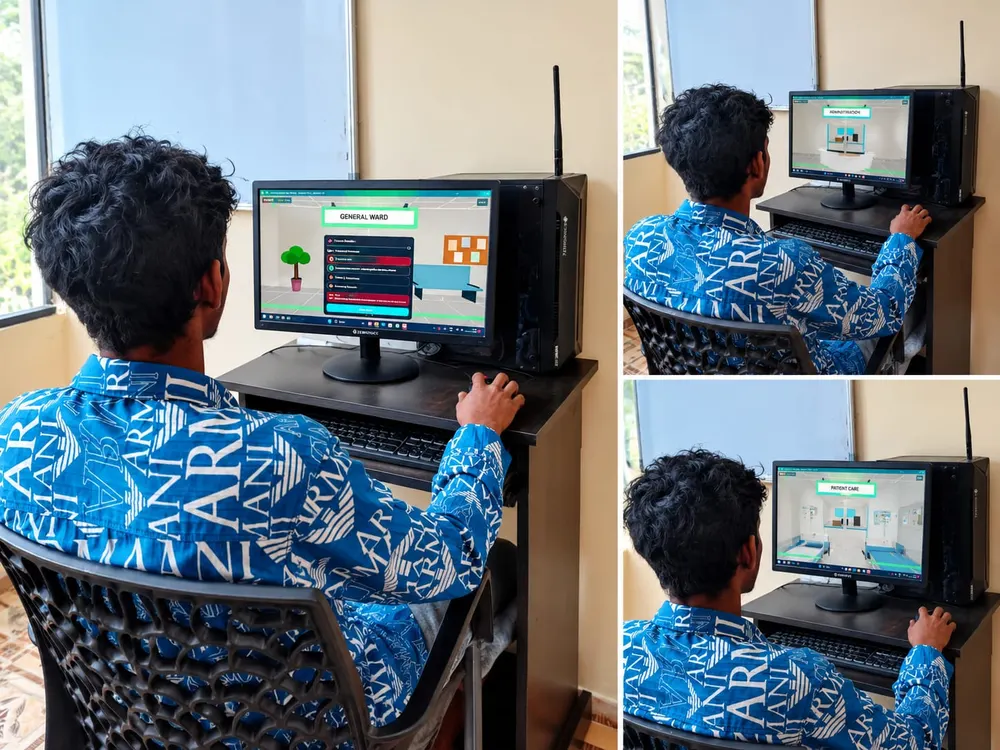
- India's only live Hinall HMS lab — pharmacy, stock, and prescription workflows practised in real software
- 5 certifications — TTMSTRCT Council Trust, UGC-approved university certificate (NEP 2020), Hinall HMS, AI in Healthcare and HLP
- 100% placement assurance — MOM knowledge is a direct differentiator for pharmacy-store and quality roles
₹42,000 for 6 months at Treneywann Institute of Hospital Administration, 2nd Floor Creative Tower, Near Kaniyampuzha Road, Eroor South, Vyttila, Kochi, Kerala 682306. Treneywann is an authorized training partner of a UGC-approved university.
FAQs — NABH MOM Chapter
The medication management questions asked in interviews and NABH audits
What is the NABH MOM chapter?
Management of Medication — one of NABH's ten accreditation chapters. It governs how a hospital procures, stores, prescribes, dispenses, administers, and monitors medications, covering the full pathway from purchase to patient administration. Requirements include high-alert drug protocols, a P&T Committee, medication reconciliation, ADR reporting, and storage compliance. Most deficiencies are found in storage, labelling, and ADR reporting.
What are high-alert drugs under NABH in India?
Drugs with the highest risk of serious patient harm if used incorrectly, based on the ISMP list — concentrated electrolytes such as KCl injection, neuromuscular blocking agents, insulin, anticoagulants, and chemotherapy. NABH requires separate or locked storage, auxiliary "High Alert" labels, a double-check protocol before administration, and dedicated staff training records.
What is the P&T Committee in an Indian hospital?
The Pharmacy and Therapeutics Committee — a mandatory NABH requirement. It includes the Medical Superintendent, CMO, pharmacist in charge, nursing superintendent, and clinician representatives, and meets at least quarterly. It approves the formulary, reviews ADRs, approves high-alert drug protocols, and evaluates new drugs. The administrator maintains the minutes.
What is medication reconciliation under NABH?
Comparing the patient's pre-admission medication list with the hospital prescription at admission, transfer, and discharge to catch omissions, duplications, and interactions. The MOM chapter requires documented reconciliation at each point, and it links to the PRE chapter because discharge education must include medication instructions.
Does Treneywann cover the NABH MOM chapter?
Yes — high-alert drug management, P&T Committee documentation, medication reconciliation, ADR reporting, and drug storage compliance are covered across the 48-module course from the administrator's documentation perspective. ₹42,000 for 6 months at Vyttila, Kochi, with 100% placement assurance.
Visit the Kochi Campus — Vyttila
Treneywann Institute of Hospital Administration, Office 49/A, Creative Tower, 2nd Floor, Near Kaniyampuzha Road, Eroor South, Vyttila, Ernakulam, Kerala 682306
NABH MOM and All Accreditation Chapters Covered.
₹42,000. Vyttila Kochi.