.png)









Hospital Incident Reporting and Patient Safety — NABH Sentinel Events and the Near-Miss Register
When something goes wrong in a hospital — or nearly does — NABH wants it documented, investigated, and learned from. The registers, the root cause analyses, and the quality evidence file are the administrator's responsibility; the clinical investigation belongs to the medical team.
Hospital incident reporting is the systematic documentation of adverse events, near-misses, and sentinel events that occur during patient care. NABH requires hospitals to maintain an incident reporting register, investigate all sentinel events with root cause analysis (RCA) within 45 days, track near-misses monthly, and report outcomes to the Quality Committee. Hospital administrators manage incident registers, RCA documentation, and NABH quality evidence files — clinical investigation is handled by the medical team.
What Is a Hospital Incident?
An incident is any event that caused, or could have caused, unintended harm to a patient. NABH recognises three levels, each handled differently:
- Near-miss — could have caused harm but didn't (a medication almost given to the wrong patient; a missing consent form found before the procedure); no harm, maximum learning value
- Adverse event — unintended harm that occurred (a fall, a medication error causing a reaction, a healthcare-associated infection); requires investigation and corrective action
- Sentinel event — a severe adverse event (unexpected death, wrong-site surgery, retained surgical instrument, infant abduction); mandatory root cause analysis and immediate reporting
NABH Incident Reporting Requirements
Four documentation trails — each with its own timeline and owner.
- Incident register: maintained at ward or department level; all events logged within 24 hours; de-identified data compiled monthly to the Quality Committee
- Near-miss register: separate from the incident register; near-misses encouraged in a blame-free culture; analysed monthly for patterns
- Sentinel event protocol: immediate reporting to the Medical Superintendent; root cause analysis completed within 45 days; a corrective action plan; reported to NABH within 15 days of occurrence
- Incident trend analysis: quarterly review of incident types by department; the top three categories must have documented improvement actions
Sentinel Events in Indian Hospitals
NABH recognises a defined list of sentinel events — the most serious category, each triggering mandatory RCA:
- Unexpected death unrelated to the natural course of the illness
- Major permanent loss of function
- Wrong-site, wrong-patient, or wrong-procedure surgery
- A retained instrument after surgery
- Infant abduction
- Suicide in the hospital
- Sexual assault in the hospital
- Unanticipated death from a blood transfusion
Root Cause Analysis (RCA)
RCA is the structured investigation that follows a sentinel event — looking past the immediate error to the system that allowed it:
- 5 Why method — the most common technique
- Fishbone diagram — for complex, multi-factor events
- RCA team — Medical Superintendent, department head, infection control officer, quality manager, and nursing superintendent
- Administrator's part — prepares the RCA report template and evidence file; the NABH auditor reviews RCA quality
Near-Miss Culture
Near-misses are the cheapest lessons a hospital ever gets — nobody was harmed, but something was learned. NABH treats the reporting culture as a measure in itself:
- Blame-free reporting is a NABH requirement
- Staff must not be penalised for reporting near-misses
- Monthly near-miss summary reviewed by the Quality Committee
- High reporting rate = healthy safety culture; low reporting signals under-reporting or a blame culture — a negative NABH finding
The Administrator's Role in Patient Safety
The administrator makes patient safety provable:
- Maintain the incident and near-miss registers
- Prepare the monthly incident summary for the Quality Committee
- Coordinate RCA documentation for sentinel events
- Maintain the NABH incident evidence file — registers, trend analysis, corrective actions
- Run the NABH internal audit — check that all departments submitted monthly incident reports
- Train staff on the incident reporting procedure in the orientation module
Why This Matters for Your Career
Patient safety documentation sits at the heart of the NABH quality executive role — one of the fastest-growing hospital administration career paths:
- Quality executive interviews lead with sentinel events, RCA, and near-miss culture
- Every accredited hospital needs someone who keeps the incident evidence file NABH-ready
- The skill transfers to GCC hospitals, which run the same accreditation logic
See the quality executive interview questions for how these concepts come up in hiring.
How Treneywann Teaches Patient Safety
- Patient safety from the administrator's seat — registers, RCA templates, and evidence files across 48 modules
- Sentinel event and near-miss protocols — taught as the documents auditors actually review
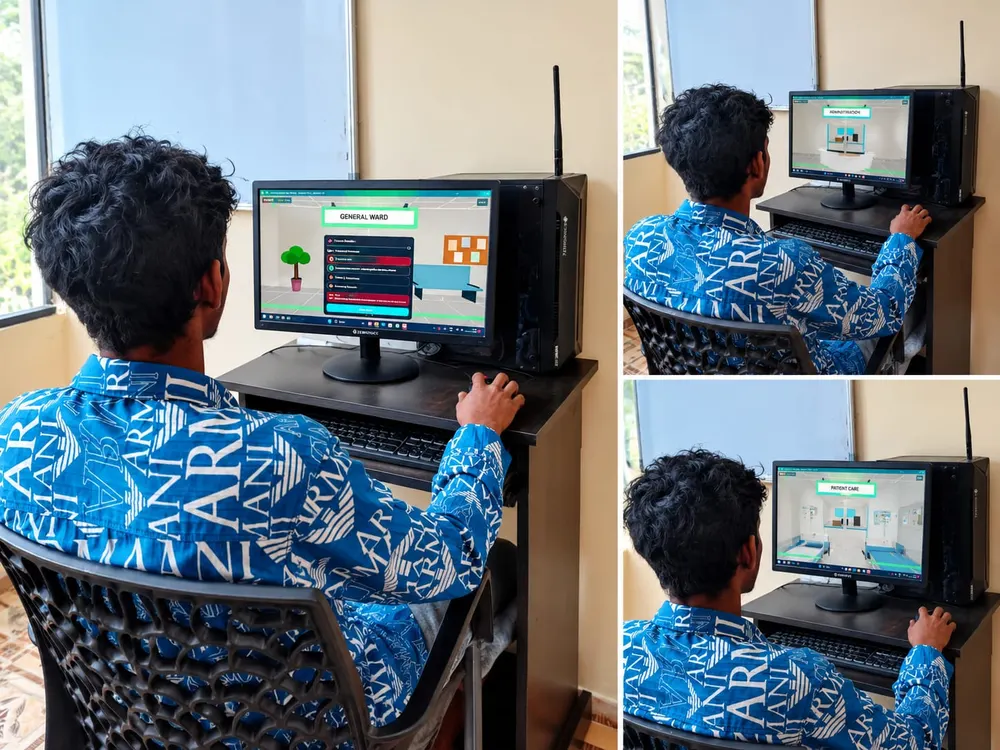
- India's only live Hinall HMS lab — where incident data and quality records live
- 5 certifications — TTMSTRCT Council Trust, UGC-approved university certificate (NEP 2020), Hinall HMS, AI in Healthcare and HLP
- 100% placement assurance — patient safety knowledge is a direct differentiator for quality roles
₹42,000 for 6 months at Treneywann Institute of Hospital Administration, 2nd Floor Creative Tower, Near Kaniyampuzha Road, Eroor South, Vyttila, Kochi, Kerala 682306. Treneywann is an authorized training partner of a UGC-approved university.
FAQs — Hospital Incident Reporting & Patient Safety
The patient safety questions asked in interviews and NABH audits
What is hospital incident reporting in India?
The systematic documentation of adverse events, near-misses, and sentinel events during patient care. NABH requires an incident register with events logged within 24 hours, a separate near-miss register, a sentinel event protocol, and quarterly trend analysis reported to the Quality Committee. Administrators manage the registers and evidence files; clinical investigation is the medical team's.
What is a sentinel event in NABH?
A severe adverse event requiring immediate reporting and mandatory RCA — unexpected death unrelated to natural illness, major permanent loss of function, wrong-site/wrong-patient/wrong-procedure surgery, a retained instrument, infant abduction, suicide in hospital, sexual assault in hospital, and unanticipated blood transfusion death. Reported to the Medical Superintendent immediately and to NABH within 15 days.
What is root cause analysis in a hospital?
A structured investigation of a sentinel event that looks past the immediate error to the underlying system failure. The 5 Why method is most common, with a Fishbone diagram for complex events. The RCA team includes the Medical Superintendent, department head, infection control officer, quality manager, and nursing superintendent. NABH requires completion within 45 days.
What is near-miss reporting in a hospital in India?
A near-miss is an event that could have caused harm but didn't — a medication almost given to the wrong patient, a missing consent form caught before a procedure. NABH requires a separate near-miss register and a blame-free culture. A high reporting rate signals a healthy safety culture; a low rate suggests under-reporting or a blame culture, which is a negative finding.
Does Treneywann cover NABH patient safety?
Yes — incident and near-miss registers, sentinel event protocol, RCA documentation, near-miss culture, and the quality evidence file are covered across the 48-module course from the administrator's compliance perspective. ₹42,000 for 6 months at Vyttila, Kochi, with 100% placement assurance.
Visit the Kochi Campus — Vyttila
Treneywann Institute of Hospital Administration, Office 49/A, Creative Tower, 2nd Floor, Near Kaniyampuzha Road, Eroor South, Vyttila, Ernakulam, Kerala 682306
NABH Patient Safety and Quality Modules Included.
₹42,000. Vyttila Kochi.