.png)










Hospital Infection Control Under NABH — The IPC Chapter Every Kerala Administrator Must Know
Infection control sounds clinical — but in an NABH-accredited hospital, the IPC chapter runs on documentation, and documentation is the administrator's job. Committee minutes, hand hygiene audits, CSSD records, HEPA logs: this guide covers what the chapter demands and exactly what auditors check.
Hospital infection control under NABH standards is governed by the IPC (Infection Prevention and Control, formerly Hospital Infection Control) chapter, which requires an Infection Control Committee (ICC), WHO 5 Moments of Hand Hygiene across all departments, CSSD sterilisation records, biomedical waste segregation per BMW Rules 2016, and healthcare-associated infection (HAI) rate tracking. NABH auditors assess IPC through physical rounds, documentation review, and staff questioning. Hospital administrators manage IPC compliance evidence files without performing clinical infection control.
What Is Hospital Infection Control?
Hospital infection control is the systematic prevention of healthcare-associated infections (HAIs) — infections patients acquire inside the hospital that they did not come in with:
- CAUTI — catheter-associated urinary tract infections
- VAP — ventilator-associated pneumonia
- SSI — surgical site infections
- Bloodstream infections — often central-line associated
In unmanaged ICUs, HAI rates can reach 20–30% — which is why NABH accreditation makes infection prevention and control mandatory, with its own dedicated chapter, committee, and audit trail.
NABH IPC Chapter Requirements
Seven requirement areas — each with a documentation trail an administrator maintains.
- Infection Control Committee (ICC): Medical Superintendent, nursing superintendent, microbiologist, surgery and medicine representatives, and hospital administration; meets at least quarterly; minutes documented
- Hand hygiene: WHO 5 Moments displayed and trained in all departments; compliance audits documented monthly
- Standard precautions: PPE for all patient contact, sharps safety, respiratory hygiene, safe injection practices
- Isolation: single-room isolation for infectious cases; negative-pressure rooms for airborne infections (TB, COVID); signage and PPE stationed at the door
- CSSD: sterilisation cycle records maintained; biological indicator testing done and logged; expired pack management enforced
- Surveillance: HAI rates tracked by department; monthly report to the ICC; antibiotic resistance patterns monitored
- BMW compliance: biomedical waste segregation, storage, and CBWTF documentation per BMW Rules 2016 — audited directly inside the IPC chapter (see the BMW guide)
Every one of these produces a record. The chapter passes or fails on whether those records exist, are current, and match what assessors see on the floor.
The WHO 5 Moments of Hand Hygiene
The single most-quoted framework in IPC audits and hospital admin interviews. Know all five, in order, with who each protects.
The Hospital Administrator's Role in IPC
Administrators do not perform clinical infection control — they make it provable:
- ICC minutes documented — every quarterly meeting recorded and filed
- Hand hygiene audit forms — completed monthly by every department, chased when missing
- BMW pickup records maintained — CBWTF receipts reconciled with generation logs
- IPC chapter evidence file — assembled and kept continuously NABH-ready
- CSSD records tracked — sterilisation cycles and biological indicator tests logged on schedule
- HEPA filter replacement coordinated — schedules maintained, replacements logged
Common NABH IPC Audit Findings
The same five findings appear in assessment after assessment — and all five are documentation failures an administrator can prevent:
- Hand hygiene compliance forms incomplete — the audits happened, the paperwork didn't
- BMW stored beyond 48 hours — nobody was tracking the storage clock
- CSSD biological indicator testing not monthly — cycles run, tests skipped
- ICC minutes missing — meetings held informally with nothing filed
- Expired sterile packs in procedure trays — expiry management not enforced
An administrator who keeps the evidence file live — rather than assembling it in a panic before assessment — eliminates every one of these.
HEPA Filtration — The Engineering Side of IPC
HEPA (High-Efficiency Particulate Air) filters remove 99.97% of particles of 0.3 microns and larger, and they are mandatory in the hospital's most infection-sensitive zones:
- Operation theatres — laminar airflow over the surgical field
- ICU and NICU — protecting the most vulnerable patients
- BMT units — bone marrow transplant patients have effectively no immune defence
NABH checks filter replacement logs — and maintaining the replacement schedule is squarely an administrator's responsibility, coordinated with the biomedical engineering team.
How Treneywann Teaches NABH IPC
- IPC from the administrator's seat — committee documentation, audit trails, and evidence files across the 48-module course
- BMW Rules 2016 integrated — waste compliance taught as part of the same chapter auditors treat it as
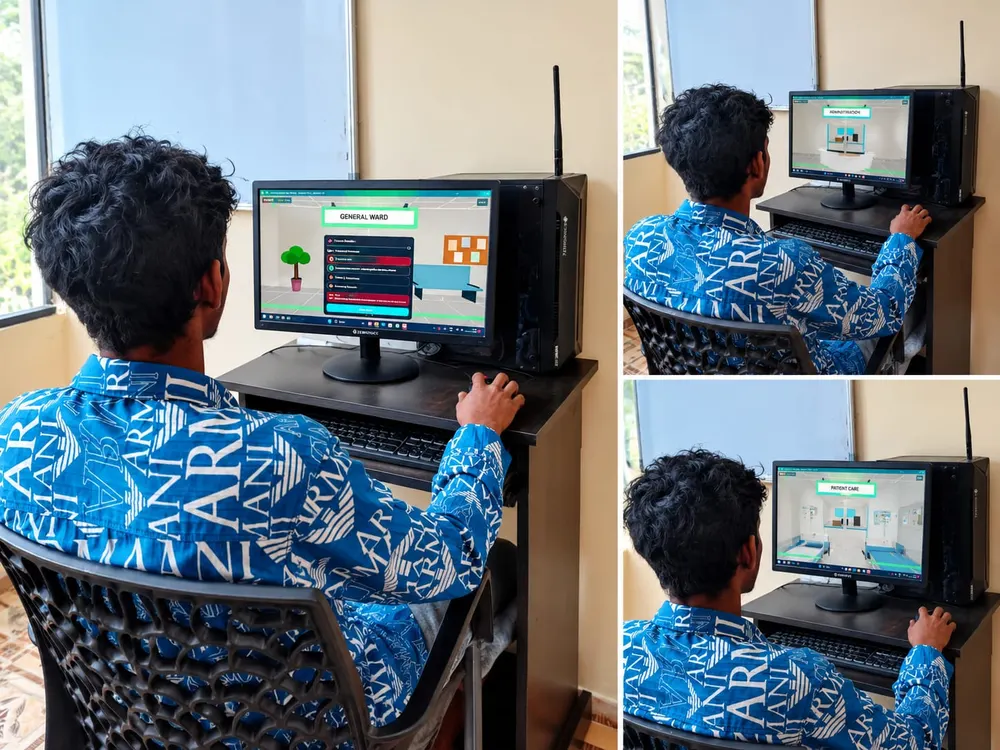
- India's only live Hinall HMS lab — the record-keeping systems where compliance data actually lives
- 5 certifications — TTMSTRCT Council Trust, UGC-approved university certificate (NEP 2020), Hinall HMS, AI in Healthcare and HLP
- 100% placement assurance — IPC knowledge is a direct differentiator for quality executive roles
₹42,000 for 6 months at Treneywann Institute of Hospital Administration, 2nd Floor Creative Tower, Near Kaniyampuzha Road, Eroor South, Vyttila, Kochi, Kerala 682306. Treneywann is an authorized training partner of a UGC-approved university.
FAQs — NABH Hospital Infection Control
The IPC questions asked in interviews and audits
What is the NABH IPC chapter?
The Hospital Infection Control chapter sets NABH's standards for preventing healthcare-associated infections: an Infection Control Committee meeting at least quarterly, WHO 5 Moments of Hand Hygiene displayed and audited monthly, standard precautions, isolation facilities, CSSD sterilisation records with biological indicator testing, HAI surveillance by department, and BMW Rules 2016 compliance.
What are the WHO 5 Moments of Hand Hygiene?
Moment 1 — before patient contact (protects the patient); Moment 2 — before an aseptic procedure (protects the patient); Moment 3 — after body fluid exposure (protects staff); Moment 4 — after patient contact (protects staff and others); Moment 5 — after contact with patient surroundings (protects staff and others).
What does a hospital administrator do in infection control?
Administrators manage compliance documentation, not clinical work: ICC minutes, monthly hand hygiene audit forms, BMW pickup records, the IPC chapter evidence file for NABH, CSSD record tracking, and HEPA filter replacement schedules for OT, ICU, and NICU.
What does the NABH auditor check in the IPC chapter?
Auditors use physical rounds, documentation review, and staff questioning. The most common findings: incomplete hand hygiene compliance forms, BMW stored beyond 48 hours, CSSD biological indicator testing not monthly, missing ICC minutes, and expired sterile packs in procedure trays.
Does Treneywann cover NABH infection control?
Yes — the IPC chapter is covered across the 48-module course from the administrator's compliance perspective: committee documentation, hand hygiene audits, CSSD records, isolation standards, HEPA logs, and BMW compliance. ₹42,000 for 6 months at Vyttila, Kochi, with 100% placement assurance.
Visit the Kochi Campus — Vyttila
Treneywann Institute of Hospital Administration, Office 49/A, Creative Tower, 2nd Floor, Near Kaniyampuzha Road, Eroor South, Vyttila, Ernakulam, Kerala 682306
NABH IPC Covered Across 48 Modules.
₹42,000. Vyttila Kochi.