.png)



Hospital Housekeeping & Facility Supervisor Interview. What NABH-Accredited Hospitals Ask.
Housekeeping and facility supervisor interviews in Kerala hospitals are protocol examinations — BMW Rules 2016 colour codes, terminal cleaning sequences, HEPA filter requirements and NABH infection control standards. This guide covers the exact questions NABH-accredited hospitals ask, with model answers for each.
Hospital housekeeping and facility supervisor interviews in Kerala test knowledge of NABH infection control standards, biomedical waste management (BMW Rules 2016), hospital colour-coding for waste segregation, terminal cleaning protocols for OT and ICU, and HEPA filtration requirements. Common questions: 'What are the BMW 2016 categories?', 'How do you do terminal cleaning of an OT?', 'What is the colour code for sharps waste?', 'How do you audit a housekeeping team?' Treneywann's hospital administration course covers all of these.
What a Hospital Facility / Housekeeping Supervisor Actually Does
Before the questions, understand what the hospital is hiring for — the interview follows directly from these responsibilities:
- Manage housekeeping staff across all departments and shifts
- Enforce infection control protocols on the floor, every day
- Oversee biomedical waste segregation and disposal end-to-end
- Schedule and verify terminal cleaning of OT and ICU
- Audit cleaning compliance and maintain sign-off registers
- Coordinate with the NABH quality team during internal and external audits
- Maintain linen management and laundry turnaround
- Manage pest control contracts and schedules
- Track cleaning supply inventory and dilution compliance
Category 1: Biomedical Waste Questions
BMW Rules 2016 — the most heavily tested area in NABH hospitals
Model answer: Category 1 — human anatomical waste; Category 2 — animal waste; Category 3 — microbiology and biotechnology waste; Category 4 — waste sharps; Category 5 — discarded medicines; Category 6 — solid waste such as gloves, tubes and catheters; Category 7 — soiled solid waste; Category 8 — liquid waste; Category 9 — incineration ash; Category 10 — chemical waste. Listing them in order, without hesitation, signals real training rather than passing familiarity.
Model answer: Yellow — anatomical waste, infectious plastic, soiled waste (sent for incineration). Red — recyclable contaminated plastic waste (autoclaved, shredded, sent for recycling). White/translucent — waste sharps (needle destroyer → puncture-proof container → authorised recycler). Blue — glassware and metallic implants. Black — general, non-biomedical waste (municipal landfill).
Why they ask: wrong-bag segregation is the single most common BMW violation found in hospital audits — the supervisor is the person accountable for it.
Model answer: not more than 48 hours without refrigeration; if refrigerated at 4°C, up to 72 hours. Waste stored beyond these limits is a common NABH audit finding — mentioning that shows the interviewer you think like an auditor, not just an operator.
Category 2: Infection Control and NABH HIC Questions
The Hospital Infection Control chapter is where housekeeping meets accreditation
Model answer (WHO standard): 1. Before patient contact. 2. Before an aseptic procedure. 3. After body fluid exposure. 4. After patient contact. 5. After contact with patient surroundings. Housekeeping supervisors are expected to know this because their staff are audited on moment 5 constantly.
Model answer: thorough cleaning done after contaminated or infected cases, or at the end of the operating day. Sequence: remove drapes and disposables → wipe all surfaces with hospital-grade disinfectant (chlorhexidine, OPA or hypochlorite depending on the surface) → mop the floor with disinfectant from the far corner towards the door → UV light for 30 minutes if available → verify positive-pressure air flow → 30-minute settling time before the next case. Giving the sequence in order is what separates a trained candidate.
Model answer: High Efficiency Particulate Air filter — removes 99.97% of particles ≥0.3 microns. Mandatory in OT, ICU, bone marrow transplant units and NICU. NABH audits filter replacement records; typical replacement is pre-filter every 3 months and HEPA every 12 months. Knowing the replacement schedule is the detail interviewers listen for.
Category 3: Cleaning Protocol Questions
Schedules, spills and documentation — the daily reality of the role
Model answer: department name, cleaning frequency (hourly / twice daily / daily / weekly), cleaning agent and its dilution, responsible staff name, supervisor signature column, and daily sign-off. NABH auditors check the last 3 months of cleaning schedules — an incomplete register is one of the most common audit findings, and the supervisor owns it.
Model answer, in sequence: isolate the area → wear gloves and mask → cover the spill with paper towels or absorbent material → pour 1% hypochlorite solution → leave for 10 minutes → wipe up and dispose in a yellow bag → clean the area with fresh disinfectant → remove gloves → hand hygiene → report to the infection control team. The reporting step at the end is the one most candidates forget — and the one NABH hospitals listen for.
Category 4: Situational Supervision Questions
No protocols to recite here — judgement, people management and audit composure
The frame: safety first, then protocol, then escalation. Provide proper PPE and demonstrate its use, explain the cleaning and disinfection protocol that makes the task safe, address the fear rather than dismissing it — and escalate through HR only if non-compliance continues after the safety concerns have been genuinely answered. The interviewer is checking that you neither bully staff nor ignore protocol.
The frame: never argue with the finding. Acknowledge the gap, produce whatever records are available, and provide a corrective action plan with a timeline — retraining, a revised sign-off process, and a supervisor verification step. Auditors and interviewers alike are testing whether you respond to findings with corrective action or with excuses.
How Treneywann Covers Facility Management
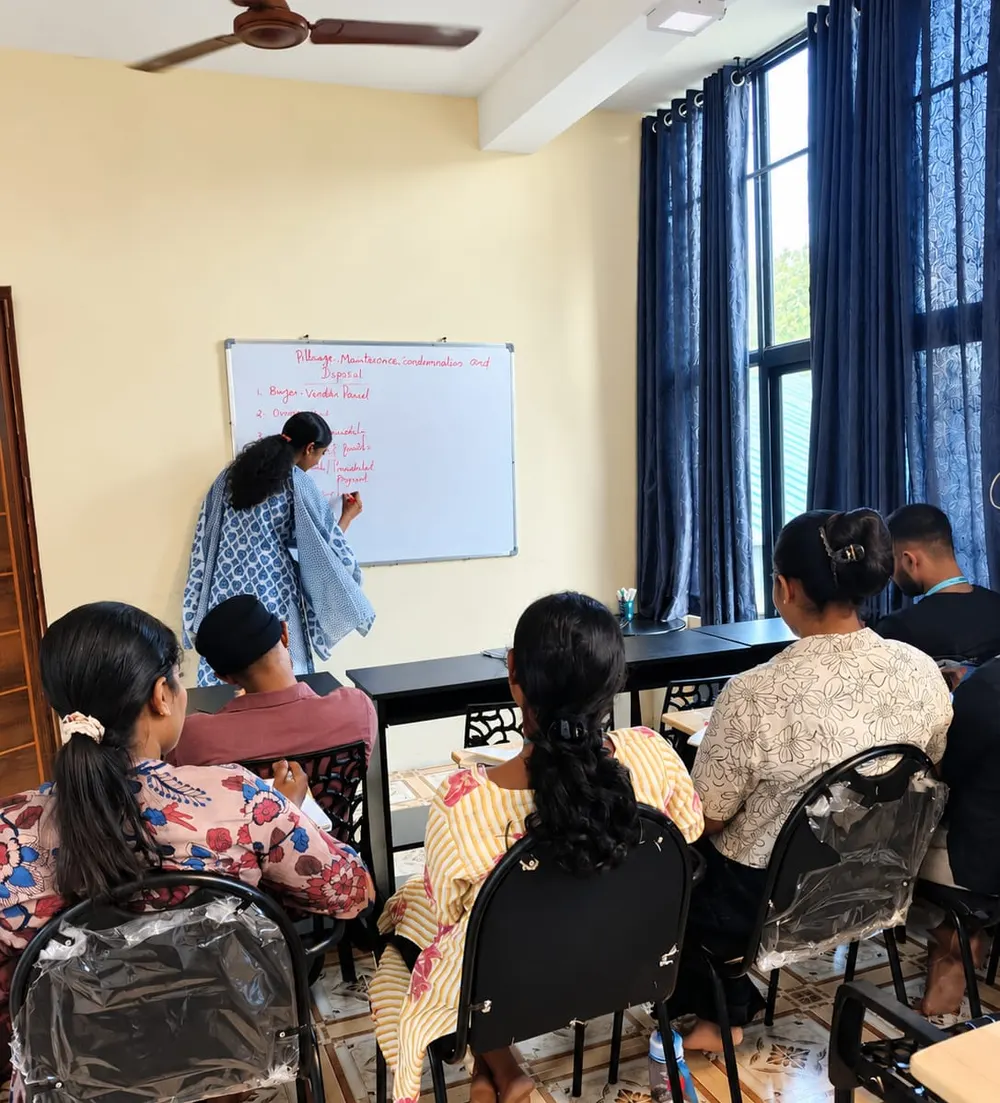
The hospital administration course at Treneywann Institute of Hospital Administration, 2nd Floor Creative Tower, Near Kaniyampuzha Road, Eroor South, Vyttila, Kochi, Kerala 682306 covers everything on this page:
- NABH infection control module — the HIC chapter, taught the way auditors test it
- Biomedical waste management module — BMW Rules 2016 categories, colour codes, storage limits and disposal routes
- Facility management overview — housekeeping supervision, linen, pest control and supply tracking as part of hospital operations
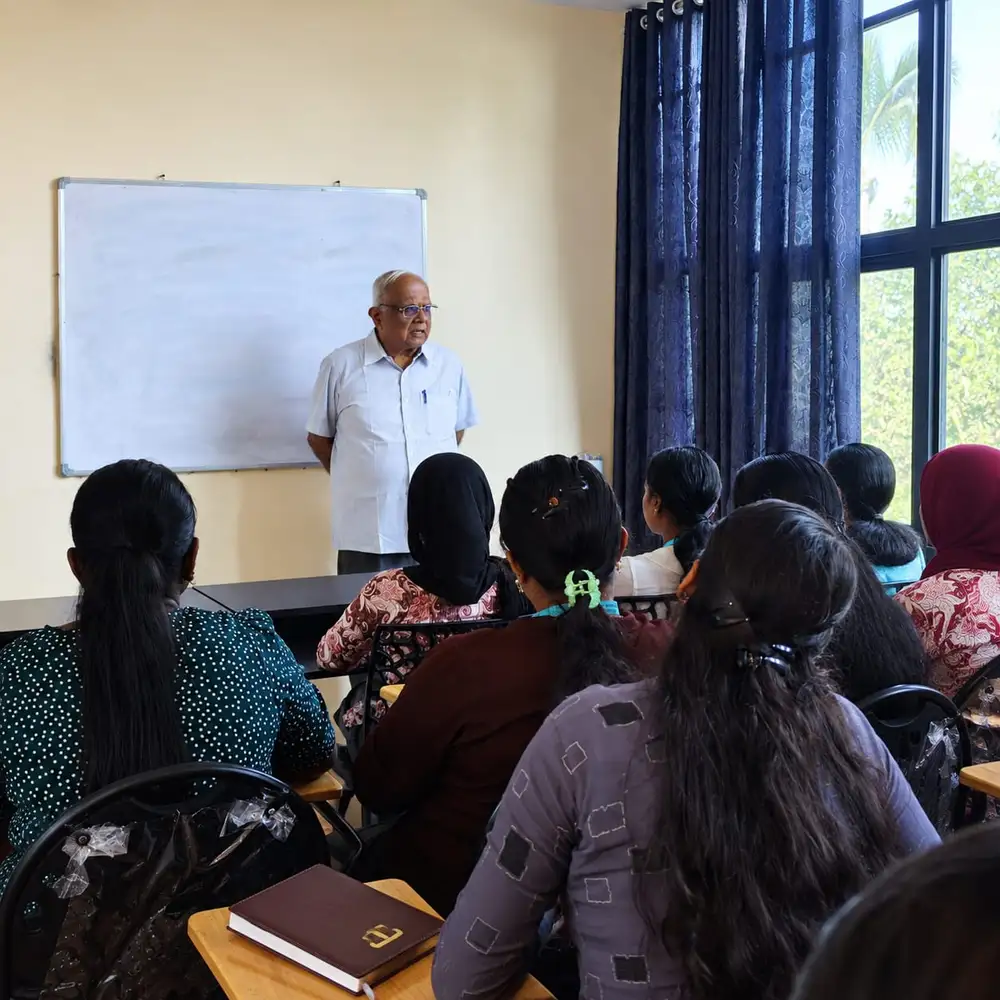
- B.V. Kumar's administrator experience — senior faculty, retired hospital administrator with 35+ years across Kerala and the GCC, whose responsibilities included facility oversight
512 graduates placed as of 31 July 2026, with placement assurance — including facility and quality-side roles in NABH-accredited hospitals.
FAQs — Hospital Housekeeping & Facility Supervisor Interviews Kerala
The questions candidates search for most
What is asked in hospital housekeeping supervisor interview?
Four areas: biomedical waste management under BMW Rules 2016 (categories, colour codes, storage limits), NABH infection control standards (5 moments of hand hygiene, terminal cleaning), cleaning protocols (schedules, spill management, dilutions), and situational supervision questions (staff refusing tasks, incomplete audit registers). NABH-accredited hospitals expect protocol-level answers, not general cleaning knowledge.
What are BMW 2016 colour codes?
Yellow — anatomical waste, infectious plastic and soiled waste (incinerated). Red — recyclable contaminated plastic (autoclaved, shredded, recycled). White/translucent — waste sharps (needle destroyer, puncture-proof container, authorised recycler). Blue — glassware and metallic implants. Black — general non-biomedical waste (municipal landfill). Interviewers expect the colour, the waste type and the disposal route together.
What is terminal cleaning of OT?
Thorough cleaning after contaminated/infected cases or at the end of the operating day: remove drapes and disposables, wipe all surfaces with hospital-grade disinfectant, mop from the far corner to the door, UV light for 30 minutes if available, verify positive-pressure air flow, and allow a 30-minute settling time before the next case. Answering in sequence is what interviewers score.
What NABH standards apply to hospital housekeeping?
The Hospital Infection Control (HIC) chapter: hand hygiene compliance, waste segregation at the point of generation, documented cleaning schedules (auditors check the last 3 months), terminal cleaning records for OT/ICU, HEPA filter replacement records, and spill protocols. In NABH hospitals, undocumented cleaning is treated as cleaning that never happened.
Does Treneywann teach biomedical waste management?
Yes — the hospital administration course (₹42,000, 6 months) at Vyttila Kochi includes a biomedical waste management module covering BMW Rules 2016, an NABH infection control module, and a facility management overview, taught by senior faculty B.V. Kumar, a retired hospital administrator with 35+ years across Kerala and the GCC.
Visit the Kochi Campus — Vyttila
Treneywann Institute of Hospital Administration, Office 49/A, Creative Tower, 2nd Floor, Near Kaniyampuzha Road, Eroor South, Vyttila, Ernakulam, Kerala 682306
NABH Infection Control and BMW Modules Included
Everything on this page is taught inside the hospital administration course. ₹42,000. Vyttila Kochi.