.png)









CSSD Hospital Sterilisation — The Central Sterile Supply Department Every Kerala Administrator Must Know
Every sterile instrument in an operating theatre passes through one department — the CSSD — and every cycle it runs generates a record NABH will ask to see. The administrator does not sterilise instruments. The administrator makes sure the department can prove it did.
CSSD (Central Sterile Supply Department) is the centralised hospital department responsible for decontaminating, sterilising, and distributing all reusable surgical instruments and medical devices. NABH standards (HIC chapter) require CSSD to maintain sterilisation cycle records, run biological indicator tests monthly, manage expired sterile packs, and track instrument set inventory. Hospital administrators manage CSSD documentation, cycle log files, and NABH evidence without performing clinical sterilisation themselves.
What Is CSSD?
The Central Sterile Supply Department is the single hub through which every reusable instrument in the hospital flows before it reaches a patient:
- Surgical trays — assembled, wrapped, sterilised, and issued as sets
- Endoscopes — heat-sensitive, requiring specialised processing
- Catheter sets and other reusable devices
- OT linen — gowns and drapes sterilised for the surgical field
CSSD is separate from nursing decontamination, staffed by trained CSSD technicians under the infection control officer, and is one of the load-bearing pillars of NABH HIC chapter compliance.
Sterilisation Methods
Four methods, each matched to the type of instrument — a frequent CSSD and NABH interview question.
Sterilisation Cycle Records
Every autoclave run produces a cycle record — the fundamental proof that sterilisation happened correctly. Each record captures:
- Date and time of the cycle
- Temperature, pressure, exposure time — the parameters that define a valid cycle
- Operator ID — who ran the load
- Load content — what was inside
Records are retained 5 years; the NABH auditor checks the last 12 months. The administrator maintains both the physical logbook and digital backups.
Biological Indicator (BI) Testing
A temperature reading proves heat. A biological indicator proves the heat actually killed microbial life:
- Geobacillus stearothermophilus spore strips for steam sterilisation
- Tested monthly minimum — weekly under NABH accreditation
- A positive BI = steriliser failure — quarantine all loads since the last negative BI
- Report to the ICC — the Infection Control Committee is notified
The administrator maintains the BI test results file — one of the first things a HIC assessor asks to see.
Chemical Indicators (CI)
Chemical indicators give an immediate, visible signal — used alongside, not instead of, biological indicators:
- Class 1 (process indicators) — the tape on the pack; confirms the item was exposed to the sterilisation process
- Class 5 (integrating indicators) — approximate biological indicator performance
- Class 6 (emulating indicators) — confirm the correct cycle parameters were met
The administrator ensures instrument packs always bear CI tape before distribution — an unmarked pack cannot be issued.
Sterile Pack Management
How long a pack stays sterile is governed by its packaging, not just a calendar:
- Event-related sterility — shelf life depends on packaging integrity; a pack stays sterile until the wrapping is damaged, wet, or opened
- Expiry dates stamped or labelled — packs still carry dating for traceability
- Compromised packs returned to CSSD immediately — never used, never left in the tray
Common NABH finding: expired or compromised packs discovered in procedure trays during unannounced rounds — a documentation and discipline failure the administrator is positioned to prevent.
The Administrator's CSSD Responsibilities
The administrator makes CSSD auditable:
- Maintain cycle logbooks — every run recorded and retained
- File BI test results monthly — the biological indicator record kept current
- Schedule steriliser preventive maintenance — logged and on time
- Track CSSD staffing — trained technicians on every shift
- Prepare the CSSD evidence file for NABH assessment
- Report equipment failure to the ICC — and cross-link CSSD records with the OT schedule
How Treneywann Teaches CSSD
- CSSD from the administrator's seat — cycle logs, BI files, and evidence preparation across 48 modules
- Tied to the HIC chapter — CSSD taught as part of the infection control audit auditors treat it as
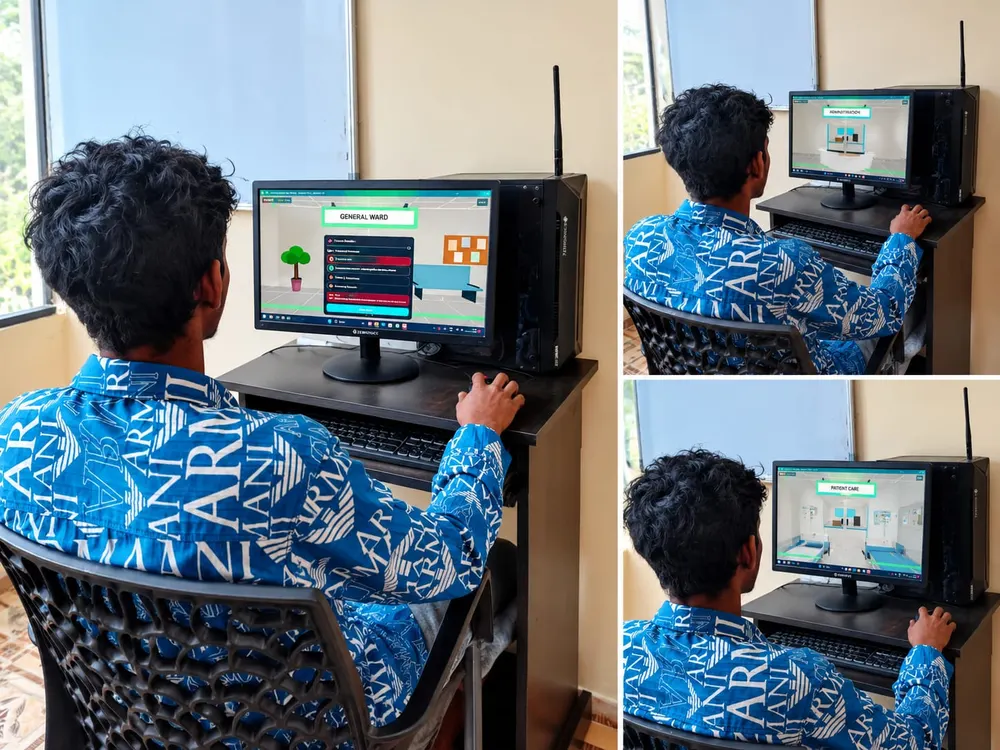
- India's only live Hinall HMS lab — the systems where instrument and inventory records actually live
- 5 certifications — TTMSTRCT Council Trust, a UGC-approved university certificate (NEP 2020), Hinall HMS, AI in Healthcare and HLP
- 100% placement assurance — CSSD and HIC knowledge is a direct differentiator for quality roles
₹42,000 for 6 months at Treneywann Institute of Hospital Administration, 2nd Floor Creative Tower, Near Kaniyampuzha Road, Eroor South, Vyttila, Kochi, Kerala 682306. Treneywann is an authorized training partner of a UGC-approved university.
FAQs — CSSD Hospital Sterilisation
The CSSD questions asked in interviews and NABH audits
What is CSSD in a hospital?
The Central Sterile Supply Department is the centralised department that decontaminates, sterilises, and distributes all reusable surgical instruments and medical devices — surgical trays, endoscopes, catheter sets, and OT linen. It is separate from nursing decontamination, staffed by CSSD technicians under the infection control officer, and critical to NABH HIC chapter compliance.
What is a biological indicator test in CSSD?
A BI test uses Geobacillus stearothermophilus spore strips to confirm a steam steriliser actually kills microbial life. NABH requires it at least monthly — weekly under accreditation. A positive BI means steriliser failure: quarantine all loads since the last negative BI and report to the Infection Control Committee. The administrator maintains the BI results file.
What sterilisation records does NABH require?
A cycle record for every autoclave run — date and time, temperature, pressure, exposure time, operator ID, load content — retained five years, with auditors checking the last 12 months. NABH also requires monthly biological indicator results, chemical indicator use on every pack, sterile pack expiry management, and preventive maintenance records.
What are sterile pack expiry rules in India?
Hospitals following NABH increasingly use event-related sterility: shelf life is governed by packaging integrity, not a fixed calendar date, so a pack stays sterile until its wrapping is damaged, wet, or opened. Packs still carry dating, and compromised packs must be returned to CSSD immediately. Expired packs in procedure trays are a common unannounced-round finding.
Does Treneywann teach CSSD hospital administration?
Yes — CSSD operations, cycle records, biological and chemical indicators, sterile pack management, and the NABH HIC evidence file are covered across the 48-module course from the administrator's compliance perspective. ₹42,000 for 6 months at Vyttila, Kochi, with 100% placement assurance.
Visit the Kochi Campus — Vyttila
Treneywann Institute of Hospital Administration, Office 49/A, Creative Tower, 2nd Floor, Near Kaniyampuzha Road, Eroor South, Vyttila, Ernakulam, Kerala 682306
CSSD, NABH HIC, and Hospital Operations Covered.
₹42,000. Vyttila Kochi.