.png)







A Day in the Life of a Hospital Administrator — What Actually Happens
Forget job descriptions. Here is the minute-by-minute reality of a hospital administration workday in India — the 8 AM census, the OPD surge, the TPA queue, the angry family you turn around, and the report that closes the day. Written from the real routines of 512 graduates placed as of 31 July 2026 Treneywann graduates working in Kerala and GCC hospitals.
A hospital administrator manages the day-to-day operations of a hospital — OPD and IPD patient flow, bed management, staff coordination, and quality compliance — acting as the interface between clinical staff (doctors, nurses) and management. A typical day includes reviewing the overnight census on the hospital management software (HMS), supervising the morning OPD rush, handling TPA insurance pre-authorizations and billing, maintaining NABH quality documentation, resolving patient complaints, and closing with MIS reports to management. No MBBS is needed — the job runs on management skill, communication, and HMS software fluency, which is exactly what a hospital administration diploma trains.
The Setting
It's 8:45 AM at a 250-bed private hospital in Kochi. The lobby already hums — token numbers blinking on displays, a queue curling from the registration counters, an ambulance easing into the casualty bay. Through the main entrance walks Rahul, the Floor Manager — a Treneywann alumnus, three years into the career. His phone shows two messages from the night duty manager and one from the TPA desk. He's read the midnight census before breakfast. By the time he crosses the lobby, he has already solved his first problem of the day — and he wouldn't trade this job for a desk anywhere. This is his day, hour by hour.
The Hour-by-Hour Workday
Twelve time blocks, 8:00 AM to 8:00 PM — including the evening shift handover most job descriptions never mention.
Morning Briefing & Census Review
Rahul logs into the Hinall HMS dashboard before his coffee is finished. The midnight census tells him everything about the day ahead: 212 of 250 beds occupied, 9 discharges planned, 3 ICU patients stepping down to wards, and 2 beds blocked for scheduled surgeries. The night duty manager hands over: one MLC case admitted at 2 AM, a ventilator alarm issue in ICU-2 (biomedical already informed). He notes bed availability by category — the private rooms are nearly full, which means today's admissions need careful allocation.
Skills & tools used: HMS census module, ADT dashboard, handover protocol
OPD Opening — The Morning Surge
By 8:45, forty people are already at registration. This is the hour that makes or breaks the hospital's reputation for the day. Rahul checks that all four registration counters are staffed, the token display is running, and — the eternal battle — that doctors are arriving on time for their 9 AM OPD slots. A cardiologist is stuck in traffic; Rahul has the front office inform his booked patients proactively rather than letting them stew. Two walk-in emergencies get redirected to casualty within seconds of arrival.
Skills & tools used: OPD registration module, token/queue management, doctor scheduling, crowd communication
Department Rounds
Clipboard (actually, a tablet) in hand, Rahul walks every floor: wards, ICU corridor, lab, radiology, pharmacy, kitchen, and the back-of-house areas patients never see. He's checking cleanliness against housekeeping checklists, staff attendance against the roster, equipment status (the ward 3 suction machine flagged yesterday — fixed? yes), and the small things: an overflowing yellow BMW bin gets photographed and escalated on the spot. Rounds aren't inspection theatre — staff flag problems to him faster face-to-face than any ticket system.
Skills & tools used: Checklist auditing, BMW compliance, housekeeping standards, staff rapport
TPA & Billing Queries
The TPA desk has a queue of its own: 6 pre-authorizations pending, 2 TPA queries demanding additional clinical documents before approval, and one enhancement request for a surgery that ran over estimate. Rahul reviews the tricky one — a claim likely to be rejected for a policy exclusion — and gets the doctor's clarification note attached before resubmission. Then discharge billing: 9 planned discharges means 9 final bills to be accurate and ready before families start asking. One family disputes a pharmacy charge; the itemised bill settles it in five minutes.
Skills & tools used: TPA pre-auth workflow, billing module, claim documentation, dispute resolution
NABH & Quality Hour
The quality coordinator joins Rahul for the daily documentation review: yesterday's incident reports (one patient fall in ward 2 — near-miss, no injury; RCA scheduled), a random sample of 5 patient files checked for consent form completeness, and SOP compliance for the new hand-hygiene audit cycle. NABH reassessment is four months away, so a chapter-wise gap list is now standing agenda. It feels like paperwork — until you realise every checklist item traces back to a patient who was once harmed somewhere by its absence.
Skills & tools used: NABH documentation, incident reporting, RCA basics, audit sampling
Administrative Meetings
Three meetings, thirty minutes each in theory, never in practice. First, the oxygen vendor — quarterly rate renewal and a delivery delay last week that cannot repeat. Second, pharmacy stock review: two fast-moving antibiotics near reorder level, and expiry-risk stock flagged by the HMS pharmacy module needs a return-to-vendor decision. Third, an HR issue — two housekeeping staff in a shift dispute; Rahul hears both, adjusts the roster, and documents the resolution. Vendor management, inventory, and people problems: the unglamorous trio that keeps a hospital solvent.
Skills & tools used: Vendor negotiation, pharmacy/store module, inventory reorder logic, HR conflict handling
Lunch + MRD Coordination
Lunch is twenty minutes at the desk. The rest of the hour goes to the Medical Records Department: an insurance company has requested records for a reimbursement claim (released only against proper authorization), two discharge summaries from Sunday are still incomplete — the concerned doctors get a polite but firm reminder — and the 2 AM MLC case needs its documentation cross-checked while memories are fresh. MRD work is invisible when done well and catastrophic when not: a missing signature today is a rejected claim or a courtroom problem next year.
Skills & tools used: MRD workflow, record release protocol, MLC documentation, deficiency checking
Patient Relations Hour
The feedback register and yesterday's patient satisfaction forms come first: food quality scored low again in ward 4 — the dietician gets looped in. Then the escalations: a family upset about a delayed discharge (the TPA approval came late; Rahul explains the timeline honestly and the anger deflates), and a bedside visit to a long-stay patient whose son had complained last week — the follow-up visit matters more than the original apology. VIP admission expected at 4 PM; room readiness checked personally. Patient relations is where administration stops being abstract.
Skills & tools used: Grievance handling, service recovery, feedback analysis, empathy under pressure
IPD Operations
Bed management chess: the 9 discharges have freed beds, but housekeeping turnaround time determines when they're truly available — Rahul tracks bed-turnover status live on the HMS. Two admissions from OPD conversions need allocation, ICU has one step-down transfer, and the orthopaedic surgeon wants tomorrow's OT list confirmed — which means checking CSSD instrument readiness, anaesthetist availability, and pre-op orders. A wrong bed allocation now cascades into tomorrow's chaos, so this hour gets full concentration.
Skills & tools used: Bed management/ADT module, OT scheduling, ICU coordination, CSSD liaison
Revenue Cycle Review
The daily MIS tells the money story: today's OPD revenue, IPD billing, pharmacy sales, and — the number management watches — outstanding TPA receivables. Three claims have been pending with insurers past 30 days; the TPA desk gets follow-up targets. Rahul runs a spot check on charge capture: did ward 2's dressing changes actually reach the bills? (Two didn't. Fixed.) Billing accuracy isn't about greed — unbilled services quietly bleed the hospital that pays everyone's salaries.
Skills & tools used: MIS reports, receivables tracking, charge capture audit, revenue analytics
Staff Management
Next week's duty roster gets finalised: leave requests balanced against minimum staffing per shift, night rotations kept fair, and one nurse's exam-leave accommodated by swapping with a volunteer. A ward secretary raises a grievance about workload distribution — heard, noted, one concrete change promised. Then training coordination: the fire safety drill is due this month (NABH requirement), and three new joiners need HMS module training scheduled. People management isn't an interruption to the job; at this level, it IS the job.
Skills & tools used: Roster planning, leave management, grievance handling, training coordination
Evening Operations & Shift Handover
The evening OPD is running, visitor hours are peaking, and the night duty manager arrives for handover. Rahul walks him through the pending list: the VIP patient in room 402, one expected emergency admission referred from a peripheral hospital, the ICU bed position, and which discharges rolled over to tomorrow morning. Today had no crisis — but last Tuesday's power fluctuation debrief produced a generator checklist that the night manager now confirms nightly. A clean handover is the difference between a hospital that runs 24×7 and one that merely stays open.
Skills & tools used: Structured handover, escalation protocols, night operations planning
Reporting & Closure
The day ends where it began: in the HMS. Close-of-day entries are verified, the daily operations report goes to the Medical Director and management — census, revenue snapshot, incidents, staffing exceptions, and tomorrow's OT list. Rahul flags one item for the morning meeting: private room occupancy has run above 95% for two weeks, which is either a pricing signal or an expansion argument. Laptop closed by 8:00 PM. Tomorrow the census will be different, the problems will be different — and that is exactly why people stay in this career.
Skills & tools used: Daily reporting, MIS summary, data-driven recommendations
3 Different Hospital Admin Roles — What's Different?
"Hospital administrator" is really a career ladder. Here's how the day changes as you climb it.
Front Office Executive
Patient registration and UHID creation, OPD token issue, billing queries at the counter, appointment and phone handling. Your day is about 80% patient-facing — speed, accuracy, and a calm voice are the job.
Software: HMS OPD + billing modules
Floor Manager
Department rounds, staff coordination, bed management, and complaint escalation — the role in the story above. Roughly 50% floor walking, 50% desk work. You are the person everyone calls when something goes wrong on a floor.
Software: Full HMS dashboard — ADT, census, housekeeping, complaints
Hospital Administrator / Operations Head
Strategic decisions, vendor contracts, P&L responsibility, NABH compliance oversight, and staff hiring. About 30% floor presence, 70% meetings and reports. Your decisions shape how the whole hospital runs.
Software: MIS, analytics, and every HMS module — you read the hospital through data
What Skills You Actually Use Every Day
Ranked by frequency of use in a real workday — not by what sounds impressive on a syllabus.
Constant — with patients, doctors, nurses, vendors, and management. Every hour of the day above involves it. The single biggest predictor of success in this career.
Every task touches Hinall HMS or a similar system — census, registration, billing, bed management, MIS. Software fluency is why trained candidates start productive on Day 1.
Something unexpected happens every single day — a staff absence, an angry family, an equipment failure. The job is staying structured when the plan breaks.
Daily in accredited hospitals — incident reports, consent audits, SOP compliance. Tedious for the first three months, automatic after.
2–3 hours of most days: pre-authorizations, claim queries, discharge billing, and disputes. The fastest-hiring specialisation for freshers.
Rosters, grievances, motivation, and fairness. Staff issues arise daily, and how you handle them determines whether the floor works for you or against you.
End of every day: census, revenue, receivables, and indicators. Administrators who can read data get promoted; those who only forward reports do not.
You are not treating anyone, but you must speak the language — diagnosis names, department abbreviations, procedure terms — to coordinate credibly with clinical teams.
What They Don't Tell You
The honest version — six things every working administrator knows and most brochures skip.
No two days are the same
Emergencies, VIP admissions, surprise audits, staff absences — the hour-by-hour above is the skeleton, but every day hangs different flesh on it. If you crave predictable routine, read the checklist section below carefully.
You will face upset patients and families
Hospital visits are among the most stressful days of people's lives, and their frustration lands on you. The skill — and it is a learnable skill — is turning them around. Few things in any career feel better than converting an angry family into a thank-you note.
NABH documentation feels tedious — for about 3 months
Every new administrator groans at the checklists. Then it becomes second nature, and eventually you understand it: every form traces back to a patient somewhere who was harmed by its absence.
HMS training pays off from literally Day 1
Graduates who trained on a live HMS walk in and start working; those who didn't spend their first month lost. This single factor separates trained candidates in interviews and in the first job.
Senior roles get after-hours calls
Hospitals run 24×7, and operations heads take on-call responsibility for genuine emergencies. Good hospitals rotate on-call duty across an admin team so it is structured, not constant.
It is genuinely satisfying
You are not treating patients — you are making the entire machine that treats them work. When the OPD flows, the discharge happens on time, and the family leaves without a billing dispute, that was you. Healthcare careers without clinical work rarely feel this consequential.
Is Hospital Administration Right for You?
A quick honesty check. If most of these sound like you, this career will fit.
- ✅ You like people and communication — talking is a core job function, not a distraction from it
- ✅ You can stay calm when multiple things go wrong at once
- ✅ You are organized and detail-oriented — checklists and follow-ups come naturally
- ✅ You want a healthcare career without clinical work (no MBBS, no injections, no night rounds in scrubs)
- ✅ You are comfortable with software and data — dashboards and reports are your tools
- ✅ You want management responsibility early in your career, not after 10 years
- ✅ You are interested in GCC/Gulf career opportunities — hospital administrators are in demand across UAE, Saudi, and Qatar
- ❌ Not for you if: you want a purely desk/remote job with zero human interaction. Hospital administration is a people-and-floor career — that's precisely what makes it rewarding.
From Classroom to Workday — How Treneywann Prepares You
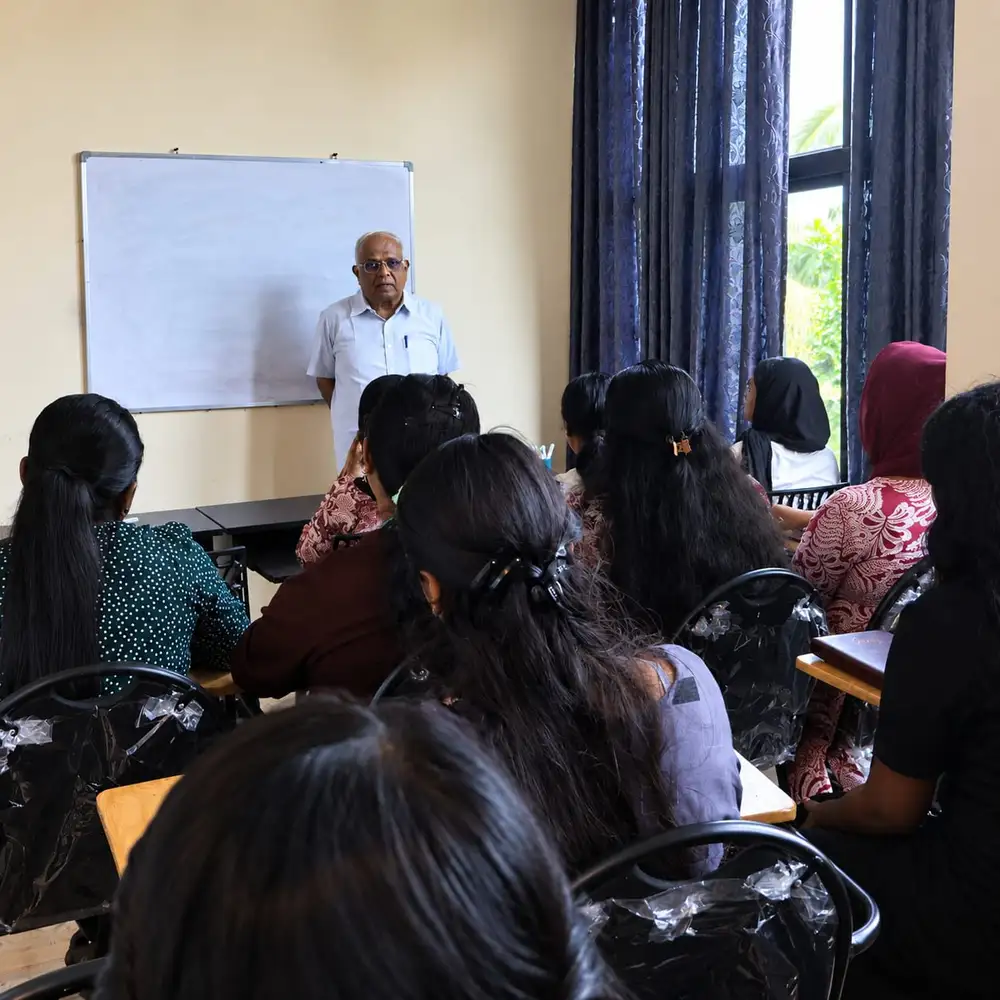
Every hour of Rahul's day above maps to a specific part of the Treneywann course. That's by design — the syllabus was built backwards from the workday by HOD B.V. Kumar (MHA, MBA, MA, PGDPR, PGDJ — 35 years across India and GCC hospitals).
Kerala's only live Hinall HMS lab (48 modules, 16 departments) means Treneywann students don't simulate the workday — they've already worked it. Add 5 certifications, including embassy-attestable credentials (TTMSTRCT Diploma and UGC-approved university certificate), and a 100% placement assurance, and Day 1 stops being frightening.
Frequently Asked Questions
What does a hospital administrator do on a daily basis?
A hospital administrator manages daily hospital operations: reviewing the midnight census and bed availability on the HMS dashboard, managing OPD patient flow, doing department rounds, handling TPA pre-authorizations and billing queries, maintaining NABH quality documentation, resolving patient complaints, coordinating IPD bed allocation and OT schedules, finalising staff duty rosters, and sending daily MIS reports to management. The day typically runs 9–12 hours across floor work, desk work, and meetings — as the hour-by-hour breakdown above shows.
Is hospital administration a stressful job?
It's a dynamic, moderately high-pressure job rather than a uniformly stressful one. Peak stress moments are the morning OPD rush, discharge billing disputes, staff absence on busy days, and NABH audit periods. Trained administrators handle these with systems — HMS dashboards, SOPs, escalation protocols — and most report high job satisfaction because the work is varied and visibly helps patients.
What are the working hours of a hospital administrator?
Typical shifts run 8–9 hours — commonly 8:00 AM to 5:00 PM or 9:00 AM to 6:00 PM — with hospitals running morning, evening, and night administrative shifts. Floor managers and duty managers work in rotation including some Sundays and holidays, since hospitals never close. Senior administrators keep general shifts but may take structured on-call responsibility for emergencies.
What does a hospital administrator do in the morning?
Mornings are the busiest block: reviewing the overnight midnight census and bed availability on the HMS, attending the morning briefing with nursing and duty managers, supervising the OPD opening rush (registration counters, token flow, doctor punctuality), and doing physical department rounds to check cleanliness, staff attendance, and equipment readiness before the day peaks.
Does a hospital administrator interact with patients?
Yes, constantly — but differently from clinical staff. Administrators handle patient grievances, explain bills and insurance approvals, manage admission and discharge experiences, conduct bedside visits for VIP or complex cases, and act on patient feedback. Front office roles are about 80% patient-facing; even senior operations roles involve daily patient interaction during rounds and complaint escalations.
What is the difference between a floor manager and a hospital administrator?
A floor manager is a mid-level operational role: physically supervising wards and departments, coordinating staff, managing beds, and escalating complaints — roughly half floor walking, half desk work. A hospital administrator or operations head is the senior role above: strategic decisions, vendor contracts, budgets and P&L, NABH compliance oversight, and hiring — roughly 30% floor presence and 70% meetings and reports. Floor manager is the classic stepping stone to administrator.
Is hospital administration a desk job?
No. Even the most senior roles involve daily floor presence — department rounds, patient interactions, and on-the-spot problem solving. Entry-level front office roles are mostly at the counter but standing and patient-facing; floor managers walk several kilometres a day inside the hospital. Desk work (HMS entries, MIS reports, documentation) is typically 40–60% of the day depending on seniority.
What does a hospital quality manager do every day?
A quality manager runs the NABH and patient-safety engine daily: reviewing incident reports filed in the last 24 hours, auditing documentation samples (consent forms, discharge summaries, nursing records), tracking quality indicators like infection rates and patient falls, conducting SOP compliance rounds, coordinating quality committee meetings, and preparing for accreditation assessments. During NABH audit season, this becomes the entire hospital's agenda.
Experience the Hospital Before You Start
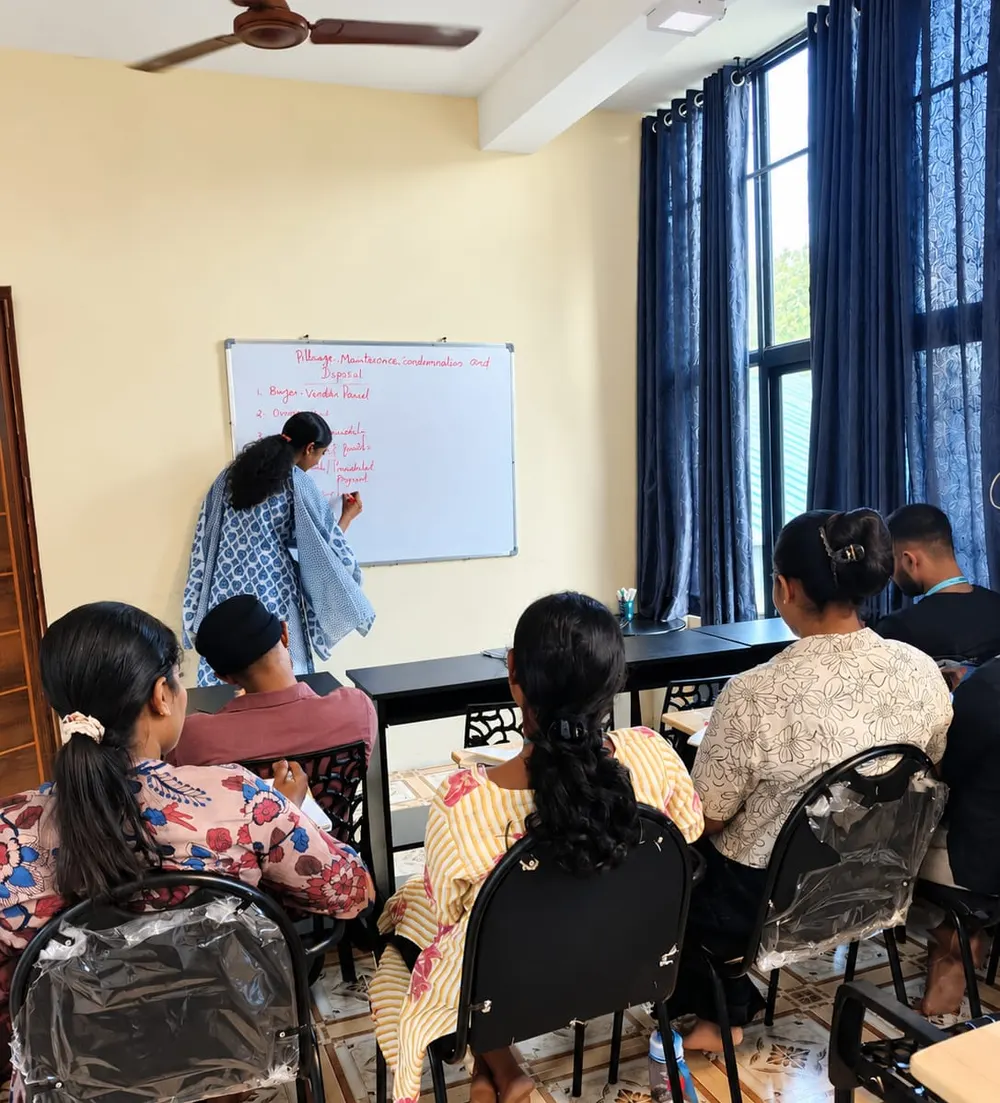
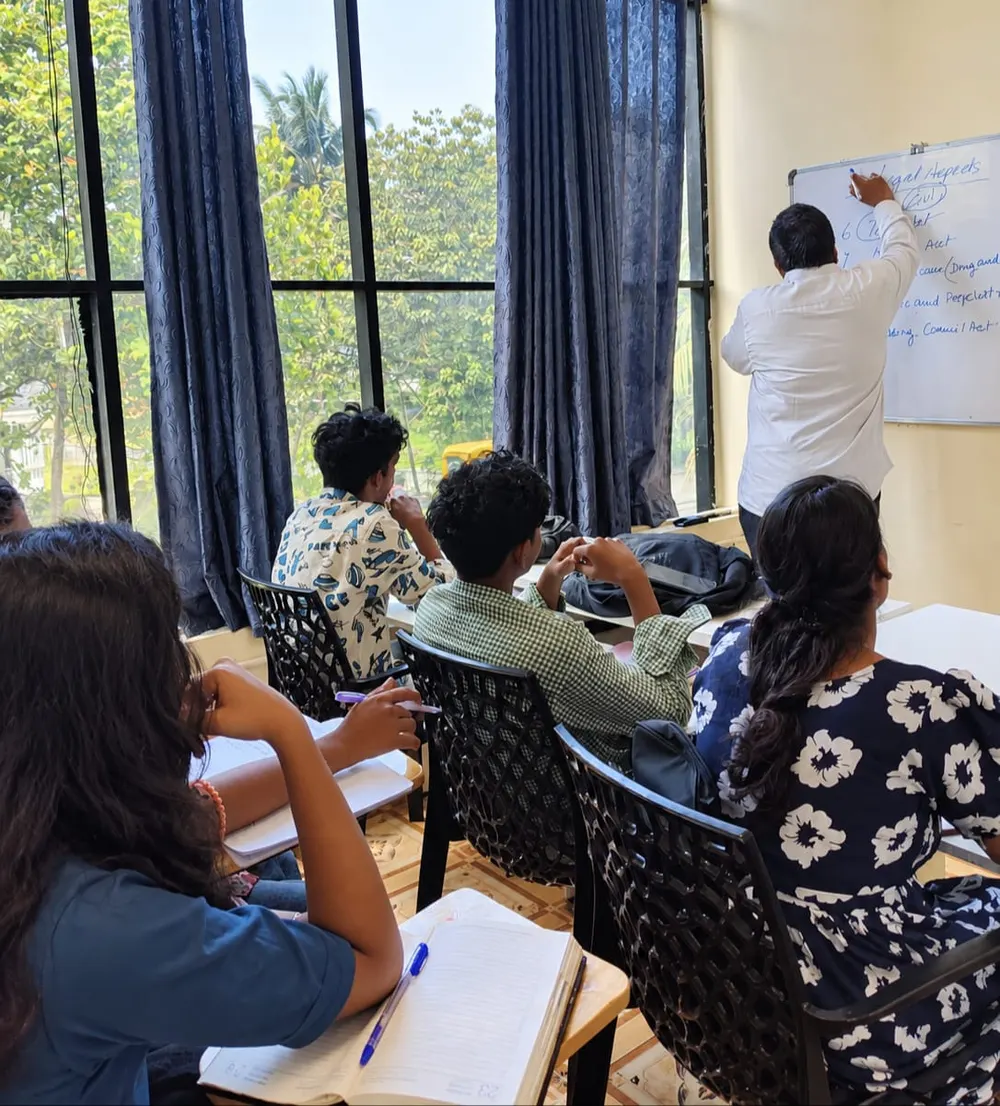
Treneywann's course includes a real hospital internship — you shadow working administrators through exactly the day described above, before your first job. Combined with India's only live Hinall HMS lab, mock interviews with hospital HR panels, and a 100% placement assurance, your first day at work won't be your first day in a hospital.
₹37,000 (6 Months Hospital Administration Course) | ₹57,000 (1-Year PG Diploma) — all-inclusive. Hybrid mode · 512 graduates placed as of 31 July 2026 · 4.9/5 rating.
Treneywann Institute of Hospital Administration · Office 49/A, Creative Tower, 2nd Floor, Near Kaniyampuzha Road, Eroor South, Vyttila, Ernakulam, Kerala 682306
Explore More
🏥 Hospital Administration Hub
The complete overview — what the field is, who it suits, and how to enter it.
🧭 Career Guide
Roles, salaries, and the 5-year growth path from front office to operations head.
📋 50 Interview Questions
The questions hospital HR panels actually ask — with model answers.
🎓 Course in Kerala
The full Treneywann diploma — syllabus, HMS lab, placement assurance, fees.
📍 Course in Kochi
Study at our Vyttila campus, minutes from Vyttila Hub.
💻 Hinall HMS — 48 Modules, 16 Departments
The exact software Rahul uses all day — and you train on before your first job.
📚 Syllabus
Module-by-module — see how each subject maps to the workday above.
🌟 Success Stories
512 graduates placed as of 31 July 2026 living this workday at Aster, Rajagiri, VPS Lakeshore, and GCC hospitals.