.png)

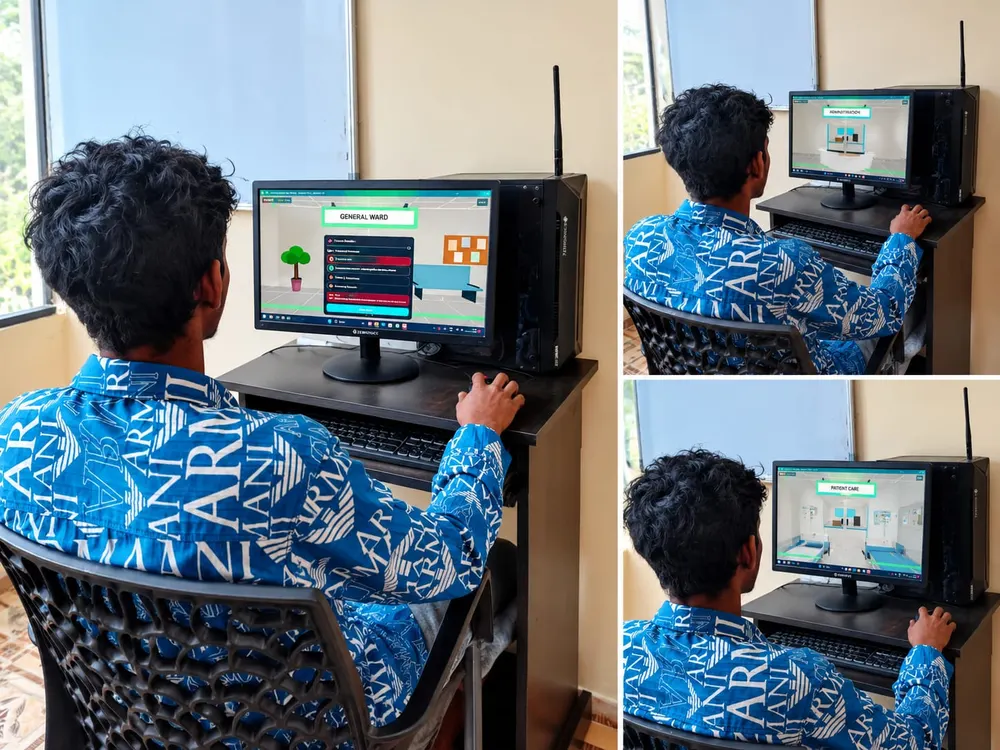











NABH (National Accreditation Board for Hospitals) documentation refers to the mandatory records, registers, forms, and audit trails hospitals must maintain for accreditation. Hospital administrators in Kerala are responsible for non-clinical documentation across patient care, quality, infection control, biomedical waste, staff competency, and equipment maintenance. Kerala has the highest concentration of NABH-accredited hospitals in India, making documentation competency a core requirement for hospital administration jobs in the state.
NABH Documentation — What Every Hospital Administrator in Kerala Must Know
Ask any hospital quality manager in Kerala what decides an NABH survey, and the answer is the same: documents. This guide maps every documentation category a hospital administrator is responsible for, the failures assessors catch most often, and how to build the documentation discipline that NABH-accredited hospitals hire for.
Why NABH Documentation is a Hospital Administrator's Core Responsibility
A NABH survey is, at its heart, a document review. Assessors walk the wards, interview staff, and observe processes — but every claim the hospital makes must be evidenced on paper or in the HMS. If the hospital says hand hygiene compliance is audited monthly, the assessor asks to see twelve months of audit records. If a consent form is missing a signature, that is a non-conformity — and enough non-conformities can cost the hospital its accreditation.
Doctors and nurses own the clinical record. The hospital administrator is the custodian of everything else: consent management, registers, quality data, maintenance logs, HR files, and statutory certificates. When a document is missing, outdated, or unsigned, it is the administrator who is answerable — and when a survey goes smoothly, it is usually because an administrator spent months keeping the files audit-ready.
This is why NABH-accredited hospitals in Kerala explicitly prefer trained hospital administration graduates for compliance and quality-coordination roles. A candidate who can name the mandatory registers, explain closed-loop incident reporting, and spot an incomplete consent form in an interview stands far ahead of one who cannot. For background on the accreditation itself, see NABH Accreditation Explained.
The 8 Key NABH Documentation Categories
NABH documentation responsibilities fall into eight practical categories. A competent hospital administrator should be able to describe what belongs in each — and what an assessor will look for.
Patient Care Documents
- Consent forms — surgical, anaesthesia, blood transfusion, HIV disclosure, MLC
- Patient rights acknowledgement
- Admission forms with complete demographics
- Discharge summary checklist
- DNR (Do Not Resuscitate) documentation
Medication & Pharmacy Records
- Drug administration records
- High-alert medication register (insulin, heparin, concentrated electrolytes)
- Narcotics register (Form 6 under the NDPS Act)
- Pharmacy stock audit logs
Infection Control (IPC (formerly HIC) Chapter)
- Hand hygiene audit records (monthly compliance %)
- HAI (Hospital-Acquired Infection) surveillance registers
- Sharps disposal logs
- CSSD sterilisation batch records
- Biomedical waste manifests (Form 2 & 3)
Quality Indicators
- Monthly QI data — bed occupancy, ALOS, mortality rate, re-admission rate, SSI rate, medication error rate
- Sentinel event register and RCA (Root Cause Analysis) records
- Near-miss incident reports
- Patient complaint register with resolution timelines
Human Resource Records
- Staff credential verification files
- Training and orientation records
- Annual appraisal forms
- Competency assessment checklists
Equipment & Facility Records
- Preventive maintenance schedules and completion records
- Equipment calibration certificates
- Fire safety drill records
- Generator and utility maintenance logs
Patient Safety Documents
- Fall risk assessment forms (completed on admission)
- Pressure ulcer risk forms (Braden scale)
- WHO Surgical Safety Checklist (all 3 phases: Sign-In, Time-Out, Sign-Out)
- MLC register
Administrative & Statutory Records
- PCPNDT register (if the hospital offers ultrasound/obstetric services)
- BMW authorisation from the State Pollution Control Board
- Clinical establishment registration certificate
- Medico-legal documentation register
Deep-dive guides: NABH PRE Chapter (Patient Rights & Education) | NABH MOM Chapter (Management of Medication) | Hospital Infection Control under NABH
Common NABH Documentation Failures
NABH assessors see the same documentation failures survey after survey. These are the ones that most frequently generate non-conformities in Kerala hospitals — and every one of them is preventable by an alert administrator:
- Unsigned consent forms — a surgical or anaesthesia consent present in the file but missing the patient's signature, date, or time. The single most common finding.
- Discharge summary missing the diagnosis code — the summary exists but the final diagnosis is not coded or not stated, breaking the record's clinical completeness.
- Expired calibration certificates — biomedical equipment in active use with calibration stickers past their due date.
- HAI surveillance data gaps — infection surveillance registers with missing months, making trend analysis impossible.
- Incident reports not closed-loop — incidents reported but with no documented investigation, corrective action, or closure sign-off.
- Training records without sign-off — attendance sheets that lack attendee signatures or trainer verification, making the training unprovable.
- Narcotics register overwriting — corrections made by overwriting entries without a countersignature, which violates NDPS record-keeping discipline.
Notice the pattern: none of these are failures of medicine — they are failures of administrative discipline. Closed-loop incident management in particular is a skill worth studying in depth: see Hospital Incident Reporting and Patient Safety in Kerala.
How HMS Supports NABH Documentation
Modern Hospital Management Software takes much of the manual burden out of NABH documentation. A well-configured HMS auto-generates audit trails for every transaction, stores scanned consent forms against the patient record, timestamps entries so sequence disputes disappear, and produces monthly quality indicator reports — bed occupancy, ALOS, re-admission rates — at the click of a button.
But software does not replace the administrator. The HMS can store a scanned consent form; only the administrator can verify the form was actually signed before scanning. The HMS can generate a QI report; only the administrator can spot that the data feeding it has gaps. And NABH still requires certain physical records — registers, statutory certificates, signed originals — to be maintained and retrievable per its standards. The administrator's job is to make the digital and physical record systems agree. Students at Treneywann learn this dual discipline hands-on in India's only live Hinall HMS lab.
How Specialist HA Training Covers NABH Documentation
At most training centres, NABH is a topic. At Treneywann Institute of Hospital Administration — Kerala's only institute exclusively dedicated to hospital administration — NABH is a curriculum. Each NABH chapter gets dedicated sessions: students work through real document formats, learn what a complete consent file looks like, practise compiling quality indicator data, and run mock file audits to spot non-conformities before an assessor would.
By the end of the course, a Treneywann graduate can walk into a NABH-accredited hospital and prepare a department's files for an assessor visit — a competency that normally takes a year of on-the-job learning. This depth is only possible at an institute that teaches only hospital administration, because there is no other subject competing for curriculum hours.
Learn more: Why a Specialist Hospital Administration Institute Matters | Hospital Administration Course in Kerala — Full Details
Frequently Asked Questions
What documents does a hospital administrator manage under NABH? ▼
Hospital administrators manage the non-clinical documentation required for NABH accreditation, across eight broad categories: patient care documents (consent forms, patient rights acknowledgement, admission forms, discharge summary checklists, DNR documentation); medication and pharmacy records (high-alert medication registers, the narcotics register under the NDPS Act, stock audit logs); infection control records (hand hygiene audits, HAI surveillance registers, CSSD sterilisation records, biomedical waste manifests); quality indicator data and incident registers; HR records (credential files, training records, competency assessments); equipment and facility records (preventive maintenance, calibration certificates, fire drills); patient safety documents (fall risk forms, WHO Surgical Safety Checklist, MLC register); and statutory records (PCPNDT register, BMW authorisation, clinical establishment registration).
How many NABH chapters apply to hospital administration? ▼
The NABH hospital standard is organised into ten chapters — half patient-centred (Access, Assessment and Continuity of Care; Care of Patients; Management of Medication; Patient Rights and Education; Hospital Infection Control) and half organisation-centred (Patient Safety and Quality Improvement; Responsibilities of Management; Facility Management and Safety; Human Resource Management; Information Management Systems). Administrators are directly responsible for documentation in the organisation-centred chapters and support the patient-centred ones, so nearly every chapter touches the administrator's desk.
What is the most common NABH documentation failure in Kerala hospitals? ▼
Incomplete or unsigned consent forms are the most frequently cited non-conformity — a consent present in the file but missing the signature, date, or time. Other common failures: discharge summaries without a final diagnosis code, expired calibration certificates, HAI surveillance data gaps, incident reports never closed with corrective action, training records without sign-off, and narcotics register corrections made by overwriting without a countersignature. These are administrative discipline failures, which is why hospitals hire trained administrators to prevent them.
Is NABH documentation training included in hospital administration courses in Kerala? ▼
It depends on the institute. Generalist courses usually give NABH one or two overview lectures. At Treneywann — Kerala's only institute exclusively dedicated to hospital administration — NABH documentation is taught chapter by chapter, with dedicated sessions on consent management, quality indicators, infection control records, and statutory registers, plus mock file audits. The course costs ₹42,000 for the 6-month course or ₹64,000 for the 1-year PG diploma, taught at Vyttila, Kochi.
What is the difference between clinical and non-clinical NABH documentation? ▼
Clinical documentation is created and owned by doctors and nurses — case sheets, treatment orders, nursing notes, operative notes. Non-clinical documentation is the administrator's territory: consent forms, registers (MLC, narcotics, complaints, sentinel events), quality indicator data, maintenance and calibration records, HR and training files, biomedical waste manifests, and statutory certificates. NABH assessors review both, but the administrator is the custodian responsible for keeping the non-clinical records complete, signed, and retrievable — and for chasing clinical staff when their entries are missing from shared documents.
Master NABH Documentation with Chapter-by-Chapter Training
Kerala's Only Dedicated Hospital Administration Institute
₹42,000 (6 Months Hospital Administration Course) · ₹64,000 (1-year PG Diploma) · Vyttila, Kochi
100% placement assurance for successful students · 5 certifications: TTMSTRCT Council Trust · a UGC-approved university certificate (NEP 2020) · Hinall HMS · AI in Healthcare · HLP
View Course Details Book Free SessionOffice 49/A, Creative Tower, 2nd Floor, Near Kaniyampuzha Road, Eroor South, Vyttila, Ernakulam, Kerala 682306