










Shruti Raghunathan Nair

Shruti Raghunathan Nair, MBA (Finance & HR)
Lecturer, Hospital Administration
Human resources, finance and accounting topics
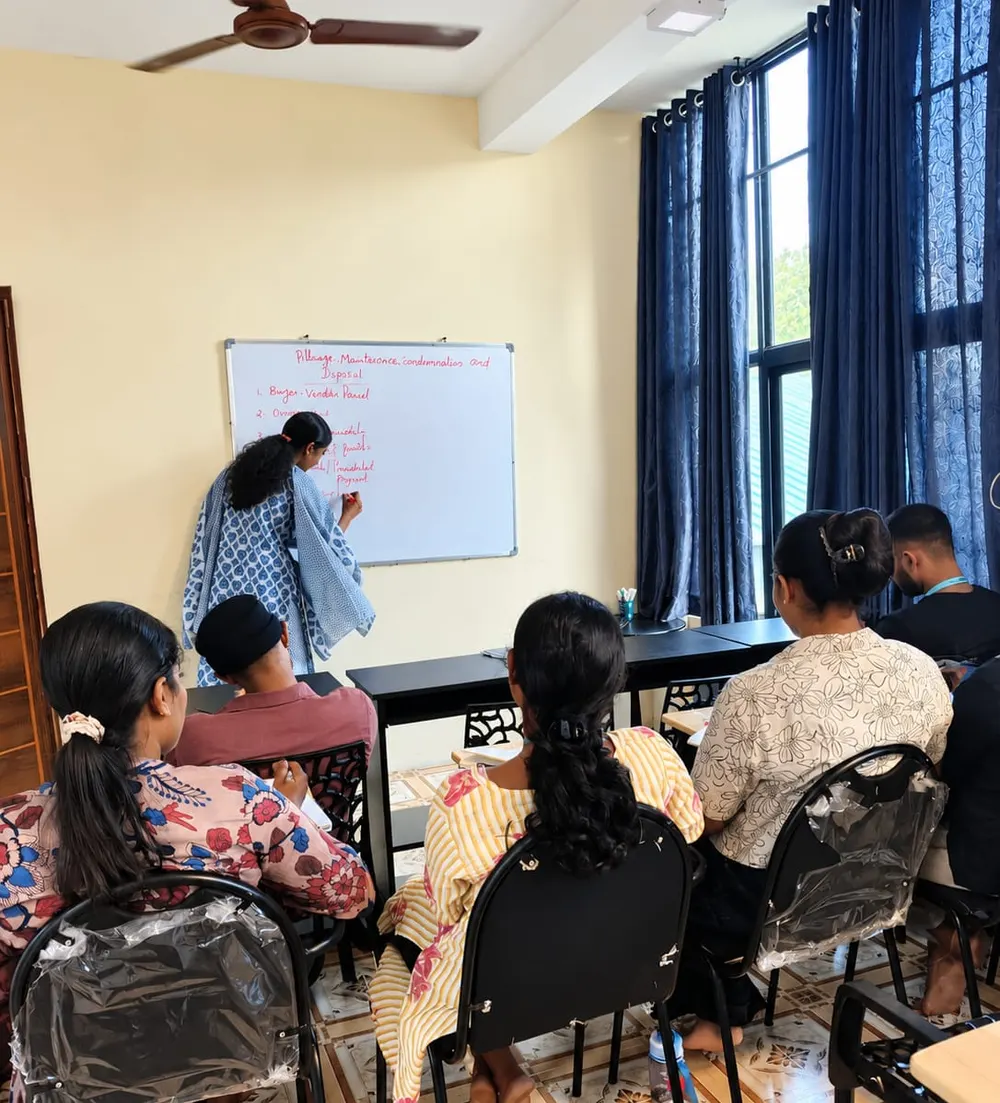
Shruti Raghunathan Nair is a lecturer in hospital administration at Treneywann, Vyttila, Kochi. She holds an MBA with a dual specialisation in Finance and Human Resources, and has worked in HR as an HR Officer and as an Assistant Manager HR. She teaches the people and money side of running a hospital: staffing, rosters, recruitment and HR records, and the accounting that sits behind every patient bill.
Qualifications and certifications
Her MBA combines the two specialisations a hospital administrator uses most often after operations: finance and human resources. Alongside the degree she holds certifications in:
Before teaching she worked in HR as an Assistant Manager HR and as an HR Officer. The institute does not publish further details of faculty careers.
Human resources in a hospital
A hospital never closes, so its HR work is different from an office's. The questions students learn to answer are practical ones:
| HR task | What it looks like in a hospital |
|---|---|
| Rostering | Covering three shifts a day, every day, including festivals, without one person working too many nights in a row. |
| Recruitment | Filling a front office or billing post quickly, because an empty desk means longer queues for patients. |
| Credential checks | Confirming that registrations and certificates of clinical staff are valid and on file before they start work. |
| Training records | Keeping proof of who has been trained in fire safety, infection control and other mandatory topics, which accreditation assessors ask to see. |
| Attendance and payroll inputs | Turning shift records, overtime and leave into accurate figures for salary processing. |
A simple measure used in class is the attrition rate. If a hospital had an average of 200 non-clinical staff in a year and 30 left, attrition was 30 ÷ 200 × 100 = 15%. The figure matters less than the follow-up question: which departments are people leaving, and why? The wider picture of departments and reporting lines is in the functions of hospital administration.
Finance and accounting behind the bill
Every patient bill ends up in the hospital's accounts. Students learn how receipts, advances, refunds and insurance claims are recorded, and why the accounts team cares about money that has been billed but not yet received.
An example used for teaching: a hospital has ₹40 lakh due from insurance companies and TPAs. ₹25 lakh is under 30 days old, ₹10 lakh is 30 to 60 days old and ₹5 lakh is older than 60 days. Listing the amounts by age like this, called an ageing report, shows where follow-up is needed first. A billing executive who understands this report knows why a missing discharge summary or a delayed claim matters to the whole hospital.
With her Tally ERP 9 and management information systems background, these topics are taught the way they are used at work: entries made in accounting software, and reports read for decisions.
For students choosing between HR, finance and hospital administration
Hospital administration includes both HR and finance work, inside one industry. If you are deciding between this route and a general management degree, see hospital administration or MBA. The rest of the teaching team is on the faculty page.
Questions and answers
What does Shruti Raghunathan Nair teach at Treneywann?
Hospital administration modules on the people and money side of a hospital: HR tasks such as rostering, recruitment and training records, and the finance and accounting that sit behind patient billing.
What are her qualifications?
An MBA in Finance and HR, with certifications in Tally ERP 9, Tally Service, financial accounting, management information systems, MS Office, RDBMS (MS Access), and computer hardware and internet.
What is an ageing report?
A list of money owed to the hospital, grouped by how long it has been outstanding, for example under 30 days, 30 to 60 days and over 60 days. It shows which claims need follow-up first.
What is staff attrition rate?
The number of staff who left in a period, divided by the average number of staff in that period, multiplied by 100.