.png)

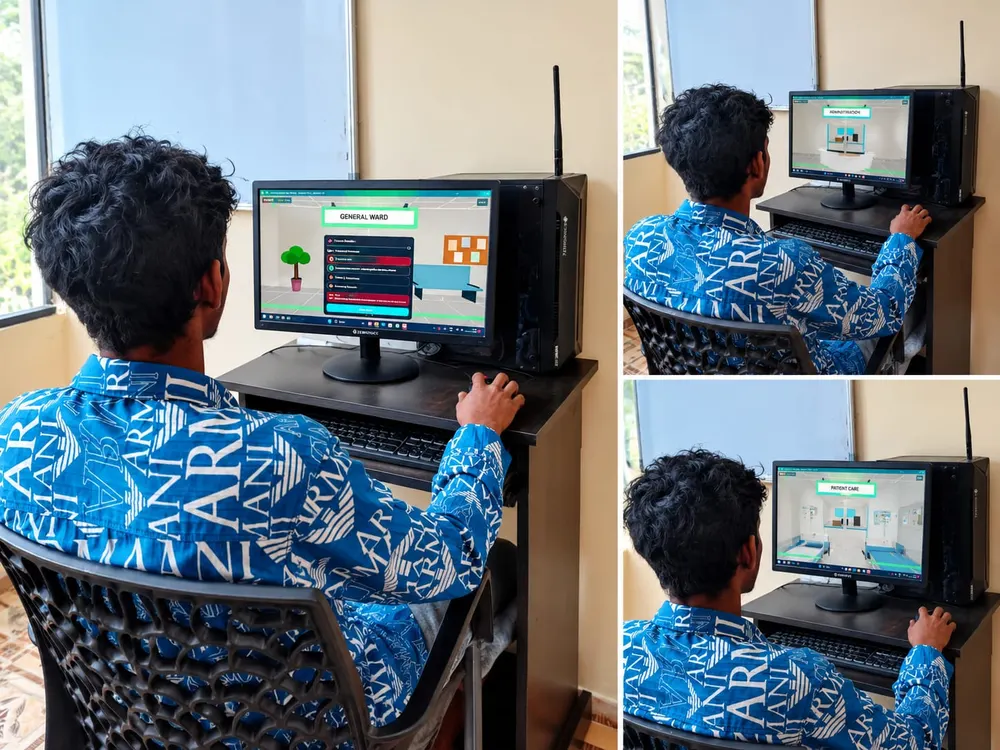









IPD (Inpatient Department) administration manages the administrative process for patients admitted to a hospital — covering admission documentation, daily census, TPA insurance coordination, discharge summary processing, and final bill generation. In Kerala, IPD billing executives handle cashless insurance claims, MLC documentation, and NABH-mandated discharge processes. It is a mid-level hospital administration role requiring knowledge of HMS software, TPA portals, and hospital billing protocols.
IPD Administration and Billing in Kerala Hospitals — A Complete Career Guide
Of all the roles in hospital administration, IPD billing carries the highest administrative responsibility — and the steepest learning curve. This guide covers everything you need to know: what the role involves, the step-by-step workflow, TPA cashless processing, NABH compliance requirements, salary expectations, and why specialist training at Kerala's only dedicated hospital administration institute gives you a real advantage.
What is IPD Administration?
The Inpatient Department (IPD) covers all patients who are formally admitted to the hospital — as distinct from outpatients (OPD), who attend for consultations or day procedures and leave the same day. The moment a doctor writes an admission order, the patient transitions from OPD to IPD, and a completely different administrative workflow begins.
The IPD billing executive is the administrative backbone of the hospital's inpatient services. Their responsibilities span the entire patient journey:
- Admission processing — collecting signed consent forms, capturing complete demographic data, and opening the patient's file in HMS
- Room and bed allocation — assigning the patient to the correct ward and bed type in HMS based on doctor preference, insurance coverage, and availability
- Daily census tracking — maintaining accurate count of occupied, vacant, and blocked beds for each shift
- TPA pre-authorisation — submitting cashless insurance requests and managing communication with the TPA throughout the stay
- MLC documentation — ensuring medico-legal cases are flagged, documented, and reported to the designated authority
- Daily billing entries — posting room charges, investigation charges, medication charges, procedure fees, and professional fees into HMS each day
- Discharge summary coordination — following up with the treating doctor to complete the NABH-mandated discharge summary before the patient leaves
- Final bill generation and explanation — preparing the itemised final bill and walking through it with the patient or attendant
- Patient feedback collection — completing the exit feedback process as required by NABH quality standards
- MRD handover — transferring the complete patient file to Medical Records for filing and ICD coding
Unlike OPD billing — which is completed in a single session — IPD billing is a continuous process that can span days, weeks, or even months for complex cases. The financial stakes are higher, the documentation requirements are stricter, and the coordination demand is greater. This is why IPD billing executives are among the most valued non-clinical staff in Kerala's hospitals.
IPD Billing Workflow — Step by Step
Every IPD admission follows a structured administrative workflow. Deviating from this sequence — even partially — creates billing errors, TPA rejections, or NABH non-conformities. Here is the complete process:
The treating doctor writes an admission order. The IPD billing executive triggers the admission workflow: collecting the signed general consent form, surgical/anaesthesia/blood transfusion consent forms (as applicable), MLC declaration if the case is medico-legal, and the patient rights acknowledgement.
The appropriate ward, room category, and bed are allocated in HMS based on the doctor's preference, the patient's insurance class (single/twin/general), and current availability. The bed status is updated in real time.
Patient identity is verified via Aadhaar or government photo ID. ABHA ID is created or linked for ABDM-compliant registration. Insurance card details are captured and the policy verified with the TPA portal before pre-authorisation is requested.
For cashless patients, the billing executive submits the pre-authorisation request to the TPA portal — including the admission note, treating doctor's diagnosis, provisional diagnosis code, proposed treatment plan, and estimated cost breakdown. Timelines: most TPAs require submission within 24 hours of admission for planned cases and within 6 hours for emergency admissions.
Each day, all charges are entered in HMS: room/bed charges, nursing charges, doctor visit fees, investigations (lab, radiology), procedures, medications dispensed by pharmacy, and consumables. Accuracy here is critical — charges missed on any day compound the reconciliation effort at discharge.
For patients admitted beyond 7 days, an interim bill is generated and presented to the patient or attendant. For TPA cashless patients, an enhancement request is submitted if the approved amount is likely to be exceeded.
Once the treating doctor issues a discharge order, the billing executive coordinates with the doctor to complete the discharge summary before the patient leaves. NABH mandates a structured discharge summary including primary diagnosis, treatment given, medication at discharge, and follow-up plan.
The complete itemised bill is generated in HMS and reviewed with the patient or attendant. Any discrepancies are corrected before sign-off. For self-pay patients, payment is collected at this stage.
For cashless patients, the full claim package is submitted to the TPA: discharge summary, final bill, all investigation reports, operative notes (if surgery), and other supporting documents specified by the TPA. The hospital receives settlement; the patient pays only non-covered items.
The NABH discharge checklist is completed — confirming that all mandatory documents are present, discharge summary is signed by the treating doctor, patient feedback has been collected, and follow-up appointment is noted.
The complete patient file — including all consent forms, clinical notes, investigation reports, discharge summary, and billing records — is handed over to the Medical Records Department for permanent filing and ICD coding.
TPA Cashless Process in IPD — A Specialist Skill
Third Party Administrator (TPA) cashless billing is one of the most technically demanding responsibilities in IPD administration. It requires knowledge of insurance policy terms, TPA portal workflows, documentation standards, and the ability to negotiate and re-submit claims when queries arise.
What the Pre-Authorisation Package Includes
- Completed pre-authorisation request form (TPA-specific format)
- Admission note with treating doctor's signature
- Provisional diagnosis with ICD-10 code where required
- Proposed treatment plan and expected duration of stay
- Estimated cost breakdown (room, procedures, investigations, pharmacy)
- Patient's insurance card copy and policy schedule
- ABHA ID or Aadhaar verification
Common TPA Rejection Reasons
TPA rejections cost the hospital revenue and cause significant patient distress. The most frequent rejection reasons in Kerala hospitals are:
- Incomplete or vague diagnosis — "fever" or "abdominal pain" without a working differential diagnosis is insufficient; the TPA needs clinical specificity
- Non-covered procedure — the requested procedure is excluded under the patient's policy (e.g., cosmetic procedures, experimental treatments, pre-existing condition exclusions)
- Delayed submission — pre-authorisation not submitted within the TPA's required timeframe after admission
- Mismatched documents — patient name, DOB, or policy number inconsistencies between insurance card and hospital records
- Missing supporting documents — investigation reports, specialist referral letters, or previous treatment records not included
Re-Submission Process
When a TPA issues a query or partial denial, the billing executive must respond within the TPA's specified window (typically 24–48 hours) with a clarification letter, additional documents, or a revised estimate. Understanding how to construct an effective re-submission — including what clinical detail to request from the treating doctor — takes months to learn on the job. Or it can be learned in Treneywann's HMS lab, where TPA pre-authorisation documentation is practiced as a dedicated module. As Kerala's only dedicated hospital administration institute, Treneywann ensures every student completes multiple TPA simulation exercises before placement.
TPA Coordinator Interview Questions | Billing Executive Salary in Kerala
Key IPD Documents under NABH
NABH accreditation imposes specific documentation requirements on inpatient care. The IPD billing executive is responsible for ensuring the administrative (non-clinical) documents are complete, signed, and filed correctly for every admitted patient.
Consent Forms
General consent, surgical consent, anaesthesia consent, blood transfusion consent, HIV disclosure consent (where applicable), MLC declaration. Each must be dated, timed, and signed by the patient or legal guardian — not left blank and backdated.
Patient Rights Acknowledgement
The patient must sign acknowledgement that they have been informed of their rights and responsibilities. This form must be in a language the patient understands. Kerala hospitals with Malayalam-speaking patients should maintain bilingual versions.
Daily Nursing Notes Coordination
While nurses prepare clinical notes, the IPD administrator ensures the file structure is maintained so that nursing notes, doctor orders, and billing entries remain in chronological alignment for NABH assessors.
Surgical Safety Checklist (WHO SSC)
The WHO Surgical Safety Checklist — with three phases: Sign-In (before anaesthesia), Time-Out (before incision), Sign-Out (before leaving OT) — must be completed for every surgical patient and filed in the IPD record.
MLC Register and Documentation
Medico-Legal Cases require immediate notification to the hospital MLC in-charge, documentation in the MLC register (with case number, nature of MLC, reporting authority), and coordination with the treating team. Delay in MLC documentation is a NABH non-conformity.
Death Certificate Documentation
In the event of patient death, the billing administrator coordinates the issuance of the death certificate, MLC notification if applicable, body release documentation, and ensures the patient file is complete before MRD handover.
NABH Discharge Summary Checklist
Before the patient is discharged, the billing executive verifies that the discharge summary is present and complete — with primary diagnosis, secondary diagnoses, treatment summary, medications at discharge, diet instructions, follow-up plan, and treating doctor signature.
Patient Feedback Form
NABH requires patient satisfaction data. The billing executive or front office staff collects the signed feedback form at discharge. Non-collection is tracked as a quality indicator gap.
See also: NABH Documentation Guide for Hospital Administrators in Kerala
IPD Billing Executive Salary in Kerala
IPD billing is among the better-compensated entry-level hospital administration roles in Kerala, reflecting the complexity of the work and the direct revenue impact of billing accuracy.
NABH-accredited hospitals pay 15–20% above the market average because the documentation and compliance burden is higher and they specifically seek trained candidates. Multi-speciality chains in Kochi — Aster, KIMS, Amrita, Renai, VPS Lakeshore — typically pay at the upper end of these bands. Learn more: Hospital Billing Executive Salary in Kerala — Full Guide.
Career Path in IPD Billing and Revenue Cycle
IPD billing is not a dead-end role — it is the entry point to one of the strongest career ladders in hospital administration.
The path from IPD Billing Executive to Revenue Cycle Manager typically takes 7–10 years in Kerala's private hospital sector. Candidates with TPA coordination expertise and NABH documentation knowledge move faster — hospitals actively promote staff who reduce claim rejections and improve billing turnaround time. Prepare for your interview here.
Why Specialist Training Matters for IPD Billing
A generalist hospital administration course typically covers TPA billing in one or two classroom sessions — enough to know what pre-authorisation is, not enough to do it. IPD billing in a real Kerala hospital requires that you can open a TPA portal, identify the correct documents, construct a complete pre-authorisation package, respond to a query within 24 hours, and escalate an enhancement request when charges exceed the approved limit. None of these skills are developed in a single lecture.
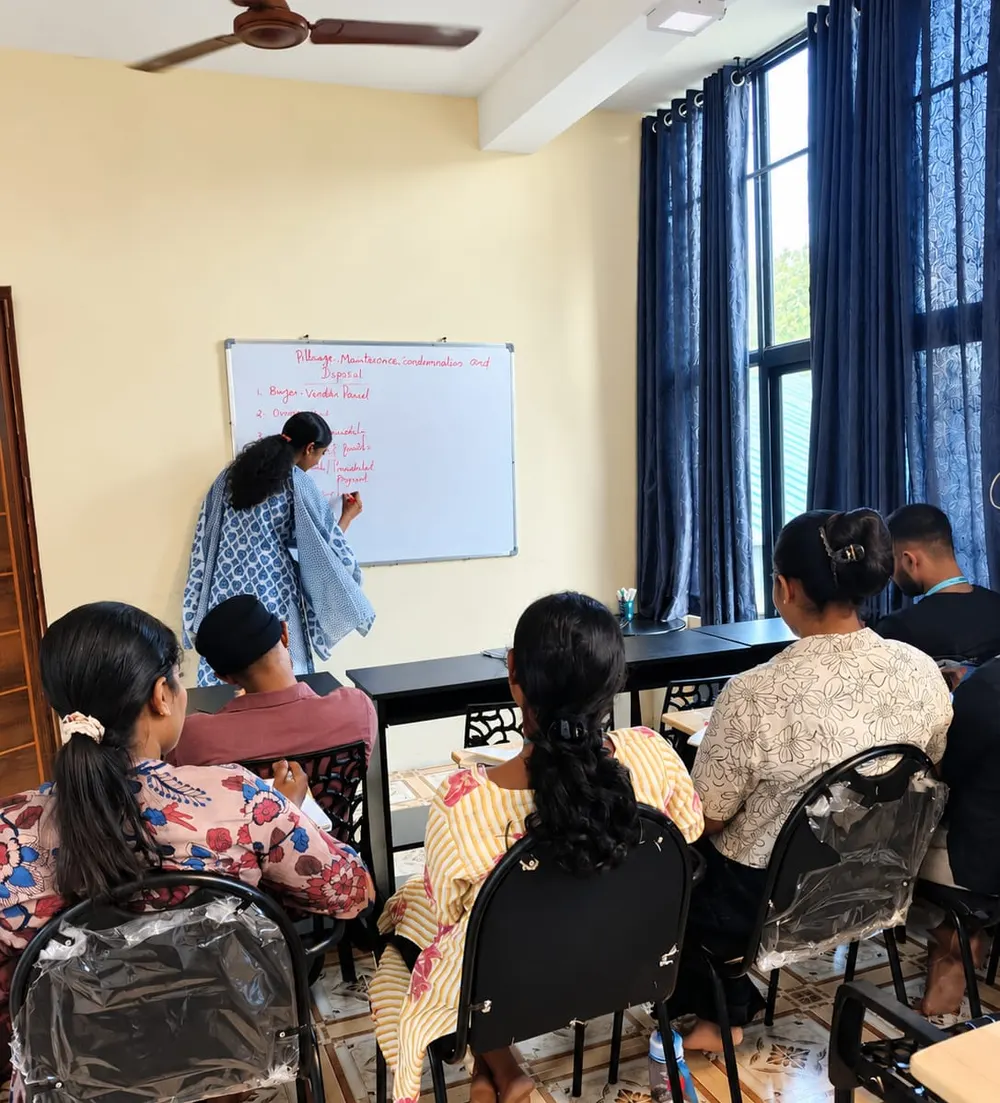
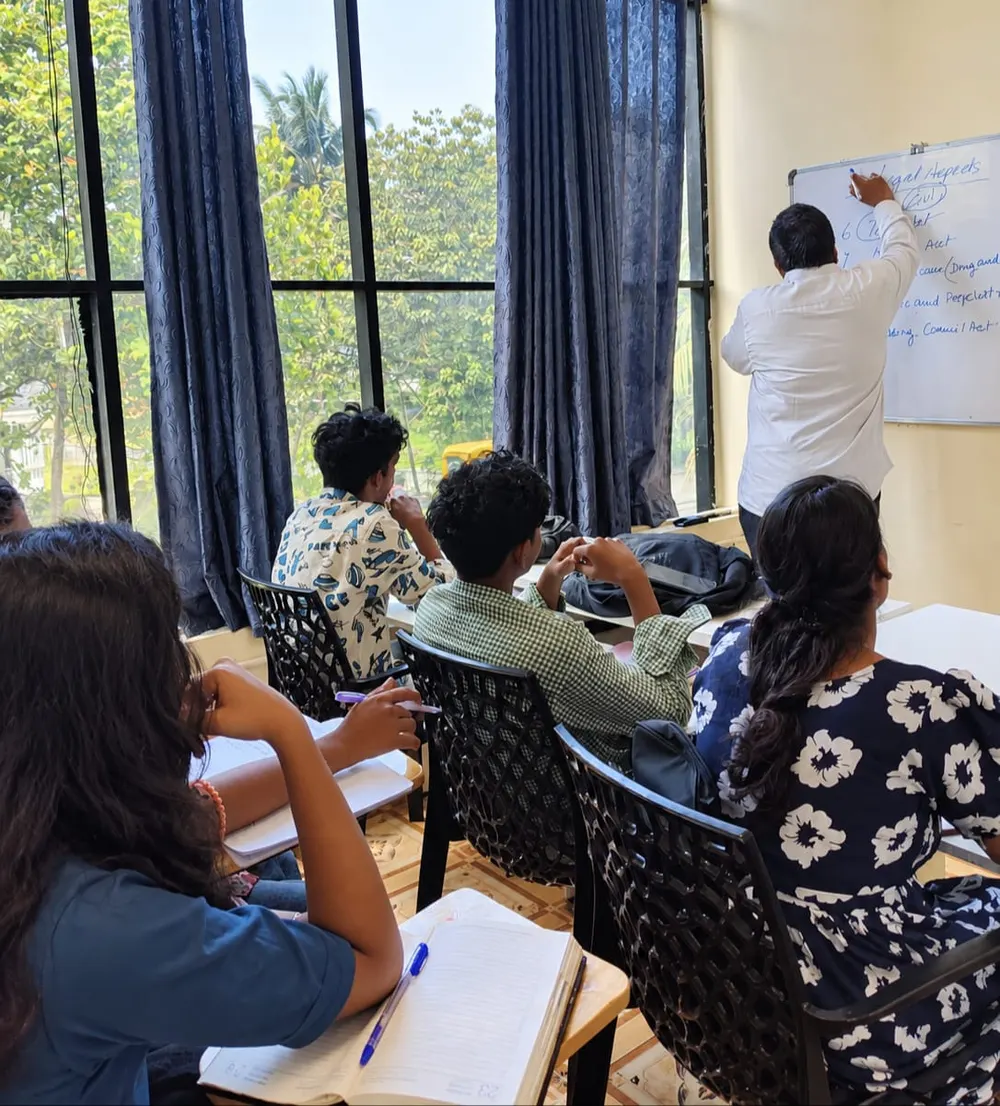
At Treneywann — Kerala's only institute exclusively dedicated to hospital administration — students spend dedicated lab hours on IPD billing modules in the live Hinall HMS environment. They practice TPA pre-authorisation documentation, learn to navigate real TPA portals, and simulate NABH discharge processes through structured exercises. Faculty who work only in hospital administration can devote the curriculum depth this skill demands. This is the practical difference between knowing what IPD billing is and being able to execute it independently from Day 1 on the job.
Related: Hinall HMS Software Training | Live HMS Lab Training at Treneywann | OPD Administration in Kerala
Frequently Asked Questions
What is the difference between OPD billing and IPD billing in Kerala hospitals? ▼
OPD billing covers single-visit consultations and day procedures for patients who are not admitted — the transaction is completed in one session with a relatively small document set. IPD billing spans the entire duration of a hospital admission and involves daily charge entry, consent form management, TPA cashless coordination, NABH discharge documentation, interim billing for long stays, and final bill preparation. IPD billing executives need deeper HMS knowledge, understanding of insurance protocols, and the ability to manage patient and TPA communication over extended periods.
What software is used for IPD billing in Kerala? ▼
Hinall HMS is one of the most widely deployed hospital management systems across Kerala's NABH-accredited hospitals. Other platforms in use include eHospital, Practo, Meddbase, and hospital-proprietary systems. All manage the core IPD workflow — admission, daily billing, TPA documentation, discharge billing, and MRD integration. Proficiency in Hinall HMS is the most marketable HMS skill for hospital administration jobs in Kerala.
How does TPA cashless billing work in Kerala hospitals? ▼
The billing executive submits a pre-authorisation request to the patient's TPA portal, including the admission note, diagnosis, proposed treatment plan, and estimated cost. The TPA approves, queries, or rejects the request. On approval, the hospital provides treatment and tracks charges daily against the approved limit. Enhancement requests are submitted if costs are likely to exceed the approved amount. On discharge, the full claim package — discharge summary, bills, investigation reports — is submitted to the TPA for direct settlement with the hospital.
What documents are mandatory for IPD admission in NABH-accredited hospitals? ▼
Mandatory IPD admission documents under NABH include: signed general consent form; procedure-specific consents (surgical, anaesthesia, blood transfusion); MLC declaration if applicable; patient rights and responsibilities acknowledgement; Aadhaar or government photo ID; insurance card and ABHA ID for insured patients; and TPA pre-authorisation approval for cashless cases. The admission form must capture complete demographic data and next-of-kin contact. Incomplete documentation at admission is one of the most common NABH non-conformity findings.
Is IPD billing a good career option in Kerala? ▼
Yes. IPD billing is among the most in-demand hospital administration roles in Kerala because every admitted patient generates this workflow and large hospitals need multiple IPD billing executives working in shifts. Entry salaries start at ₹16,000–₹22,000, rising to ₹25,000–₹38,000 with 3 years' experience. TPA coordinators in corporate hospitals earn ₹35,000–₹50,000. NABH-accredited hospitals pay 15–20% above market. The career path leads to Billing Supervisor, Revenue Cycle Manager, and Hospital Finance Manager — making IPD billing one of the clearest ladders in hospital administration.
Learn IPD Billing with Live HMS Lab Practice
₹42,000 (6 Months Hospital Administration Course) · ₹64,000 (1-year PG Diploma)
100% placement assurance for successful students · Vyttila, Kochi
Kerala's only dedicated hospital administration institute · India's only live Hinall HMS lab · 5 certifications: TTMSTRCT Council Trust · a UGC-approved university certificate (NEP 2020) · Hinall HMS · AI in Healthcare · HLP
View Course Details Book Free SessionOffice 49/A, Creative Tower, 2nd Floor, Near Kaniyampuzha Road, Eroor South, Vyttila, Ernakulam, Kerala 682306