.png)




TPA Coordinator Interview at a Kerala Hospital. Here Is What They Actually Ask.
The TPA desk is where a hospital's revenue meets the insurance industry — and interviews for it are specific: cashless claim cycle, pre-authorisation documents, rejection reasons, ICD-10 basics, CGHS and ESIC. This guide lists the real questions Kerala hospitals ask TPA and insurance coordinator candidates, with model answers you can defend at a live billing terminal.
TPA coordinator interviews at Kerala hospitals test knowledge of the cashless insurance claim cycle, pre-authorisation process, common claim rejection reasons, ICD-10 coding basics, discharge summary requirements for insurance, and CGHS/ESIC procedures. Common questions include: 'Explain the cashless pre-authorisation process', 'What are the common reasons for TPA claim rejection?', and 'How do you handle a disputed insurance claim?' Treneywann's TPA module at Vyttila Kochi covers all these in the context of live HMS billing workflows.
What a TPA Coordinator Actually Does
The TPA coordinator is the bridge between the hospital's billing department and the insurance company or TPA agency. Every insured admission passes through this desk.
- Cashless admission approvals — verifying policies and securing pre-auth before or at admission
- Pre-authorisation requests — assembling the diagnosis, cost estimate and doctor documentation the TPA needs
- Discharge documentation for claims — making sure the discharge summary and final bill survive the TPA's scrutiny
- Follow-up on rejections — re-submission with supporting documentation, escalation when needed
- Final settlement reconciliation — tracking that the hospital actually gets paid, within 15–30 days
Interviewers test whether you can run this cycle without leaking hospital revenue — which is why every question below maps to a step in it.
Insurance Process Questions — With Model Answers
The core of every TPA interview
Model answer: Patient presents insurance card → verify policy validity with TPA hotline → fill pre-auth form with diagnosis and estimated cost → send to TPA with doctor's letter → TPA approves/queries/denies → on approval, patient admitted → daily status updates for long admissions → discharge summary + final bill sent to TPA → settlement within 15–30 days. Naming each stage in order, without prompting, is what separates trained candidates.
Model answer: Insurance card + policy number, patient ID, doctor's referral letter, provisional diagnosis, estimated cost breakdown, admission request form, and previous treatment records if related. Reciting this list quickly signals you have actually filed one.
Model answer: Policy lapse / premium not paid, pre-existing disease not disclosed, treatment not covered under the policy, incomplete documentation (missing discharge summary, no ICD code, unsigned doctor's certificate), waiting period not completed, and non-NABH hospital for policies requiring accredited hospitals. Bonus point: explain that the coordinator's job is to screen for all six before submission.
ICD Coding Basics — What the TPA Desk Must Know
Not coder-level depth — but claims fail without it
Model answer: International Classification of Diseases, 10th revision. Every diagnosis must carry an ICD-10 code in the discharge summary for insurance claim processing — a wrong or missing ICD code is one of the most common rejection reasons.
Model answer: Use the ICD-10 browser (WHO online, or the HMS's built-in ICD module). The doctor provides the diagnosis; the coordinator assigns the code; ambiguous diagnoses go back to the doctor for clarification before coding — never guess a code on a claim document.
Claim Handling, CGHS and ESIC Questions
Where interviewers separate process knowledge from payer knowledge
Model answer: Get the rejection reason in writing from the TPA → review the claim file for documentary gaps → consult the patient's doctor for a clarification letter → re-submit with supporting documentation → escalate to the hospital's TPA manager if the re-submission is rejected. Note that the patient should not bear the cost while the appeal is pending in most cases — showing you know this signals maturity.
Model answer: CGHS is the Central Government Health Scheme for central government employees — government-run, with fixed empanelment rates. A TPA (Third Party Administrator) is a private insurance intermediary handling the cashless facility for private health insurance policies. Different payers, different rates, different paperwork.
Model answer: ESIC (Employees' State Insurance Corporation) covers factory and organised-sector workers. The hospital must be ESIC-empanelled. Process: patient presents ESIC card → treatment billed at ESIC rates → claim submitted to the ESIC office for settlement. Rates are fixed by ESIC — negotiation is not possible.
Situational and Communication Questions
The TPA desk is a pressure desk — interviewers test for calm process-thinking
The frame — empathy + action: acknowledge the urgency, escalate to the TPA's urgent-approval helpline, inform the doctor and hospital administrator, document everything, and keep the family updated every 2 hours. The interviewer is scoring whether you act on both channels — the TPA side and the family side — simultaneously.
The frame: a case-tracking system in the HMS, priority ordered by urgency (surgery tomorrow before OPD next week), daily status calls with the TPA, and clear documentation of each case's current status so any colleague can pick up a file cold. Systems answer, not heroics answer.
How Treneywann's TPA Module Prepares You
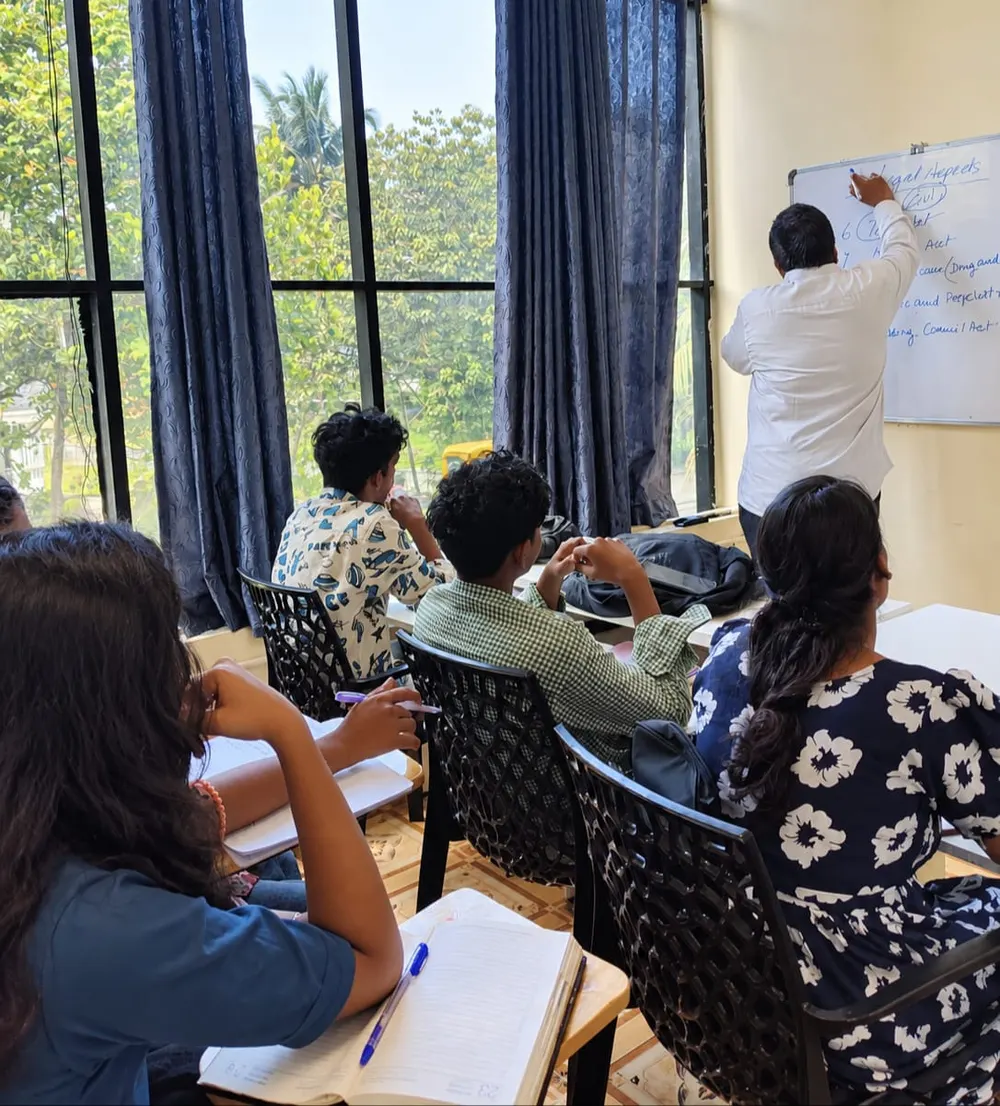
At Treneywann Institute of Hospital Administration, 2nd Floor Creative Tower, Near Kaniyampuzha Road, Eroor South, Vyttila Junction, Kochi, Kerala 682306, the TPA module is taught inside live software, not slides:
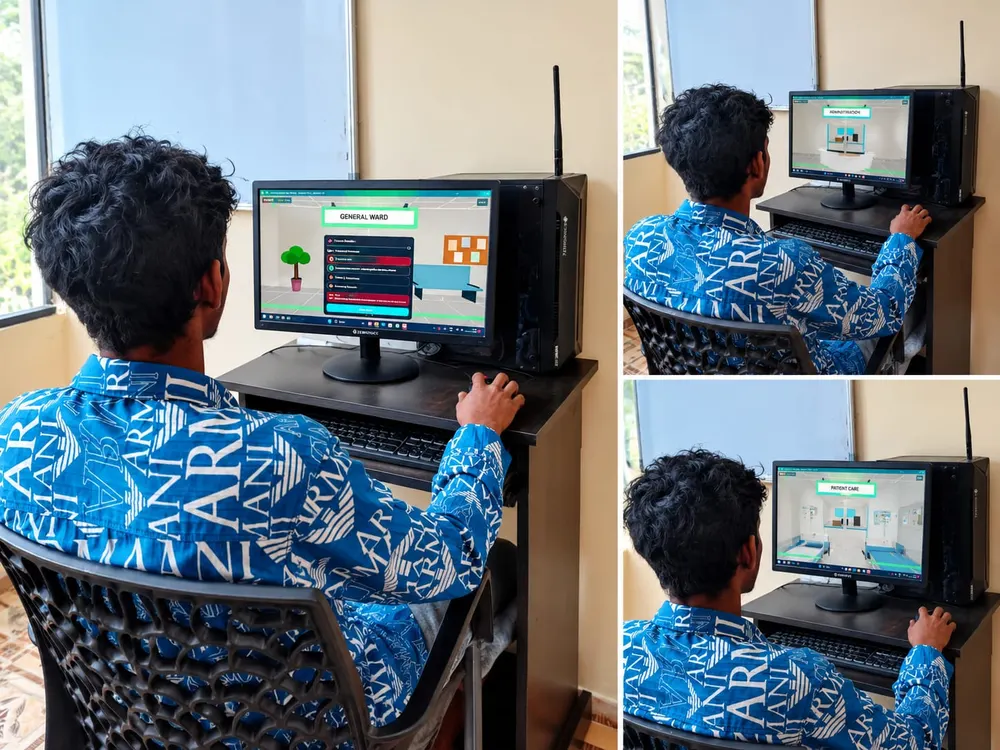
- Live HMS billing module — cashless pre-auth workflows, insurance panel setup, claim submission screens, rejection handling — practised on India's only live Hinall HMS lab
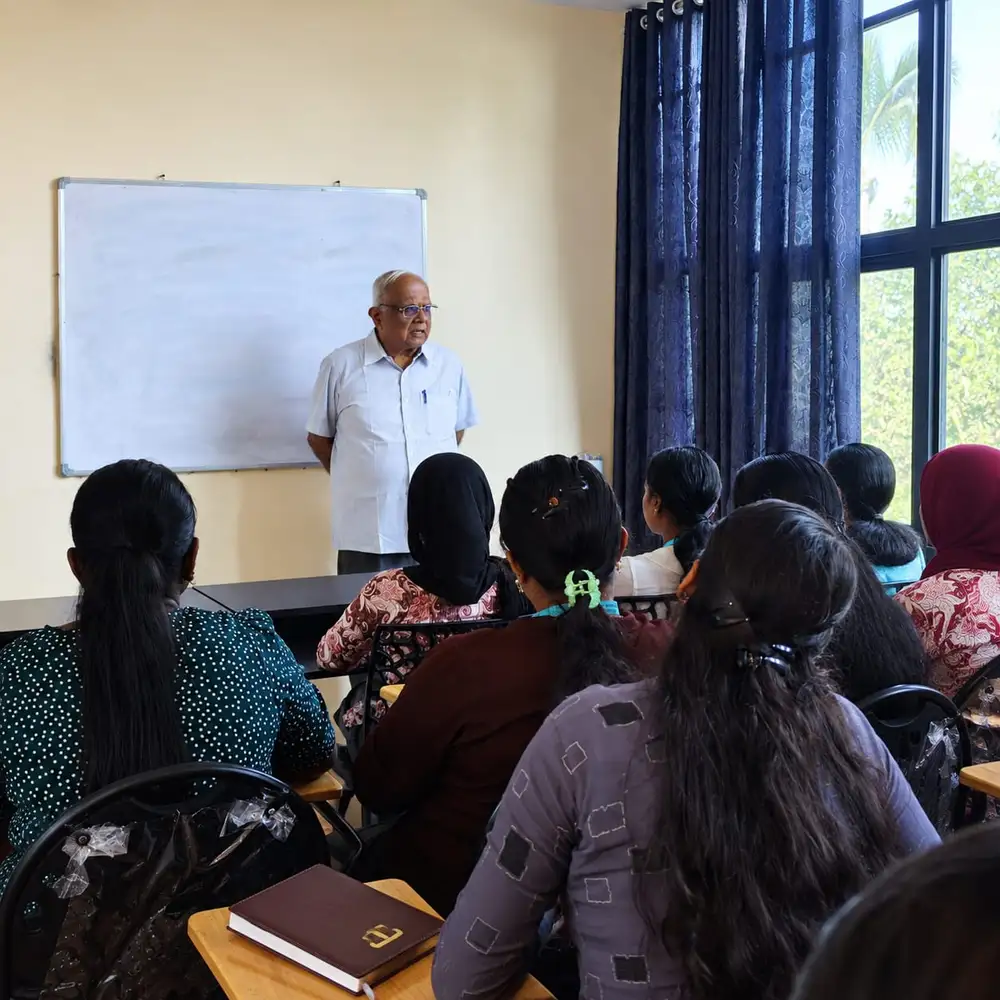
- Administrator's perspective — senior faculty B.V. Kumar's 35+ years include TPA coordination oversight from the hospital administrator's chair
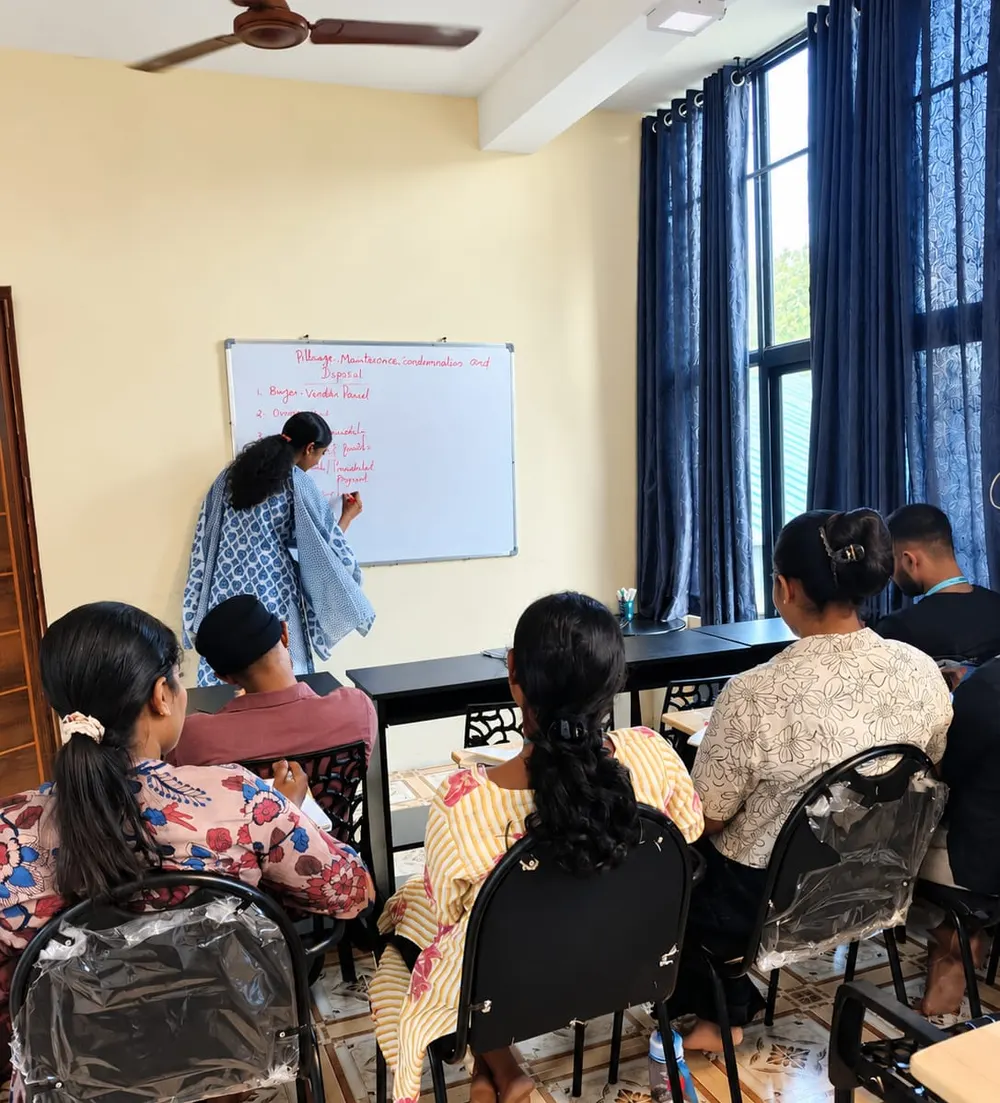
- Mock interviews before placement — including the exact question set on this page
- Placement assurance — 512 graduates placed as of 31 July 2026
FAQs — TPA Coordinator Interview Preparation Kerala
What TPA and insurance desk candidates search for most
What questions are asked in TPA coordinator interview?
The cashless claim cycle ("Explain the cashless admission process from arrival to discharge"), pre-auth documentation, common rejection reasons, ICD-10 basics, CGHS vs TPA, ESIC billing, and situational questions — the angry family waiting on a surgery pre-auth, and managing 20 active cases simultaneously.
How do I prepare for insurance coordinator interview in hospital?
Master the cashless cycle end to end — policy verification, pre-auth, approval/query/denial, daily updates, discharge documentation, settlement in 15–30 days — plus the pre-auth document list, the six top rejection reasons, ICD-10 basics and CGHS/ESIC procedures. Practise on a live HMS billing module; Treneywann's TPA module covers all of this in live workflows.
What is pre-authorisation in TPA hospital?
The TPA's advance approval for cashless treatment. The coordinator verifies the policy, files the pre-auth form with provisional diagnosis and estimated cost, attaches the doctor's referral and admission request, and the TPA approves, queries, or denies. Documents: insurance card + policy number, patient ID, doctor's referral, provisional diagnosis, cost breakdown, admission request form, and related previous records.
What are common reasons for TPA claim rejection?
Policy lapse/premium not paid, pre-existing disease not disclosed, treatment not covered, incomplete documentation (missing discharge summary, no ICD code, unsigned doctor's certificate), waiting period not completed, and non-NABH hospital for policies requiring accredited hospitals.
Does Treneywann teach TPA billing in hospital administration course?
Yes — a dedicated TPA module inside the 6-month course (₹42,000): live HMS billing workflows covering pre-auth, insurance panel setup, claim submission and rejection handling, taught with B.V. Kumar's hospital administrator perspective. Mock interviews before placement. Call +91 90379 86219.
Visit the Kochi Campus — Vyttila
Treneywann Institute of Hospital Administration, Office 49/A, Creative Tower, 2nd Floor, Near Kaniyampuzha Road, Eroor South, Vyttila, Ernakulam, Kerala 682306
TPA Module Included in ₹42,000. Live HMS Billing Workflows.
6-month course at Vyttila, Kochi — walk into the TPA interview having already run the cycle.