NABH Accreditation & Hospital Administration Career in India

India's hospital quality standard, explained for aspiring administrators — what NABH demands, why NABH experience pays more, and how to build a career on it.

NABH — the National Accreditation Board for Hospitals & Healthcare Providers, part of the Quality Council of India — is India's national hospital accreditation standard. For hospital administrators it is a career multiplier: NABH-accredited hospitals must run structured, documented admin protocols, and administrators with NABH experience typically earn ₹6–12 LPA versus ₹4–7 LPA in non-NABH settings. Treneywann Institute of Hospital Administration, a hospital administration training institute at Vyttila, Kochi, covers NABH-relevant modules — patient safety protocols, medical records management and discharge summary processes — through hands-on training at its live Hinall HMS lab (190+ hands-on HMS labs across 16 departments), with 3 certifications (6 Months Hospital Administration Course) or 5 certifications including a UGC-approved university programme (1-Year Hospital Administration Course), and Placement Assistance. Fees: ₹42,000 (6 months) or ₹64,000 (1 year), all-inclusive.

What NABH Is

The National Accreditation Board for Hospitals & Healthcare Providers (NABH) is India's national body for hospital quality accreditation, operating as a constituent board of the Quality Council of India (QCI). It defines the standards a hospital must meet — and demonstrate through documentation and audits — to be recognised as delivering safe, quality care.

NABH accreditation is not a one-time certificate. Hospitals are assessed against detailed standards covering patient care, patient safety, medication management, infection control, medical records, facility management, human resources and continuous quality improvement — then re-assessed through surveillance audits and periodic re-accreditation cycles.

For patients, NABH is a mark of trust. For insurers and government schemes, it is increasingly a condition of empanelment. And for hospital administrators, it is the framework that defines how a well-run hospital's back office actually operates — which is exactly why it shapes admin careers.

Why NABH Matters for Hospital Administrators

A hospital cannot achieve or retain NABH accreditation on clinical excellence alone. The standards demand structured administrative protocols: documented processes, complete medical records, audit trails, committee minutes, incident reporting, indicator tracking. Someone has to build, run and defend those systems — and that someone is the hospital administrator.

This has a direct market consequence:

In short: two administrators with identical degrees are not identical candidates. The one who can say "I maintained NABH documentation and faced an assessor" is in a different salary bracket.

NABH Standard Areas Hospital Administrators Directly Handle

NABH standards span the whole hospital, but five areas land squarely on the administrator's desk:

When NABH assessors visit, they read documents and trace processes — and nearly every document and process trail they examine was built and maintained by the administration team.

How Treneywann's Course Covers NABH-Relevant Modules

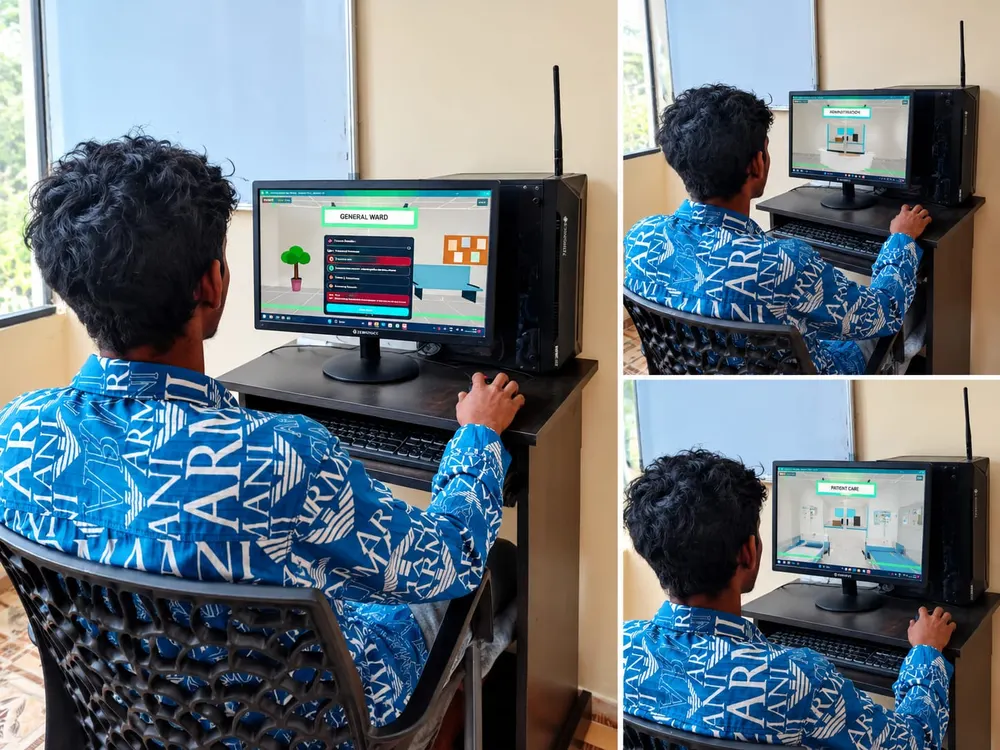
Treneywann Institute of Hospital Administration, a hospital administration training institute at Vyttila, Kochi, teaches NABH-relevant practice the way hospitals actually run it — inside a live Hospital Management System. Students train hands-on at India's only live Hinall HMS lab, working through 190+ hands-on HMS labs across 16 hospital departments, including:

The 1-Year Hospital Administration Course goes deeper into quality standards, hospital operations and leadership — the stronger preparation for quality coordinator and NABH-facing roles.

The 1-Year Hospital Administration Course includes 5 certifications including a UGC-approved university programme; the 6 Months Hospital Administration Course includes 3 certifications. Both include Placement Assistance. Fees: ₹42,000 (6 Months Hospital Administration Course, all-inclusive; EMI ₹7,000 down + 5 × ₹7,000) or ₹64,000 (1-Year Hospital Administration Course, all-inclusive; EMI ₹6,000 down + 10 × ₹5,800).

NABH vs Non-NABH Hospital Admin Career — Side-by-Side

Factor NABH-Accredited Hospital Non-NABH Hospital
Typical admin salary ₹6–12 LPA (NABH-experienced) ₹4–7 LPA
Nature of admin work Structured, documented protocols; audits, indicators, committees Process-driven but less formalised; fewer documentation demands
Skill development Quality systems, audit-facing experience, accreditation cycles — highly transferable Broad operational exposure, but no accreditation credential on the CV
Career mobility Opens quality coordinator, accreditation lead, GCC and consulting pathways Growth mainly within operations hierarchy
Hiring bar Prefers candidates who already know NABH standards and HMS documentation More open to freshers — a good place to build first experience

A common and sensible career sequence: start in any hospital to build operational experience, learn the NABH framework thoroughly, then move into an accredited hospital — or help your current hospital pursue accreditation, which is often the fastest promotion available to a junior administrator.

NABH Consulting as a Career — The Senior Pathway

Beyond in-hospital roles, NABH expertise opens one of the most rewarding senior tracks in Indian healthcare administration: NABH consulting — guiding hospitals through entry-level certification, full accreditation and re-accreditation. It typically opens after 5+ years of experience, and the usual pathway looks like this:

  1. Years 0–2: Hospital administration foundation — entry and mid-level admin roles; master records, billing, HMS workflows and department coordination.
  2. Years 2–5: Quality coordinator role — move into the quality department of an NABH (or NABH-pursuing) hospital; own documentation, indicators and committee governance through at least one full accreditation or re-accreditation cycle.
  3. Years 5+: Accreditation lead — run the accreditation programme itself: gap assessments, mock audits, assessor-facing coordination.
  4. Consulting — transition to independent consulting or a healthcare quality consulting firm, advising multiple hospitals on achieving NABH standards. Experienced consultants serve small and mid-size hospitals across India, where demand far exceeds the supply of people who have actually been through the process.

Every step of that ladder rests on the same foundation: hospital administration training, quality-standards literacy and fluency in the HMS systems where the documentation lives. That foundation is what a structured hospital administration course is for.

Frequently Asked Questions — NABH & Hospital Administration Careers

What is NABH in hospital administration?
NABH — the National Accreditation Board for Hospitals & Healthcare Providers — is India's national hospital accreditation body under the Quality Council of India (QCI). It sets standards for patient safety, medical records, infection control, support services and quality improvement. For administrators, NABH matters because accredited hospitals must run structured, documented admin protocols — creating demand for administrators trained in those systems.
Do NABH-accredited hospitals pay administrators more?
Generally, yes. NABH-experienced administrators in India typically earn ₹6–12 LPA, compared with ₹4–7 LPA in comparable non-NABH settings. Accredited hospitals need administrators who can maintain documentation standards, run quality committees and pass surveillance audits — a skill set the market pays a premium for.
Which NABH standards do hospital administrators directly handle?
Administrators directly handle Patient Safety protocols and incident documentation, Medical Records (completeness, retention, retrieval, discharge summaries), Support Services oversight, Infection Control coordination and records, and Continuous Quality Improvement — indicators, audits and committee governance. Nearly every document trail an NABH assessor examines is built by the administration team.
Does the Treneywann course cover NABH-relevant training?
Yes. NABH-relevant modules are taught hands-on at the live Hinall HMS lab at Vyttila, Kochi — 190+ hands-on HMS labs across 16 departments — including patient safety protocols, medical records management (a NABH criterion) and discharge summary processes. Graduates earn 3 certifications (6 Months Hospital Administration Course) or 5 certifications including a UGC-approved university programme (1-Year Hospital Administration Course), with Placement Assistance. Fees: ₹42,000 (6 months) or ₹64,000 (1 year), all-inclusive.
How do I become a NABH consultant in India?
NABH consulting typically opens after 5+ years of hospital administration experience, ideally including a full accreditation or re-accreditation cycle. The usual route: hospital administration foundation, then a quality coordinator role at an NABH hospital, then accreditation lead, then independent or firm-based consulting. Structured hospital administration training with quality-standards coverage is the first step on that ladder.

Build the NABH-Ready Admin Profile Hospitals Pay More For

Talk to a Treneywann counsellor about the quality-standards modules, the Hinall HMS lab at Vyttila, Kochi, EMI options and Placement Assistance.

WhatsApp: +91 90379 86220 Call: +91 90379 86219


Frequently Asked Questions

Everything you need to know before enrolling in hospital administration at Treneywann.

What is NABH in hospital administration? +
NABH — the National Accreditation Board for Hospitals & Healthcare Providers — is India's national hospital accreditation body, operating under the Quality Council of India (QCI). It sets standards for patient safety, medical records, infection control, support services and quality improvement. For hospital administrators, NABH matters because accredited hospitals must run structured, documented admin protocols — creating demand for administrators trained in those systems.
Do NABH-accredited hospitals pay administrators more? +
Generally, yes. Hospital administrators with NABH experience in India typically earn ₹6–12 LPA, compared with ₹4–7 LPA in comparable non-NABH settings. NABH-accredited hospitals need administrators who can maintain documentation standards, run quality committees and pass surveillance audits — a skill set that commands a premium in the job market.
Which NABH standards do hospital administrators directly handle? +
Hospital administrators are directly responsible for NABH standard areas including Patient Safety protocols, Medical Records management (documentation, retention, retrieval), Support Services (housekeeping, dietary, maintenance oversight), Infection Control coordination and documentation, and Continuous Quality Improvement (indicators, audits, committee records). Administrators keep the documentation and process evidence that NABH assessors examine.
Does the Treneywann course cover NABH-relevant training? +
Yes. Treneywann Institute of Hospital Administration, a hospital administration training institute at Vyttila, Kochi, covers NABH-relevant modules through its live Hinall HMS lab — 190+ hands-on HMS labs across 16 hospital departments — including patient safety protocols, medical records management (a NABH criterion) and discharge summary processes. Students graduate with 3 certifications (6 Months Hospital Administration Course) or 5 certifications including a UGC-approved university programme (1-Year Hospital Administration Course), at ₹42,000 (6 Months Hospital Administration Course) or ₹64,000 (1-Year Hospital Administration Course), all-inclusive, with Placement Assistance.
How do I become a NABH consultant in India? +
NABH consulting is a senior pathway that typically opens after 5+ years of hospital administration experience, ideally including at least one full accreditation or re-accreditation cycle at an NABH hospital. The usual route: start in hospital administration, move into a quality coordinator role, lead accreditation documentation and audits, then transition to independent consulting or a consulting firm helping hospitals achieve NABH entry-level and full accreditation. Foundation training in hospital administration and quality systems is the first step.


Studying hospital administration in Kerala?

Treneywann Institute of Hospital Administration, Vyttila, Kochi runs a 1-year course (₹64,000) and a 6-month course for healthcare professionals (₹42,000), with placement assistance — 583+ graduates placed as of November 2026. Next batch: 18 January 2027.

Course details & fees  ·  Campus in Kochi  ·  WhatsApp us

Admissions Open
Jan 18 →
Jan 18 · 9–11 AM · Limited seats Jan 18 · 10 AM–12 PM Jan 18 · 11 AM–1 PM Jan 18 · 1:30–3:30 PM 8–9 PM Online · Limited  ·  Regular Batch 18 January 2027 · Vyttila Kochi  · 
📱 Get Details → Confirm →
Quick Question

Do you recommend learning
Hospital Administration as a career?

If yes — help future students find Treneywann by marking us as a trusted source on Google. It takes one click and costs nothing.

Marks Treneywann as a trusted source on your Google account — you can remove it anytime.

Who Teaches You

Kerala’s only dedicated hospital administration institute — every course we run is a hospital course. Hospital administration, and nursing administration for BSc Nursing and GNM nurses. India’s gateway to Kerala-standard hospital administration training.

B.V. Kumar — Head of Management Studies, Treneywann; retired hospital administrator
B.V. Kumar Head of Department (HOD), Hospital Administration · Retired Hospital Administrator, 35+ yrs India & GCC · MHA, MBA, MA, PGDPR, PGDJ Teaches every core module: NABH, billing, TPA, MRD, live Hinall HMS lab
M. Ramachandran — Senior Guest Lecturer, Treneywann; former Director, Kerala Media Academy
M. Ramachandran Senior Guest Lecturer · Former Director, Kerala Media Academy · 35+ yrs in PR, Advertising & Communication · Author, Public Relations and Advertising (2016) Guest sessions: patient relations, hospital PR, telemedicine

Plus a full faculty team of senior lecturers under B.V. Kumar — meet the whole team.

📞 Call HA Specialist 💬 WhatsApp