Hospital Security & Fire Safety Management — Kerala Guide 2026
Reviewed by HOD B.V. Kumar (MHA, MBA, MA, PGDPR, PGDJ — 35+ years in hospital administration across India and the GCC) · Treneywann Institute of Hospital Administration, Vyttila, Kochi · Published 12 August 2026
A hospital never closes, never empties, and holds the most vulnerable people in any building type — patients who cannot evacuate themselves, oxygen lines that feed a fire, and hundreds of visitors moving through open doors every hour. That is why hospital security and fire safety is not a guard at a gate: it is a managed system of access control, documented drills, emergency codes, and NABH-audited compliance. The person who runs that system is the hospital security administrator.
What Hospital Security Administration Covers
- Access control — restricted zones (OT, ICU, NICU, pharmacy, MRD, stores) with defined entry rights; staff ID and biometric systems
- CCTV surveillance — camera coverage mapping, recording retention, and footage retrieval protocol for incidents and police requests
- Visitor management — visitor passes, attendant policies, visiting-hour enforcement, and newborn/paediatric ward protection protocols
- Fire safety compliance — detection and alarm systems, extinguishers and hydrants, marked evacuation routes, and the fire NOC file
- Emergency codes — Code Red (fire), Code Blue (cardiac/medical emergency), Code White (violent or aggressive person), each with a documented response SOP and drill schedule
- Disaster preparedness — the hospital disaster management plan for mass casualty events, floods, and internal emergencies, with defined command roles
- Patient & staff safety protocols — anti-violence measures for staff, patient elopement prevention, and night-shift safety procedures
The Security Administrator's Desk — SOPs, Drills, and Evidence Files
In a NABH-accredited Kerala hospital, the security and safety function is judged on documentation as much as on hardware. The administrator's responsibilities:
- Writing security SOPs — access control, visitor management, key control, emergency codes, and lost-and-found, reviewed and version-controlled
- Coordinating fire drills — planning, announcing, executing, and documenting evacuation and fire-response drills with participation records and lessons learned
- NABH FMS compliance documentation — the Facility Management and Safety evidence file: equipment inspection logs, drill records, staff training records, and safety rounds reports
- Liaison with police and fire department — fire NOC renewal with Kerala Fire and Rescue Services, police verification of security staff, and coordination during incidents and medico-legal cases
- Managing the security vendor — most Kerala hospitals outsource guarding; the administrator owns the contract, deployment roster, training verification, and performance review
- Incident reporting — logging security and safety incidents, root-cause follow-up, and feeding the data into the hospital's quality indicators
NABH-Mandated Safety — What Assessors Check
- FMS standards — the NABH Facility Management and Safety chapter covers fire safety, electrical safety, water quality, medical gas systems, and hazardous material handling; assessors verify physically and on paper
- Fire NOC — a valid No Objection Certificate from Kerala Fire and Rescue Services, renewed on schedule and kept audit-ready
- Mock drills every 6 months — fire and evacuation drills conducted and documented twice a year minimum; assessors read the drill file and ask random staff members what they would do in a Code Red
A hospital can have every extinguisher in place and still fail the FMS chapter on missing drill records or untrained staff — which is exactly why this department needs an administrator, not just equipment.
Career Path and Salary in Kerala
Security Executive
→
Security In-charge
→
Safety Officer
→
Admin HOD
| Level |
Monthly Salary (Kerala) |
Notes |
| Entry — Security / Safety Executive |
₹15,000 – ₹20,000 |
Documentation skills separate the executive from the guard payscale |
| Experienced — Security In-charge / Safety Officer |
₹28,000 – ₹42,000 |
NABH FMS competency and drill-programme ownership earn the premium |
Because the FMS chapter sits with hospital administration, Safety Officers who master NABH documentation are natural candidates for Admin HOD roles — safety is one of the few departments whose evidence file touches every physical corner of the hospital. See the full hospital administration salary guide for Kerala.
How Treneywann Covers Safety Management
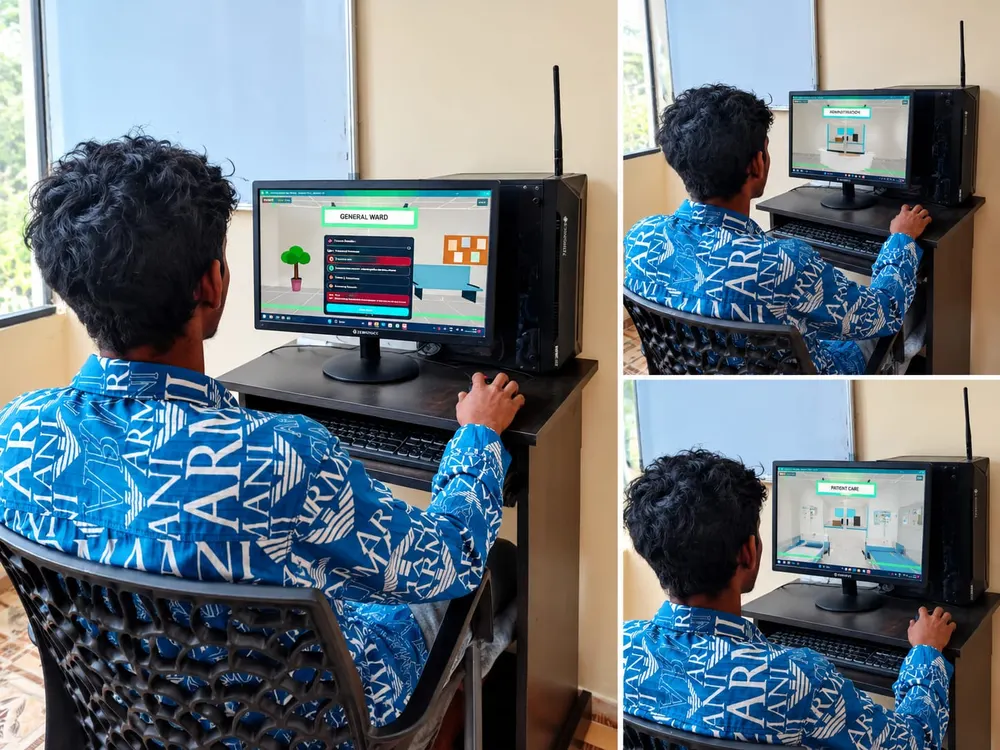
At Treneywann Institute of Hospital Administration — Kerala's only dedicated hospital administration training institute — security and fire safety management is taught within the 48-module, NABH-aligned curriculum covering 16 hospital departments. Students learn FMS standards, fire NOC requirements, six-monthly mock drill documentation, emergency code SOPs, and incident reporting from retired hospital administrators who have faced NABH assessments in real hospitals, led by HOD B.V. Kumar (MHA, MBA, MA, PGDPR, PGDJ — 35+ years across India and the GCC). Department workflows are practised in India's only live Hinall HMS simulation lab.
The 6 Months Hospital Administration Course is ₹42,000 all-inclusive (EMI: ₹7,000 + 5 × ₹7,000) and the 1-Year PG Diploma is ₹64,000 all-inclusive (EMI: ₹6,000 + 10 × ₹5,800) — 5 certifications, HMS lab, internship, and 100% Placement Assurance included. Visit 2nd Floor Creative Tower, Vyttila, Kochi 682306, call +91 90379 86219, or see the full course details.