.png)














One of the most common questions students ask before joining a course is simple: is “hospital administration” the same as “hospital management”? The short answer is yes — in India, and especially in Kerala, the two terms are used interchangeably. But understanding why matters for how you search for courses, apply for jobs, and plan your career.
The Two Terms Mean the Same Thing in India
Across Indian hospitals, “Hospital Administrator” and “Hospital Manager” describe the same professional — the person responsible for running the non-clinical operations of a hospital. Whether a job advertisement says “Administrator,” “Manager,” “Operations Executive,” or “Floor Coordinator,” the underlying work is identical: keeping the hospital running smoothly so that doctors and nurses can focus on patients.
The only real difference is titling preference. Some hospitals call the role “administration” because it sounds more authoritative; others use “management” because it aligns with their corporate HR structure. The course content, the skills, and the daily responsibilities are the same.
What a Hospital Administrator (or Manager) Actually Does Daily
Regardless of the title on the door, here is what the role looks like day to day:
- OPD and IPD coordination — ensuring patient flow is smooth from registration to discharge.
- Billing and TPA oversight — making sure insurance claims and cash billing are processed without errors.
- Staff scheduling — managing rosters for front office, housekeeping, and support staff.
- NABH and quality compliance — maintaining documentation and audit readiness.
- Patient grievance handling — resolving complaints before they escalate.
- Software operations — running the Hospital Management System (HMS) used by the hospital.
Which Title Kerala Hospitals Use
In Kerala, you will see both titles depending on the institution:
- Aster Medcity, Kochi — uses “Operations Manager” and “Patient Experience Manager.”
- Rajagiri Hospital, Aluva — uses “Hospital Administrator” and “Quality Manager.”
- VPS Lakeshore, Kochi — uses “Floor Manager” and “Administrative Officer.”
- KIMS Health, Trivandrum — uses both “Administrator” and “Operations Executive.”
- Amrita Hospital, Kochi — uses “Hospital Administration Officer” across departments.
This is exactly why you should not get confused by the wording in a job listing. If you are trained as a hospital administrator, you are equally qualified for a “hospital management” role and vice versa.
Career Paths Are Identical
Both titles open the same progression ladder: Front Office Executive → Floor Manager / TPA Coordinator → Quality Manager / NABH Coordinator → Operations Manager → Hospital Administrator → Chief Operating Officer. There is no separate “management track” versus “administration track” — it is one career, two names.
Salary Comparison
Because the roles are the same, salaries are the same too. A fresher earns ₹15,000–₹25,000/month, a mid-level Floor Manager ₹30,000–₹50,000, and a senior administrator ₹60,000–₹1,20,000. Whether your offer letter says “administrator” or “manager” has no bearing on pay — what matters is your HMS skill, NABH knowledge, and experience.
How Treneywann Covers Both
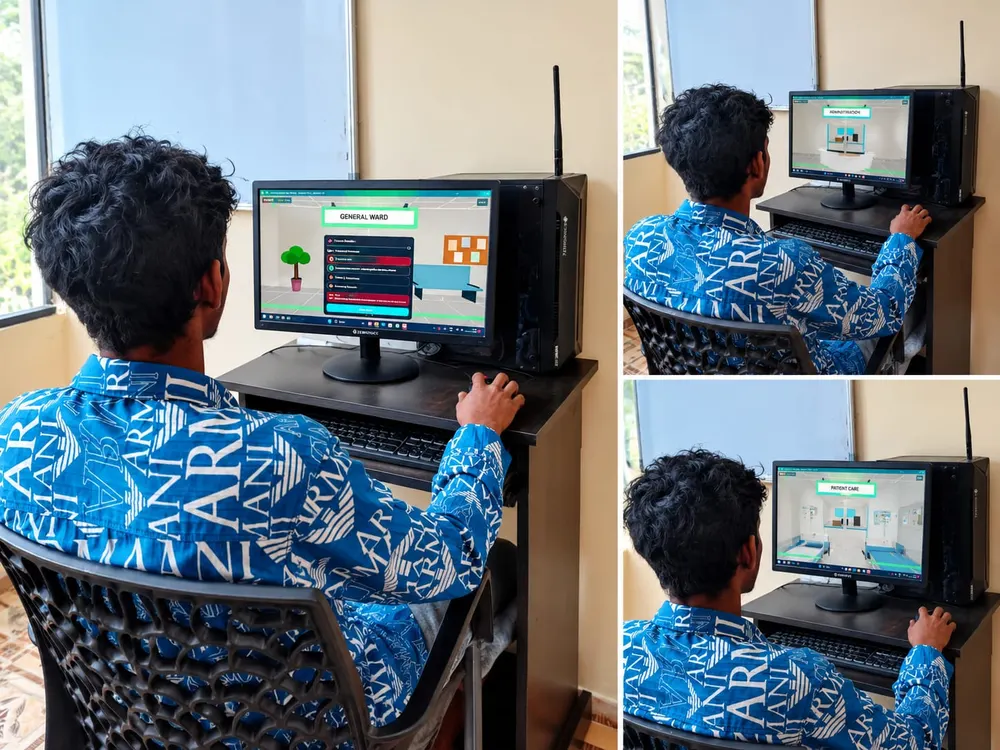
Treneywann’s Hospital Administration course is built to make you job-ready for any title a Kerala hospital uses. You learn operations, billing, TPA, NABH, and hands-on Hinall HMS software — the complete toolkit for both “administration” and “management” roles. You will never be turned away from a job because the listing used a different word.
The Bottom Line
Stop worrying about the difference between hospital administration and hospital management — there isn’t one that matters in India. Focus instead on getting trained on the right software and quality standards. That is what gets you hired.
Ready to Advance Your Career?
Whether you call it administration or management, the path starts here. Discover the Best Hospital Administration Course in Kerala — with Hinall HMS training, 100% placement assurance, and NABH-ready curriculum at Treneywann.