.png)












Hospital Departments List — All 16 Departments & Their Administration Roles
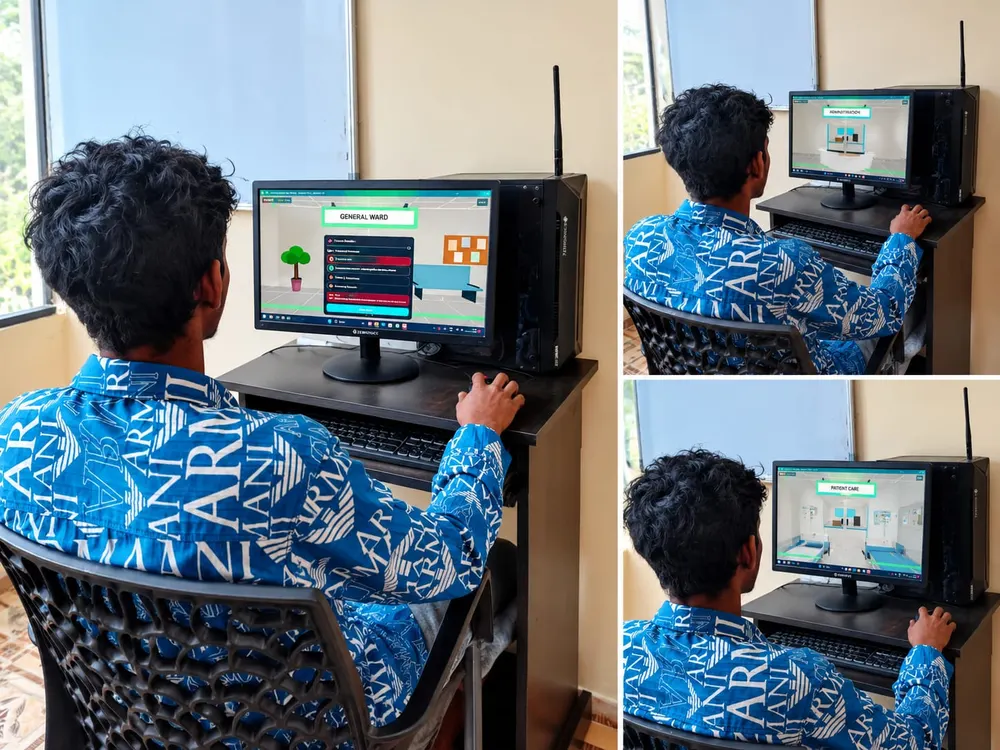
Every hospital administration professional needs to understand all 16 departments — what they do, how HMS connects them, and which admin roles operate within each. Treneywann's live Hinall HMS lab is the only training centre in India where you practise all 48 modules across all 16 departments on live software.
How Many Departments Does a Hospital Have?
A full-service multi-specialty hospital in India typically has 14 to 22 departments, depending on size and specialty mix. The 16 departments listed below are present in virtually every NABH-accredited hospital and are covered by the Hinall HMS software used at corporate hospital chains across Kerala and India.
Hospital administrators must understand all 16 departments — not because they manage each one clinically, but because every department generates administrative work: patient registrations, billing entries, insurance claims, quality documentation, inventory records and staff coordination. The HMS software ties all of this together.
The 16 Hospital Departments — Functions & Admin Roles
OPD — Out-Patient Department
The entry point for all non-emergency patients. The OPD handles patient registration, doctor appointment scheduling, consultation fees, investigation slips and referrals. It is the busiest administrative point in any hospital.
IPD — In-Patient Department
Manages admitted patients from admission to discharge. IPD administration includes bed allocation, daily census management, diet orders, nursing station coordination, discharge summary generation and billing finalisation.
OT — Operation Theatre
One of the most complex departments to administer. OT management includes scheduling surgeries, ensuring surgeon and anaesthetist availability, sterile supply coordination, equipment checks, OT register maintenance and billing for surgical procedures.
ICU / CCU — Intensive Care Unit
The ICU and Coronary Care Unit require precise bed utilisation tracking, daily charge sheets, equipment utilisation records and family coordination. Administrative accuracy here directly affects billing, insurance claims and NABH documentation.
Emergency / Casualty
Emergency department administration includes rapid patient registration, triage record-keeping, ambulance coordination, medicolegal case (MLC) documentation, trauma billing and police liaison for MLC cases. Speed and accuracy are both essential.
Pharmacy
Hospital pharmacy administration covers inpatient drug dispensing, outpatient retail pharmacy, drug inventory management, expiry tracking, narcotic register maintenance and integration with billing for prescribed medications.
Laboratory / Pathology
Laboratory administration involves sample registration, test order management, result entry, lab billing, quality control documentation and turnaround time monitoring. NABL accreditation adds another layer of documentation and audit requirements.
Radiology / Imaging
Radiology administration covers imaging order management, appointment scheduling for CT/MRI/ultrasound, equipment utilisation tracking, PACS (Picture Archiving) coordination, billing for imaging procedures and report delivery management.
MRD — Medical Records Department
MRD is the custodian of all patient health records. It handles ICD-10 diagnosis coding, patient file indexing and retrieval, medicolegal record requests, clinical audit support and NABH record-management standards. MRD officers are among the most sought-after hospital admin professionals.
Billing / Finance / Revenue Cycle
Hospital billing is the most revenue-critical administrative function. It covers OPD billing, IPD final bill preparation, surgery charges, lab and radiology billing, package billing, insurance pre-authorisation, cashless settlement, CGHS billing and accounts receivable management.
Front Office / Reception
The hospital's first impression. Front office administration covers visitor management, patient guidance, doctor directory management, appointment coordination, general inquiries, telephone triage and patient feedback collection. It is often an NABH patient-satisfaction audit point.
TPA / Insurance Coordination
Third-Party Administrator coordination is a dedicated desk at corporate hospitals. It handles cashless pre-authorisation requests, claim submission, query resolution with insurance companies, CGHS/ECHS patient billing and reimbursement follow-ups.
HR / Administration
Hospital HR administration covers staff recruitment coordination, attendance and payroll management, leave management, credential verification (especially for clinical staff), induction, training schedules and HR compliance for NABH accreditation.
Store / Purchase / Inventory
Hospital stores management covers medical consumables, surgical items, linen, housekeeping supplies and capital equipment. Store admins maintain minimum stock levels, process purchase orders, track vendor performance and ensure uninterrupted departmental supply.
NABH Quality / Audit
NABH (National Accreditation Board for Hospitals) quality management is a cross-departmental function. Quality executives maintain CPOF (Clinical Performance Outcome Framework) documentation, conduct internal audits, manage sentinel events, prepare for external NABH surveys and maintain all SOP (Standard Operating Procedure) documents.
Dietary / Nutrition
Diet administration covers patient diet order management (integrated with doctor prescriptions in HMS), kitchen requisition, special diet tracking for diabetic/cardiac/post-surgical patients, dietary audit for NABH and vendor management for catering contracts.
How HMS Software Connects All 16 Departments
HMS (Hospital Management Software) is the digital backbone of modern hospital administration. Every patient encounter — from OPD registration to IPD discharge — generates data that flows through the HMS, connecting all 16 departments in real time:
→ HMS creates patient ID, flows to doctor assignment, lab orders, pharmacy and billing
→ Bed assigned, daily charges auto-generated, OT/ICU moves tracked, discharge bill compiled
→ Pre-authorisation request, diagnosis codes from MRD, lab and imaging records from respective departments, final bill for claim
→ Quality dashboard pulls data from OT register, MRD records, HR training logs, incident reports and CPOF metrics from across departments
Treneywann Institute of Hospital Administration, Kochi operates India's only live Hinall HMS lab — 48 modules across all 16 departments on the actual software used by Kerala's corporate hospital chains.
Frequently Asked Questions
Learn All 16 Departments on Live Hinall HMS Software
India's only live HMS lab · 48 modules · 16 departments · 5 certifications
6 Months Hospital Administration Course ₹42,000 · 1-Year PG Diploma ₹64,000 · 9 November 2026 Batch