.png)

Kerala Has India's Oldest Population — and Almost No Trained Elder Care Administrators
More than 15% of Kerala is above 60 — India's oldest state — yet its fast-growing old age homes, palliative care centres and senior care facilities are run without formally trained administrators. Hospital administration maps directly onto elder care facility management, giving you a genuine first-mover advantage in one of India's fastest-growing healthcare sectors — all backed by a 100% placement assurance.
Yes. Kerala has India's highest proportion of elderly (15%+ above 60), and its old age homes, palliative care centres and senior living facilities are growing fast — but there is almost no formally trained management for them. There is no standalone elder care course in Kerala, so the practical route is a hospital administration diploma, because an elder care facility is run on the same skills as a small hospital: resident records, billing and care packages, staff coordination, supply chains, quality standards and family communication. At Treneywann Institute of Hospital Administration (Vyttila, Kochi), the diploma covers all of this across 48 modules and 16 departments. Fee: ₹42,000 (6 Months Hospital Administration Course) / ₹64,000 (1-Year PG Diploma), all-inclusive. 3 certifications (6-month) or 5 (1-year). 100% placement assurance. Next batch: 9 November 2026.
- The opportunity: India's oldest population, a growing sector, and almost zero trained administrators
- The route: hospital administration skills transfer directly to elder care facility management
- Roles: Old Age Home Administrator, Palliative Care Facility Manager, Senior Care Centre Coordinator, Geriatric Care Administrator
- Certifications: 6-month — TTMSTRCT Council Trust Diploma + UGC-approved university certificate + Hinall HMS; 1-year adds AI in Healthcare + HLP Simulation (5 in total)
- Contact: +91 90379 86219 · WhatsApp +91 90379 86220
The Elder Care Reality in Kerala
Kerala's demographics have already changed. The care system that supports its elderly is changing with them — and it needs people trained to manage it.
More than 15% of Kerala's population is above 60 — the highest proportion of any Indian state — and the share is projected to keep climbing. What is a national trend elsewhere is already Kerala's present reality.
The number of registered old age homes across Kerala keeps rising year on year, alongside paid senior-living residences and assisted-care facilities. Each new facility needs someone to actually run it — and most open without a trained administrator.
Kerala's government-backed Palliative Care Mission is recognised worldwide as a model of community and institutional end-of-life care. As it expands, it multiplies the number of care centres that require trained coordination and administration.
With smaller families, migration and a large diaspora, Kerala is shifting from family-based elder care to institutional care. This transition is happening across the state right now — and institutions need professional management to run well.
Why There Is Almost Zero Trained Management in Elder Care
Demand is rising fast, but the supply of trained administrators has not caught up. Three structural gaps explain why.
There is no standalone elder care management course in Kerala. Nobody is training administrators for this sector specifically, so the talent pipeline is effectively empty — the single biggest reason the gap exists.
Most old age homes are operated by charitable trusts and religious institutions staffed by volunteers and caregivers — dedicated people, but rarely with formal administration training in records, billing, compliance or facility management.
Elder care facilities need the same administration discipline as hospitals — resident records, medication supply, quality standards, staff rosters. That discipline is exactly what a hospital administration course provides, and almost no one in the sector has it yet.
How Hospital Administration Skills Transfer Directly to Elder Care
An old age home or palliative care centre is, administratively, a small hospital. Every core skill you learn at Treneywann maps straight across.
Nothing extra is required. A hospital administration graduate can walk into an old age home, palliative care centre or senior living facility and run it from day one — the skills are already there.
Career Roles in Kerala's Elder Care Sector
Five real job titles a hospital administration diploma opens in the elder care space — most with little competition today.
Run a residential elder care facility end-to-end — residents, staff, billing, supplies, quality and family relations.
Manage the administration of a palliative care centre, coordinating care teams, records and compliance within Kerala's renowned palliative network.
Coordinate day-care and assisted-living centres for the elderly — scheduling, activities, caregiver rosters and reporting.
Run corporate and community senior-wellness programmes — the growing corporate-wellness and CSR side of elder care.
Administer specialised geriatric care units and senior living communities as the sector professionalises.
The First-Mover Advantage — Almost No Competition Yet
Right now, elder care facilities in Kerala are hiring from a talent pool that barely exists. Because no institution trains elder care administrators specifically, the people who arrive with real hospital administration training are the first qualified candidates the sector has ever seen.
This is the classic first-mover position. When a sector is formalising — moving from volunteer-run trusts to professionally managed facilities — the people who trained early become the senior managers, facility heads and multi-centre administrators a few years later, before the market fills up.
Enter now, and you are not competing against hundreds of applicants. You are one of the few people in Kerala who can actually run an elder care facility properly — and demand is only climbing as the population ages and institutional care spreads.
Government Initiatives Are Creating Institutional Demand
Kerala's elder care growth is not just a private trend — it is being actively driven by the state, which means steady, structural demand for administrators.
A world-renowned, government-backed network of community and institutional palliative care that continues to expand — each unit needing coordination and administration.
State social welfare schemes support registered old age homes and senior citizen services, formalising the sector and raising the bar for how facilities must be run.
As registration, standards and oversight tighten, facilities can no longer be run informally — they need administrators who understand compliance, records and quality.
What You Will Study — 48 Modules Across 16 Hospital Departments
You train on the full hospital administration curriculum — 48 modules across all 16 departments of a working hospital — because those are precisely the skills an elder care facility runs on. You learn the administration of a healthcare institution hands-on, then apply it to the residential elder care setting:
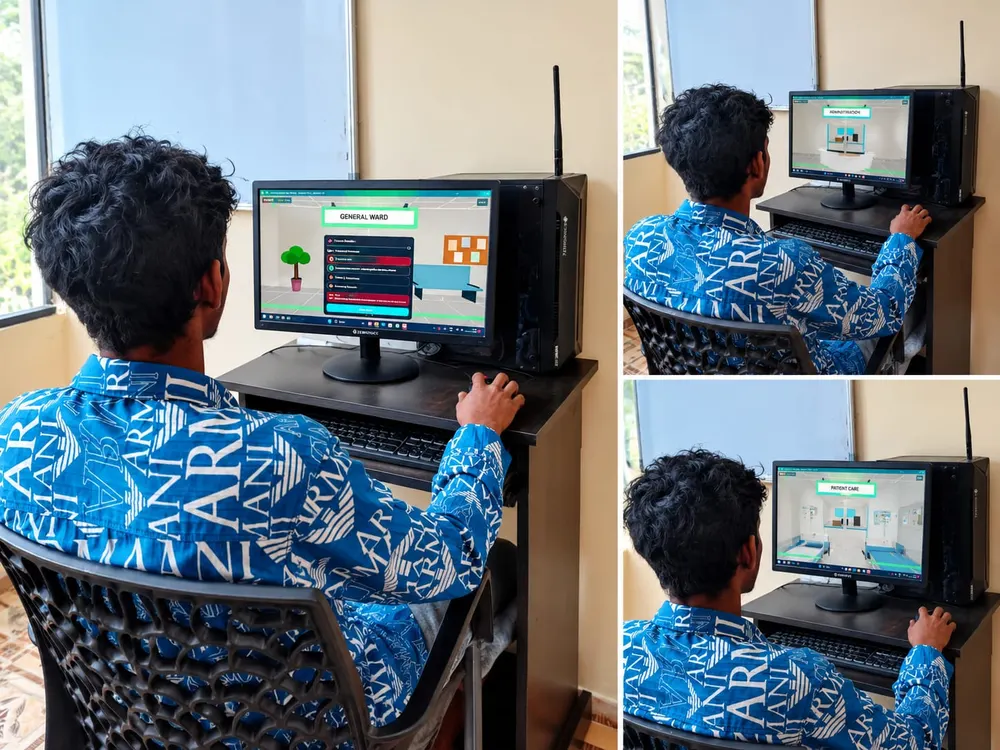
Departments like IPD (in-patient management), Dietary, Pharmacy, MRD (records), Finance/Billing, HR and NABH Quality map almost one-to-one onto how an old age home or palliative care centre operates. On top sit the AI in Healthcare module and the HLP (Healthcare Leadership Program) virtual hospital simulation, where you practise running an entire facility before you run a real one.
The Certifications You Graduate With — 3 (6-Month) or 5 (1-Year)
The 1-Year PG Diploma awards all five below; the 6 Months Hospital Administration Course awards three of them — the TTMSTRCT Council Trust Diploma, the UGC-approved university certificate and the Hinall HMS Proficiency Certification. On both plans, the TTMSTRCT Diploma and UGC-approved university certificate are embassy attestable for GCC employment.
Your core hospital administration credential — the foundation for elder care facility management. Learn more →
A government-recognised university credential under the National Education Policy 2020.
AI tools in healthcare operations — increasingly relevant to monitoring and managing elderly residents.
Hands-on training on live healthcare management software — the resident and records system elder care facilities need.
Healthcare Leadership Program — practise running a full facility before you run one. About HLP →
Salary Trajectory in Elder Care Management
Elder care follows the hospital administration salary path — and because the sector is short of trained managers, a premium is realistic for early entrants
Entry Level — Care Coordinator / Admin Executive
Your first role in an old age home, palliative centre or senior care facility: handling resident records, front desk, family communication and daily coordination. Because you trained on full healthcare administration, you are effective immediately.
Mid Level — Facility Administrator / Manager
You run the facility — staff rosters, billing and care packages, supply chains, quality standards and compliance. In an under-staffed sector, capable administrators reach this level quickly.
Senior Level — Facility Head / Multi-Centre Administrator
Senior management: running a large senior-living facility or overseeing multiple elder care centres for a trust or corporate operator. As the sector formalises, early entrants take these top roles.
GCC — Senior & Home Care Administration
The Gulf's ageing expatriate and local populations are driving senior and home care demand. Through the Treneywann GCC placement network, healthcare-facility administrators are recruited across the UAE, Saudi Arabia and Qatar.
FAQs — Elder Care & Old Age Home Management in Kerala
The questions students ask before entering Kerala's elder care sector
Is there a course for old age home management in Kerala?
There is no standalone old age home management course in Kerala today — which is exactly why the sector has almost no trained administrators. The practical route is a hospital administration diploma, because an old age home, palliative care centre or senior care facility is run on the same skills as a small hospital: resident records, billing and care packages, staff coordination, dietary and medicine supply chains, quality standards and family communication. At Treneywann, the 6 Months Hospital Administration Course (₹42,000; for healthcare professionals, doctors, nurses and paramedical holders) and 1-Year PG Diploma (₹64,000) deliver exactly these skills across 48 modules and 16 departments, with 3 certifications (6-month) or 5 (1-year) and a 100% placement assurance. Next batch: 9 November 2026 — three slots: 9–11 AM (limited seats), 11 AM–1 PM, 2–4 PM.
What qualification is needed to run an old age home?
There is no single mandated degree, but registration under the social welfare department and the shift toward professionally managed elder care mean facilities increasingly want a trained administrator — someone who can handle resident records, billing, staff, care quality and compliance. A hospital administration diploma is the most directly relevant qualification available, because elder care facilities are healthcare facilities and require the same management discipline. The Treneywann diploma equips you with resident management, billing, NABH-style quality awareness, staff coordination and supply-chain skills that transfer straight into old age home and senior care administration.
How does hospital administration relate to elder care?
Elder care facilities are healthcare facilities, so hospital administration maps onto them almost one-to-one. HMS skills for patient management become resident management; hospital billing and insurance become elder care package handling; NABH quality awareness becomes elder care quality standards; and staff management, front-desk and family communication, and medicine, consumable and dietary supply chains are identical needs. A hospital administration graduate can step into an old age home, palliative care centre or senior care facility and manage it without re-training — which is why the Treneywann programme is the fastest route into Kerala's elder care sector.
What is the salary for elder care administrators in Kerala?
Elder care administration follows the hospital administration salary trajectory, and because the sector is formalising and short of trained managers, a premium is realistic for early entrants. Typical monthly earnings in Kerala: Entry level ₹18,000–₹25,000; Mid level ₹35,000–₹55,000; Senior level ₹55,000–₹1,20,000. As charitable-trust homes professionalise and corporate senior-living operators expand, trained administrators who entered early are positioned for the senior facility-head and multi-centre roles at the top of this range.
Is Kerala's elder care sector growing?
Yes — Kerala has India's highest proportion of elderly, with more than 15% of the population above 60, and the share is projected to keep rising, making it one of India's oldest states. Registered old age homes are increasing, the government's world-renowned Kerala Palliative Care Mission continues to expand community and institutional care, and the traditional family-care model is shifting toward institutional care as families become smaller and more dispersed. This combination is driving rapid growth in old age homes, palliative care centres and senior living facilities — all of which need trained administrators the state does not yet produce.
Can I combine hospital administration and elder care?
Yes — and combining them is the smartest strategy. The Treneywann hospital administration diploma is a single qualification that opens both hospital roles and elder care facility roles, so you are never locked into one sector. You can start in a hospital to build experience, then move into the higher-responsibility, less-competitive elder care management space, or work across both. Because the skills are shared, one diploma, 3 certifications (6-month) or 5 (1-year) and a 100% placement assurance cover the full spectrum from hospital administration to old age home and palliative care facility management.
Visit the Kochi Campus — Vyttila
Office 49/A, Creative Tower, 2nd Floor, Near Kaniyampuzha Road, Eroor South, Vyttila, Ernakulam, Kerala 682306
Enter Kerala's Fastest-Growing Care Sector — Before Everyone Else Does
6-month 3 certifications (incl. UGC-approved) · 48 modules, 16 departments · 100% placement assurance · Next batch: 9 November 2026 — three slots: 9–11 AM (limited seats), 11 AM–1 PM, 2–4 PM.