.png)








You Got the Job. Now What? Your First 90 Days in Hospital Administration.
The interview is over — but the evaluation is not. The first 90 days in a Kerala hospital administration job are a probation period, and hospitals watch specific things: HMS accuracy, patient handling, billing errors, team fit. This month-by-month guide tells you exactly what to learn, what to demonstrate and what to avoid.
The first 90 days in a hospital administration job in Kerala are typically a probation period — usually 3–6 months — during which the hospital evaluates your HMS proficiency, patient handling skills, and team fit. Priority tasks: learn the hospital's HMS configuration, memorise your department's daily workflow, build relationships with nursing staff and department heads, understand the billing and TPA setup, and ask questions early. Mistakes made in the first 90 days are normal and expected — how you recover matters more.
Month 1 — Understand the Environment
Your only job in month 1 is to learn how this specific hospital works:
- Week 1 — orientations: HR induction, NABH patient rights, fire safety, infection control basics, and the department tour. Take them seriously — NABH hospitals audit orientation records
- Week 1–2 — shadow your senior: do not try to operate independently yet; observe how experienced staff handle patient flow, billing disputes and TPA queries
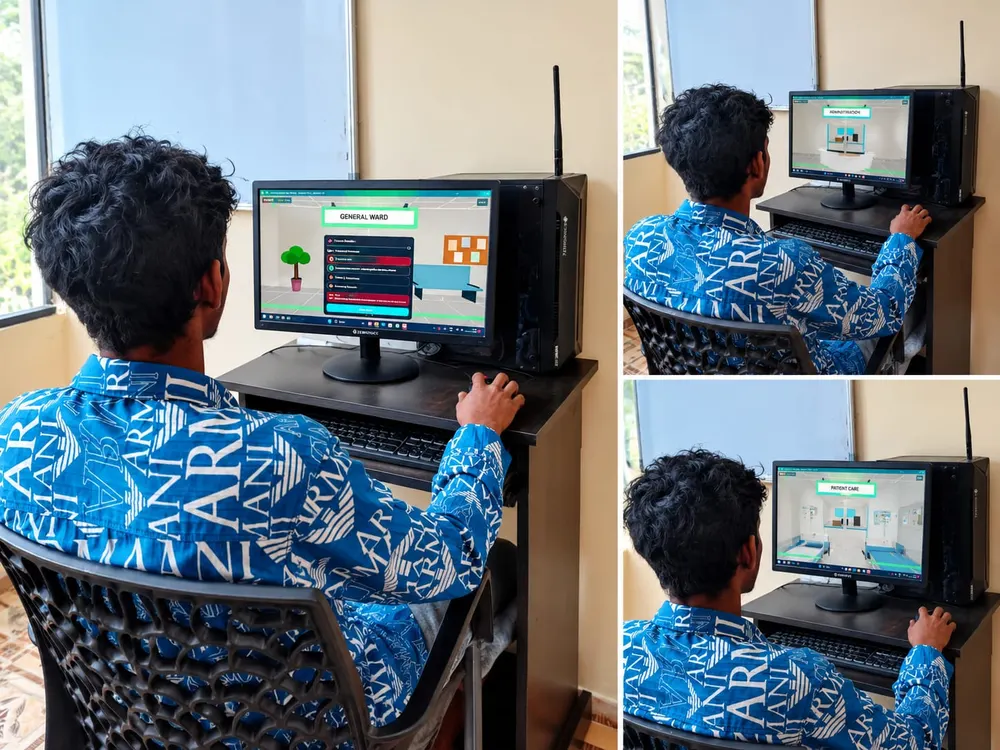
- Week 2–4 — learn the hospital's HMS configuration: every hospital configures HMS slightly differently; even if you trained on Hinall at Treneywann, the hospital may have customised the modules — ask your supervisor for a walkthrough of their specific configuration
The key question to ask in month 1: "What does a successful 90 days look like to you?" — this tells you exactly what your supervisor is measuring, so you prepare for the right review instead of guessing.
Month 2 — Build Competence
Month 2 is when you move from observer to operator:
- Take over routine tasks independently: patient registration, billing generation, appointment booking
- Track your error rate: errors are expected; what matters is that you catch and correct them, and that the rate decreases week over week
- Learn the hospital's numbers: specific billing rates, package rates, the TPA empanelment list, and CGHS rate applicability
- Build the TPA coordinator relationship: they will help you learn the insurance workflow faster than any manual
- Understand your NABH responsibilities: know exactly which documents you are responsible for maintaining in your role
Month 3 — Demonstrate Value
Month 3 is when the hospital decides whether you are a keeper. Give them the evidence:
- Identify one thing you can improve — even a small process: faster patient registration, better queue management, cleaner billing reconciliation
- Present the improvement idea to your supervisor — even if it is not implemented, the initiative is noticed and remembered at review time
- Handle a difficult patient interaction independently and professionally — this is precisely what supervisors watch for before confirming probation
- Prepare for the probation review: compile your own list of what you have learned, what you now handle independently, and where you need more support
Walking into the review with your own self-assessment changes the conversation — you are reporting progress, not waiting for a verdict.
What Hospitals Evaluate During Probation
- HMS operation speed and accuracy — can you do it without help?
- Communication with patients — polite, clear, calm under pressure?
- Accuracy in billing — errors caught before they become problems?
- Team fit — do colleagues report a positive experience working with you?
- NABH awareness — do you understand why documentation matters?
Technical skill got you hired. Accuracy plus team fit is what gets you confirmed.
Common First-90-Day Mistakes — and How to Avoid Them
Every one of these is recoverable — if you catch it early
Every hospital configures its systems differently. The candidate who assumes their training transfers one-to-one makes avoidable errors in week 2. Be curious, not confident — your training makes learning the local configuration fast, not unnecessary.
In NABH hospitals, everything must be documented. Undocumented = undone. A task completed but not recorded counts against you in an audit — and probation reviewers know it.
The first time you handle an angry patient well is when your supervisor notices you. Freshers who quietly redirect every difficult interaction to a senior stay invisible — and invisible does not get confirmed early.
Questions are welcome in the first month; they become a concern in month 6. Ask early, ask specifically, and write the answers down — the same question asked twice in month 4 lands very differently than in week 2.
The Probation Review Conversation
The review at the end of probation goes one of two ways — prepare for both:
- If probation is extended: do not treat it as a rejection. Ask specifically what improvement is needed, set clear milestones with your supervisor, and request monthly check-ins so the next review has no surprises
- If probation is confirmed: congratulations — and before the conversation ends, negotiate the salary review timeline. Confirmation is the natural moment to ask when your first increment review will happen
Graduates of Treneywann Institute of Hospital Administration, 2nd Floor Creative Tower, Near Kaniyampuzha Road, Eroor South, Vyttila, Kochi, Kerala 682306 stay connected to the placement team through this period — placement support does not end on joining day.
FAQs — First 90 Days in Hospital Administration Kerala
What new joiners ask most
How long is probation in hospital administration job in Kerala?
Typically 3–6 months in Kerala private hospitals. During this period the hospital evaluates HMS operation speed and accuracy, patient communication, billing accuracy, team fit, and NABH awareness. Confirmation comes with a formal review conversation — walk into it with your own self-assessment prepared.
What should I do in first month of hospital administration job?
Complete all orientations (HR, NABH patient rights, fire safety, infection control, department tour), shadow your senior for the first two weeks, and learn the hospital's specific HMS configuration — every hospital customises its modules. Ask your supervisor: "What does a successful 90 days look like to you?" — it tells you exactly what is being measured.
How do I pass probation in hospital administration?
Month 1: learn the environment and HMS configuration. Month 2: take over routine tasks independently, track and reduce your error rate, learn the billing rates and TPA empanelment list. Month 3: identify one process improvement and present it, handle a difficult patient interaction independently, and prepare a self-review for the probation conversation. Decreasing errors plus visible initiative is the pattern hospitals confirm.
What do hospitals evaluate during hospital admin probation?
Five things: HMS speed and accuracy without help, patient communication (polite, clear, calm under pressure), billing accuracy (errors caught early), team fit (colleagues' experience of working with you), and NABH awareness (understanding why documentation matters). Technical skill gets you hired; accuracy plus team fit gets you confirmed.
What mistakes should hospital administration freshers avoid?
Four: the "I know this already" attitude (every hospital configures systems differently), skipping documentation (in NABH hospitals, undocumented = undone), avoiding difficult patients (handling one well is when supervisors notice you), and waiting to ask questions (welcome in month 1, a concern by month 6). Mistakes are normal — recovery is what is evaluated.
Visit the Kochi Campus — Vyttila
Treneywann Institute of Hospital Administration, Office 49/A, Creative Tower, 2nd Floor, Near Kaniyampuzha Road, Eroor South, Vyttila, Ernakulam, Kerala 682306
Placement Support Continues After Joining
Treneywann graduates stay connected through their first 90 days and beyond. ₹42,000. Vyttila Kochi.