.png)


Hospital Operations Manager Interview. Senior-Level Questions, Senior-Level Answers.
Operations manager interviews are unlike any junior hospital administration interview. The panel — usually the CEO, Medical Director or group operations head — expects experiential answers backed by numbers: the P&L you managed, the KPIs you moved, the crisis you contained. This guide covers the questions Kerala hospitals actually ask at this level, with model answers that show the thinking behind them.
Hospital operations manager interviews in Kerala test hospital P&L management, department KPI oversight, bed and census management, staff rostering across departments, NABH compliance leadership, and crisis/emergency response. Common questions: 'How do you improve bed occupancy rate?', 'Walk me through a hospital P&L', 'How do you manage interdepartmental conflict?', 'Describe your approach to NABH internal audit leadership.' These are senior roles; interviewers expect experiential answers backed by specific numbers and outcomes.
What a Hospital Operations Manager Actually Does
The scope is the whole hospital. Every question in the interview maps to one of these duties:
- Oversee day-to-day operations across all departments
- Manage department heads — clinical and non-clinical
- Track and improve hospital KPIs
- Manage bed census and occupancy
- Review daily revenue and billing collections
- Lead NABH accreditation for the hospital
- Handle patient grievances escalated from front office
- Manage vendor contracts
- Report to the hospital CEO / Medical Director
Category 1: Financial and P&L Questions
Can you read, explain and move the hospital's numbers?
Model answer: Revenue side: inpatient charges, outpatient charges, pharmacy, diagnostics, surgical packages, insurance settlements. Cost side: salaries — the largest line, typically 40–50% of revenue — then consumables, maintenance, utilities, equipment depreciation and vendor costs. A well-run private hospital lands at a 15–25% EBITDA margin. Structuring the answer as revenue → cost → margin, with the salary percentage and EBITDA band quoted, is what a senior panel is checking for.
Model answer: Two levers. Raise average revenue per patient (ARPU): upgrade the bed category mix, promote package surgery, improve the pharmacy attachment rate, reduce the insurance claim rejection rate. Cut revenue leakage: investigate billing discrepancies and track unbilled services. The framing matters — "same patients, more realised value, less leakage" is a strategic answer; "do more marketing" is not.
Model answer: Gross revenue is total billing before deductions. Net revenue is what remains after TPA/insurance discounts, CGHS concessions and the hospital's own concessions. An operations manager tracks both — gross shows volume, net shows actual realisability. If the gap between the two is widening, either payer mix is deteriorating or concessions are being given without control — and that observation is the answer that gets remembered.
Category 2: Bed and Census Management Questions
The daily operational pressure of the role — and where patient safety meets administration
Model answer: Escalate to the Medical Director immediately, contact nearby hospitals for a transfer option in parallel, assess with the intensivist which current ICU patient can be stepped down to HDU, prepare the HDU for ICU-level care as a temporary measure, and document the entire decision chain. The principle to state out loud: never delay a critical admission for administrative reasons — the panel is testing whether you know where administrative authority stops.
Model answer: Average Length of Stay. Reduce it by improving discharge planning — daily ward rounds with discharge criteria defined from Day 1 — ensuring investigations happen same-day rather than next-day, bringing physiotherapy and social work into the admission earlier, and pre-arranging home care for suitable patients. The qualifier "without compromising care" is the real question: every lever you name must be a process improvement, never pressure on clinicians to discharge early.
Category 3: People Management Questions
Senior roles are leadership roles — the panel probes how you handle conflict and authority
Model answer: Meet each head separately first and understand both perspectives. Identify whether the conflict is systemic (an unclear authority boundary that will recur with any two people) or personal. Then mediate a joint meeting with a clear outcome, document the agreed resolution, and follow up in two weeks. Escalate to the CEO/Medical Director only if mediation fails. The structure — diagnose before mediating, document, follow up, escalate last — is what distinguishes a manager from a messenger.
Model answer: Take the concern seriously and clarify the specific decision. If it was truly clinical — medication, procedure — an operations manager should not have overruled it without consulting the Medical Director, and the right response is to acknowledge that and correct course. If it was operational — timing, room allocation — explain the administrative rationale respectfully. Either way, establish clear clinical-vs-operational protocols going forward. This question tests whether you know the boundary of your own authority — the most senior skill there is.
Category 4: NABH Leadership Questions
Not "do you know NABH" — "have you led NABH"
Model answer: Start with a gap analysis auditing the current state against NABH standards. Prioritise high-risk gaps first — patient safety and infection control. Assign chapter owners from among department heads, set a 6-month milestone, run an internal mock audit, address the findings, then apply for the NABH assessment. The leadership content is in two phrases: "chapter owners" (you delegate with accountability) and "mock audit before real audit" (you test before you are tested).
Model answer: Acknowledge the finding without arguing, ask for clarification if anything is unclear, assure the assessor a corrective action plan will be submitted within 30 days, document the finding immediately, and brief the CEO after the session. Arguing with an assessor damages the hospital's standing more than the gap itself — the panel is testing composure and process discipline under scrutiny.
Operations Manager Salary Benchmarks — Kerala and GCC
These are the roles Treneywann graduates reach after 5–10 years of career progression
Ranges are indicative as of 2026 and vary by hospital size, group and individual track record. See also the full Kerala salary guide →
What Senior Interviews Look For That Junior Interviews Don't
The gap between a junior and a senior interview is not harder questions — it is a different kind of answer:
- Real numbers — "I managed a 200-bed hospital", "we cut ALOS from 4.8 to 4.1 days"
- Specific incidents with outcomes — not "I would handle it by...", but "when this happened, here is what I did and what resulted"
- Strategic thinking beyond task completion — why the lever you chose was the right one
- Leadership examples — people you developed, conflicts you resolved, teams you built
How Treneywann's Course Builds the Foundation
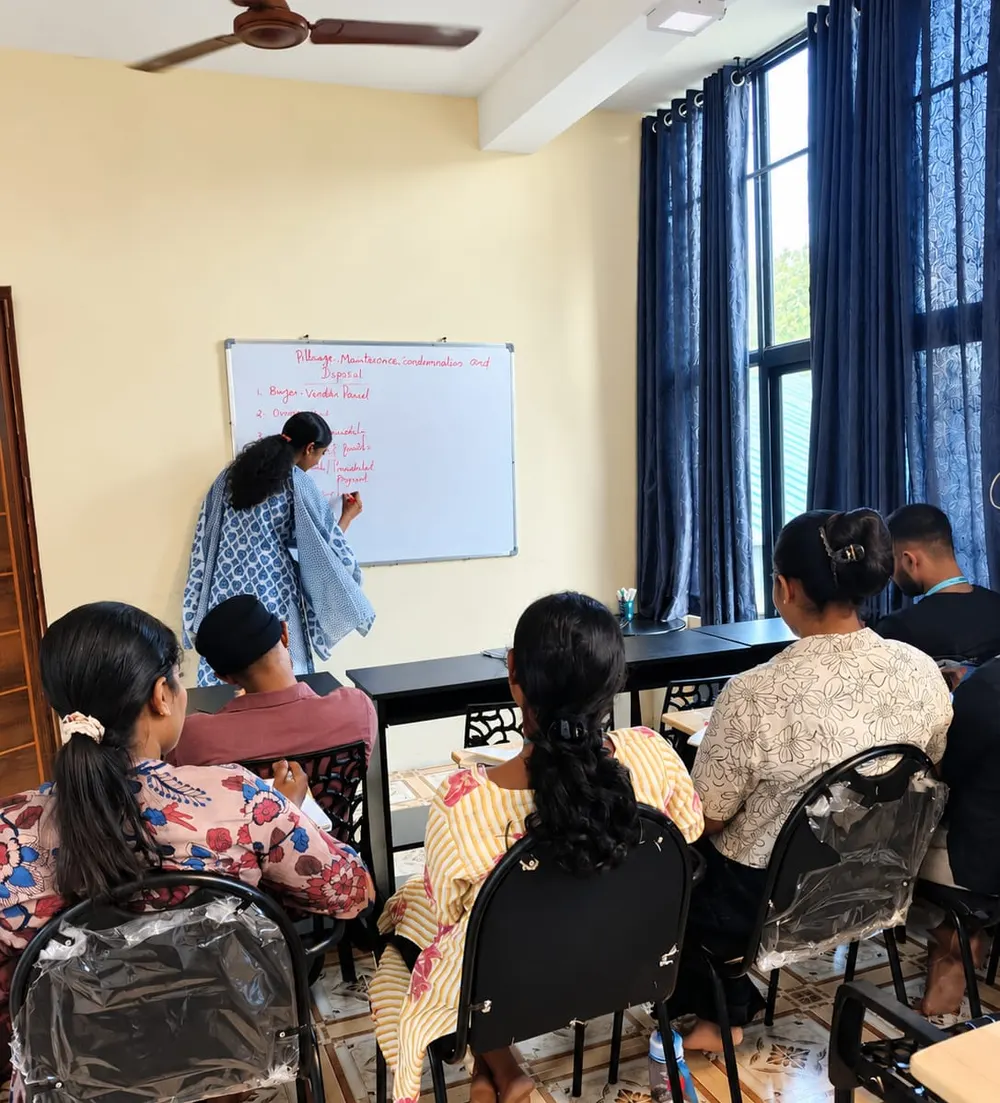
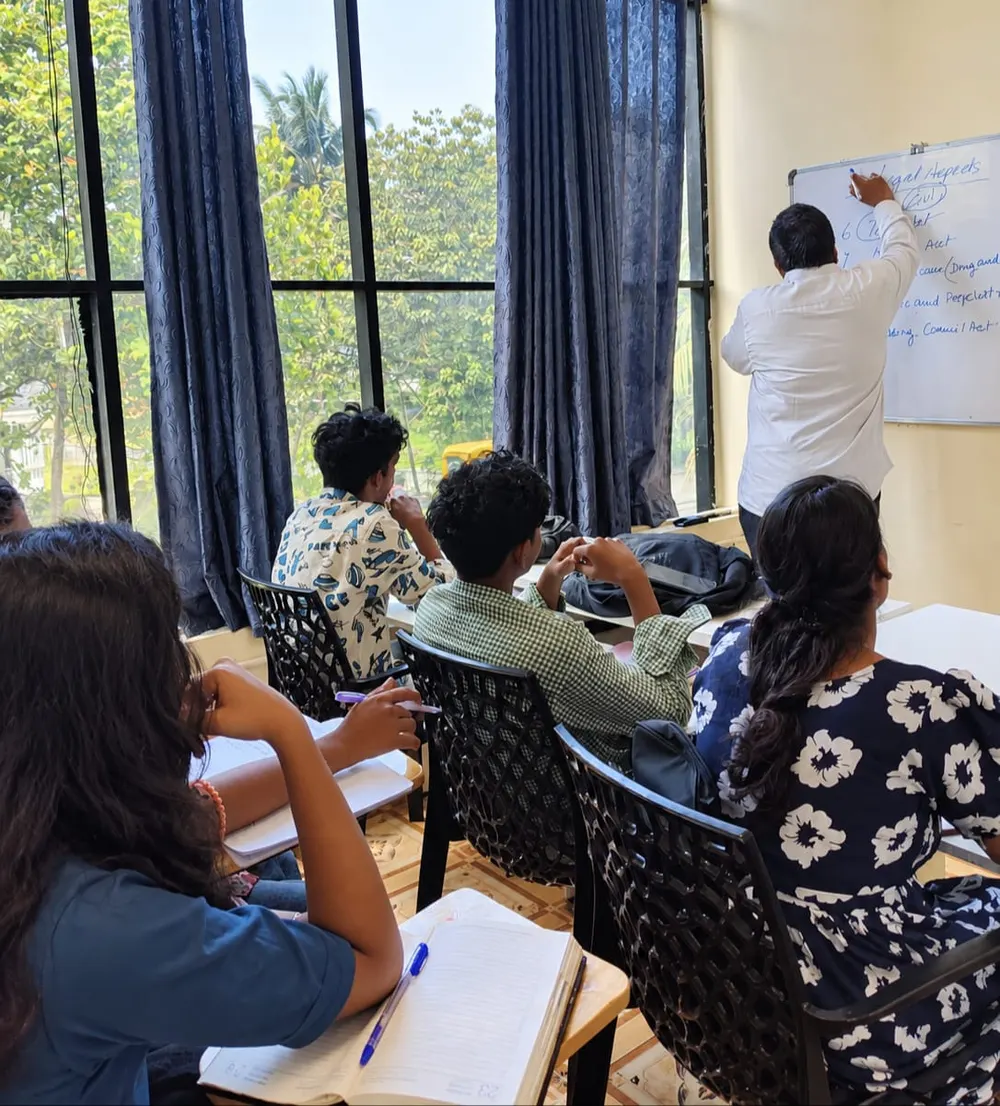
The hospital administration diploma is the entry point; the operations manager career is built over 5–10 years on top of it. What the programme at Treneywann Institute of Hospital Administration, Office 49/A, Creative Tower, 2nd Floor, Near Kaniyampuzha Road, Eroor South, Vyttila, Ernakulam, Kerala 682306 provides:
- The vocabulary — ALOS, ARPU, GRN, census, EBITDA — that senior conversations run on
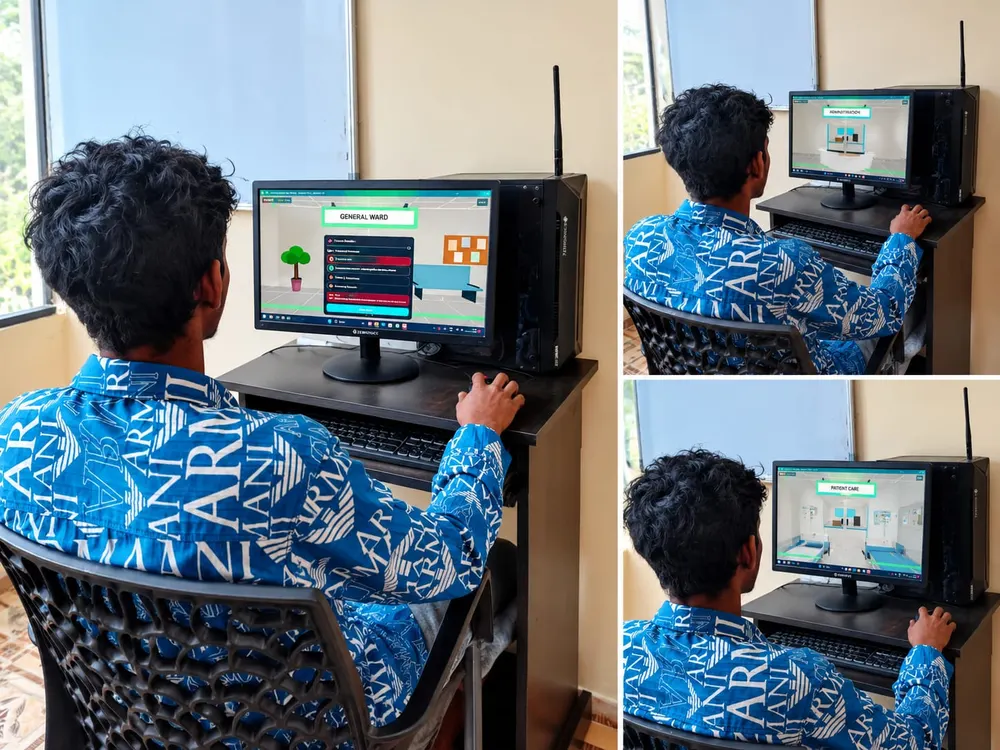
- The tools — live Hinall HMS training, NABH standards, P&L concepts
- The placement network that gets graduates into the first hospital role from which operations management grows
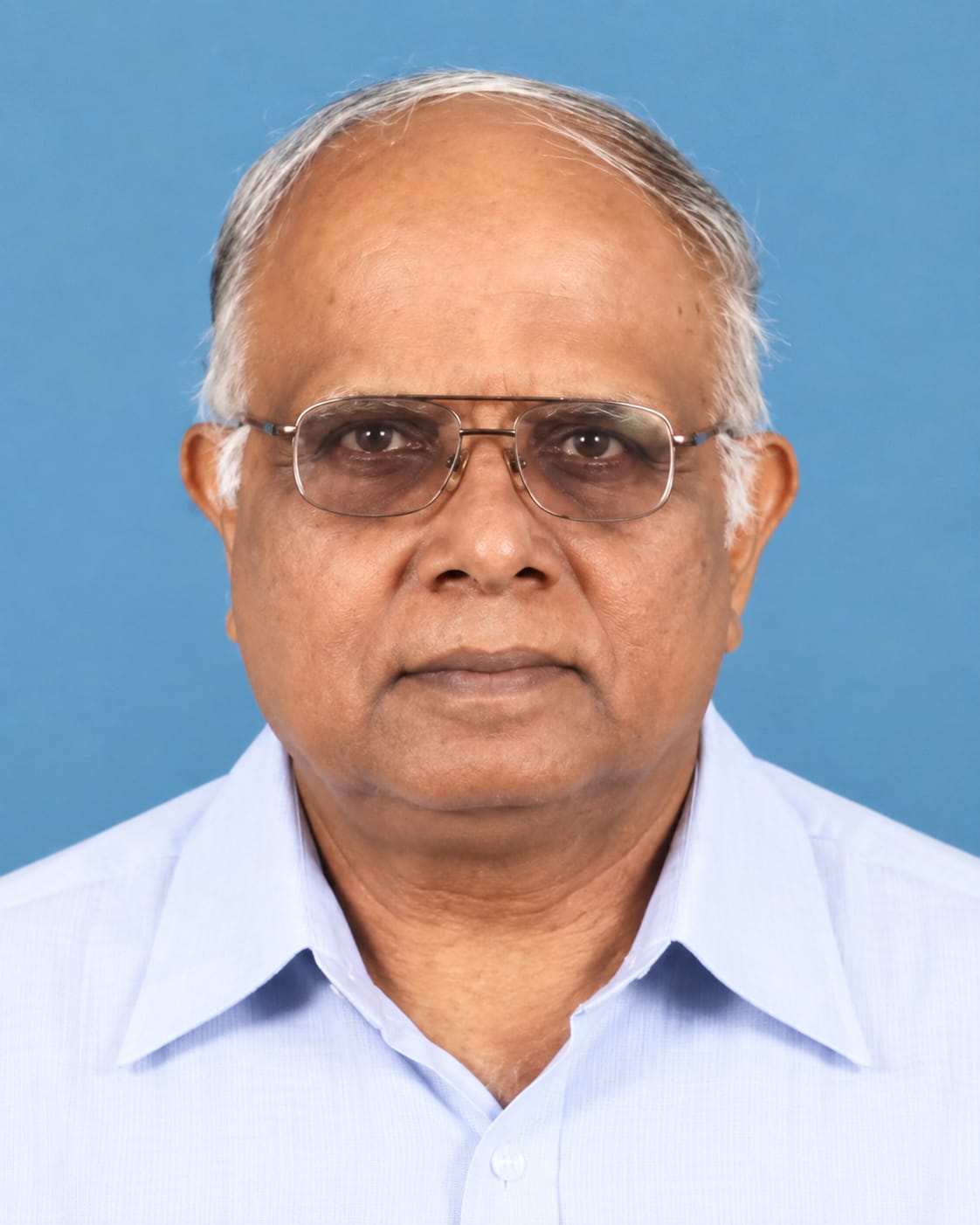
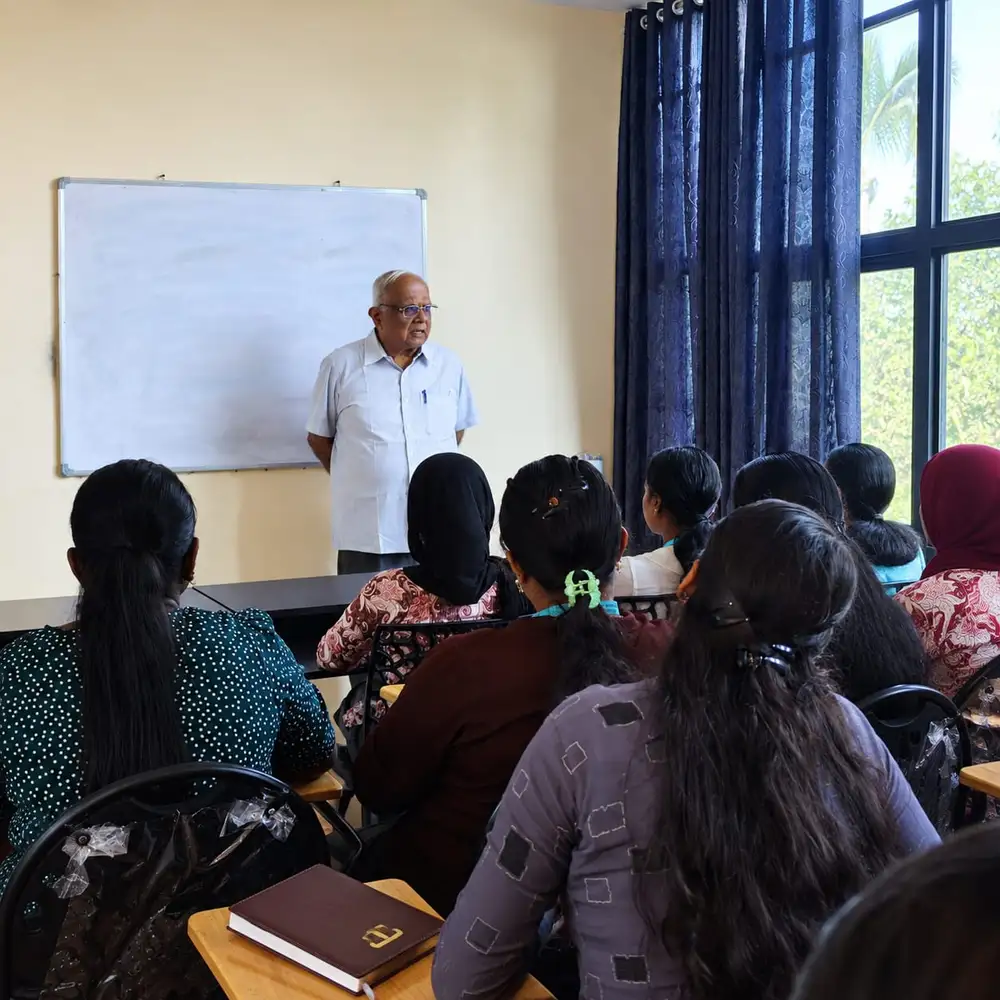
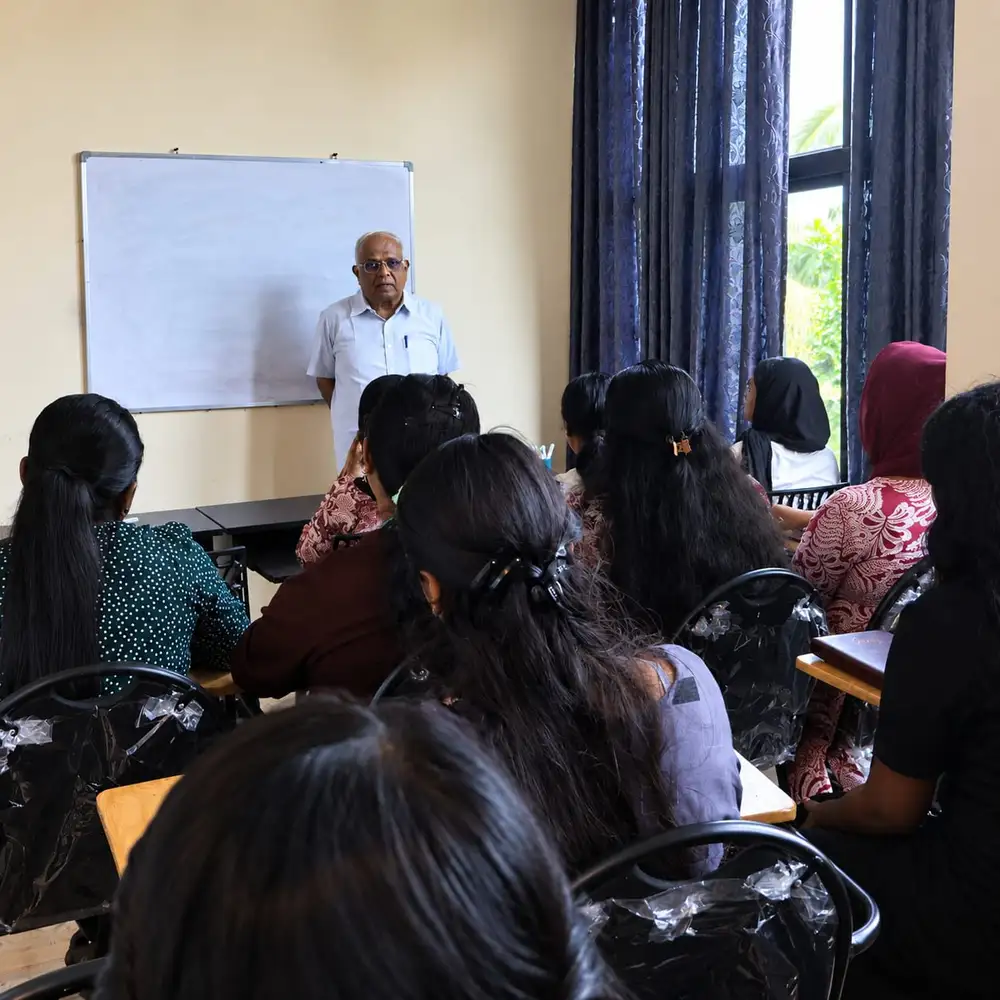
- Guidance from senior faculty B.V. Kumar — retired hospital administrator, 35+ years across Kerala and the GCC, who held exactly these senior roles
FAQs — Hospital Operations Manager Interview Kerala
The questions senior-role candidates search for most
What is asked in hospital operations manager interview in Kerala?
Four areas: financial management (hospital P&L walkthrough, gross vs net revenue, improving revenue without volume growth), bed and census management (ICU-full scenarios, ALOS reduction), people leadership (interdepartmental conflict, clinical vs administrative authority), and NABH leadership (gap analysis to assessment, handling assessor findings in the room). Panels expect experiential answers with specific numbers and outcomes.
What KPIs does a hospital operations manager track?
Bed occupancy rate, average length of stay (ALOS), average revenue per patient (ARPU), daily revenue and collections, insurance claim rejection rate, patient satisfaction, staff attrition, and NABH compliance percentage. Group them — utilisation, financial, experience, quality — and be ready to quote real numbers you have managed.
How do I prepare for senior hospital administration interview?
Prepare experiential answers with numbers: the size of hospital you managed, KPIs you moved and by how much, one crisis with the decision chain documented, and one quality or NABH initiative you led end-to-end. Task-level answers that work in junior interviews fail at this level — panels want strategy, leadership and outcomes.
What is the salary for hospital operations manager in Kerala?
Typically ₹50,000–₹1,20,000 per month in Kerala depending on hospital size and type, with corporate NABH-accredited hospitals at the upper end. Comparable GCC roles pay approximately AED 8,000–18,000 per month. These are senior roles reached after 5–10 years of progression from entry-level hospital administration positions.
Does Treneywann train for senior hospital administration roles?
Treneywann's diploma is the entry point of the career — the operations manager role is built over 5–10 years on top of it. The programme covers the vocabulary and tools senior roles require (HMS, NABH, P&L concepts) and provides the placement network that gets graduates into the first role from which operations management careers grow. ₹42,000 for 6 months at Vyttila Kochi, with placement assurance.
Visit the Kochi Campus — Vyttila
Treneywann Institute of Hospital Administration, Office 49/A, Creative Tower, 2nd Floor, Near Kaniyampuzha Road, Eroor South, Vyttila, Ernakulam, Kerala 682306
The Senior Path Starts With the Right Foundation. ₹42,000, Vyttila Kochi.
HMS, NABH and P&L vocabulary from day one — and the placement network that opens the first door. Free demo class any weekday.