.png)












Hospital Pharmacy & Store Executive Interview. What Kerala Hospital Pharmacists and Store Heads Look For.
Store and pharmacy executive interviews are the most process-precise interviews in hospital administration. The interviewer — usually the pharmacy in-charge, purchase manager or store head — tests whether you know FIFO/FEFO, the procurement cycle, NABH storage rules and the HMS store module exactly, because errors here mean expired drugs, stock losses and audit findings. This guide covers the questions Kerala hospitals actually ask, with model answers.
Hospital pharmacy and store executive interviews in Kerala test knowledge of drug inventory management, FIFO/FEFO principles, purchase order process, NABH pharmacy standards, drug storage conditions, and HMS store module navigation. Common questions: 'What is FIFO and why does it matter in pharmacy?', 'How do you manage a drug expiry alert in HMS?', 'What are the NABH standards for pharmacy storage?', 'Explain the drug procurement cycle.' Treneywann's store and pharmacy administration module at Vyttila Kochi covers all these.
What a Hospital Pharmacy / Store Executive Actually Does
Every interview question maps to a real duty. Know the role first:
- Manage drug and consumable inventory for the hospital
- Raise purchase orders against approved indents
- Receive and verify deliveries — quantity, batch, expiry
- Maintain FIFO/FEFO stock rotation on shelves and in HMS
- Track expiry dates and act on near-expiry stock
- Coordinate with pharmacy for drug requisitions from wards
- Maintain NABH pharmacy records including the narcotic register
- Operate the HMS store module — PO, GRN, issue vouchers, adjustments
- Manage vendor relationships and escalate supply issues
Category 1: Inventory and FIFO/FEFO Questions
Stock rotation errors mean expired drugs — interviewers test definitions exactly
Model answer: First In First Out — the oldest-received stock is issued and used first. It prevents drug expiry wastage, which matters most for expensive antibiotics, vaccines and short-shelf-life medications. Failure to follow FIFO is a double failure: a patient safety risk (expired stock on shelves) and a financial loss (written-off inventory). Saying both halves — safety and money — is what marks a trained candidate.
Model answer: First Expired First Out — issue whichever stock expires soonest, regardless of arrival date. FEFO is safer for pharmacy than pure FIFO because two batches may arrive close together with different expiry dates: the later-arriving batch can carry the earlier expiry. FEFO is the NABH standard for hospital pharmacy. If the interviewer asks only about FIFO, mentioning FEFO unprompted is a strong signal.
Model answer: Four layers: (1) a monthly physical stock check for items expiring within 3 months, (2) HMS auto-alerts where configured, (3) colour-coded shelf tags — red for expiring within 30 days, yellow for 90 days, and (4) the vendor returns policy — near-expiry items are returned to the vendor if the purchase agreement allows. Listing system controls (HMS) and physical controls (tags, counts) together shows you understand neither alone is enough.
Category 2: Drug Procurement Questions
From indent to payment — interviewers want the full cycle in order
Model answer: Indentation from the department → pharmacy review → purchase order raised → approved by the store/purchase committee → vendor delivers → GRN (Goods Receipt Note) raised → quality check and quantity verification → entry in the HMS store module → distribution to departments → payment processed. Naming all ten steps in order is the answer the interviewer is checking against — skipping GRN or committee approval is the common fresher mistake.
Model answer: A Goods Receipt Note — the document confirming receipt of ordered goods. It contains the PO number, item name, quantity received, batch number, expiry date and vendor name. The GRN is required for two downstream processes: entry into the HMS store module and accounts payable processing — no GRN, no payment. Knowing what the GRN feeds is what separates a store-trained candidate from a definition-memoriser.
Model answer: Reject the batch at the GRN stage — before it enters stock. Document the rejection in writing, return the goods to the vendor with a Goods Return Note (GRN reversal), notify the purchase committee, and recommend blacklisting the vendor if the problem repeats. The key phrase interviewers listen for is "reject at GRN stage" — once near-expiry stock enters HMS, it becomes the hospital's loss.
Category 3: NABH Pharmacy Standards Questions
Storage rules and the narcotic register — audit territory
Model answer: Five specifics: (1) temperature-controlled storage — cold chain for vaccines, refrigeration for certain antibiotics; (2) separate storage for flammables; (3) narcotics and psychotropics in double-lock storage with a maintained register; (4) segregated storage for external-use and internal-use medications; (5) no food or personal items in drug storage areas. Naming the specifics beats a vague "drugs must be stored safely" every time.
Model answer: Every narcotic received and dispensed is logged with date, patient name, prescription reference, quantity and running balance. The register is signed by the pharmacist and checked weekly by the pharmacy in-charge. Both NABH assessors and the Drug Controller audit this register — mentioning that double audit exposure shows you understand why the register is never allowed to fall behind.
Category 4: HMS Store Module Questions
The practical skill test — can you actually operate the software?
Model answer: Navigate to Store → Purchase → New PO → select the vendor from the approved vendor list → add items with quantity and unit rate → submit for approval → the approved PO generates automatically to the vendor. The detail interviewers check: you select from the approved vendor list, not a free-typed vendor — that control is what prevents unauthorised purchasing.
Model answer: Verify with a physical count at the department, check the issue voucher in HMS, investigate at the store end (physical count plus CCTV where available), raise a discrepancy report to the store in-charge, and — only if the shortage is confirmed — raise an adjustment entry with supervisor approval. Never adjust stock silently; every adjustment needs a documented trail and an approver.
Situational Questions — Judgment Under Pressure
No perfect answers — interviewers want your first moves in the right order
Model answer: Secure the store immediately so nothing else moves, inform the pharmacy in-charge and security, check the narcotic register and CCTV, and file an internal incident report. The order matters: containment first, escalation second, investigation third, documentation always. A missing narcotic is a regulatory event, not just a stock discrepancy — saying so shows you grasp the seriousness.
Model answer: Check the existing PO rate first. Refuse to accept delivery at the new rate without a revised PO and purchase committee approval — the store executive has no authority to accept a unilateral price change. The principle the interviewer is testing: rates are contractual, and rate changes go through the committee, never through the receiving dock.
How Treneywann Prepares Store & Pharmacy Admin Candidates
At Treneywann Institute of Hospital Administration, 2nd Floor Creative Tower, Near Kaniyampuzha Road, Eroor South, Vyttila, Kochi, Kerala 682306, store and pharmacy administration is built into the hospital administration diploma:
- Store and inventory module — FIFO/FEFO, indents, purchase orders, GRN, vendor management
- NABH pharmacy standards — covered in the quality module: storage rules, narcotic register, audit readiness
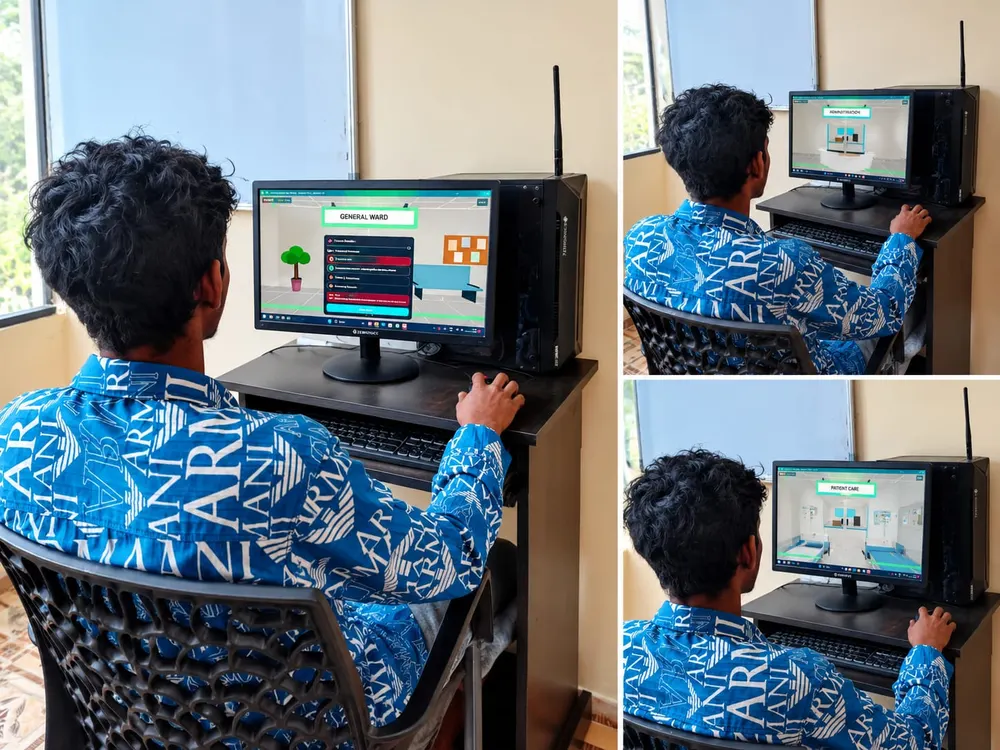
- HMS store navigation — practised hands-on in India's only live Hinall HMS lab: raising POs, GRN entry, issue vouchers, stock adjustments
- Mock interviews with senior faculty B.V. Kumar — retired hospital administrator, 35+ years across Kerala and the GCC
Why This Role Is a Strong Entry Point
Store and pharmacy administration is one of the most consistently hired roles in Kerala hospitals — every hospital has a store, and every store needs someone who knows FEFO, GRN discipline and the HMS module. Candidates who can demonstrate live HMS store operations in the interview stand out immediately, because most applicants have only theory.
The role also builds directly toward purchase officer, store in-charge and materials manager positions — a clear promotion ladder inside hospital operations.
FAQs — Hospital Pharmacy & Store Executive Interview Kerala
The questions store-role candidates search for most
What is asked in hospital store executive interview?
Four areas: inventory principles (FIFO, FEFO, near-expiry detection), the drug procurement cycle (indentation, purchase orders, GRN, vendor handling), NABH pharmacy storage standards (cold chain, narcotic double-lock storage, segregation rules), and HMS store module operation (raising POs, issue vouchers, adjustment entries). Interviewers are usually the pharmacy in-charge or purchase manager and expect precise, process-based answers in the correct order.
What is FEFO in hospital pharmacy?
First Expired First Out — whichever stock expires soonest is issued first, regardless of arrival date. It differs from FIFO (First In First Out, oldest arrival first) because two batches can arrive close together with different expiry dates. FEFO is the NABH standard for hospital pharmacy stock rotation and the single most-tested concept in Kerala store interviews.
What are NABH standards for drug storage?
Temperature-controlled storage (cold chain for vaccines, refrigeration for certain antibiotics), separate storage for flammables, narcotics and psychotropics in double-lock storage with a maintained register, segregated storage for external-use and internal-use medications, and no food or personal items in drug storage areas. Name the specifics in the interview — vague answers about "safe storage" score poorly.
How do I prepare for medical store keeper interview in hospital?
Memorise FIFO and FEFO exactly, learn the ten-step procurement cycle in order, know what a GRN contains and what it feeds (HMS entry and accounts payable), study NABH storage rules including the narcotic register, and practise HMS store tasks — raising a PO, investigating a stock discrepancy. Prepare one situational answer each for a missing narcotic and a vendor price dispute.
Does Treneywann teach pharmacy administration?
Yes — the store and inventory module covers drug inventory, FIFO/FEFO, purchase orders, GRN and vendor management; NABH pharmacy standards are covered in the quality module; and the HMS store module is practised hands-on in India's only live Hinall HMS lab. The full hospital administration course is ₹42,000 for 6 months at Vyttila, Kochi, with placement assurance and mock interviews before placement.
Visit the Kochi Campus — Vyttila
Treneywann Institute of Hospital Administration, Office 49/A, Creative Tower, 2nd Floor, Near Kaniyampuzha Road, Eroor South, Vyttila, Ernakulam, Kerala 682306
Store and Pharmacy Module Included. ₹42,000, 6 Months. Vyttila Kochi.
FIFO/FEFO, procurement, NABH storage and the HMS store module — all inside the hospital administration diploma. Free demo class any weekday.