.png)



Private Hospital Jobs for Freshers in Kerala 2026 — Entry-Level Roles & Starting Salary
Kerala's private hospitals hire freshers from any degree stream — here are the entry-level roles, what they pay, what HR screens for, and the three-year career path that follows.
The Widest Door Into a Kerala Hospital
Most freshers in Kerala assume hospital work means a clinical qualification — MBBS, nursing, or a paramedical course with a long waiting list and an entrance exam. That assumption quietly closes off the largest part of the hospital workforce. A private hospital employs far more non-clinical staff than doctors, and almost all of those positions are open to a graduate from any stream, or to someone with Plus Two.
Hospital administration is the widest of those doors. Every patient interaction begins and ends at an administrative desk: registration, appointment, insurance verification, admission, billing, discharge, records. Those desks are staffed on rotating shifts, and they are permanently hiring because the sector keeps expanding and because administrative staff move up and out into specialist roles.
Two practical facts make this a genuine option rather than a consolation prize. Entry salaries for trained freshers in Kerala now sit at ₹18,000–₹25,000 a month — competitive with most non-technical fresher jobs in the state. And the career ladder above the entry desk is short and well defined: three to five years of good work in a Kerala hospital puts you at ₹35,000–₹55,000, with a credible route to the Gulf after that.
Entry-Level Roles Open to Freshers
These are the positions Kerala private hospitals fill with freshers. None require a medical degree; all require someone who understands hospital workflow and can operate the hospital's software.
| Entry-level role | Day-to-day work | Starting salary |
|---|---|---|
| OPD Executive | Patient registration, appointments, consultant schedules, token flow, OPD collections | ₹18,000–₹22,000 |
| Front Office Executive | Reception, enquiry handling, admission counselling, visitor and attendant coordination | ₹18,000–₹22,000 |
| Billing Executive | IP and OP bill generation, tariff and package application, cash and card settlement, discharge bills | ₹18,000–₹24,000 |
| Medical Records Junior / MRD Assistant | Case sheet assembly, deficiency checks, filing and retrieval, scanning and indexing | ₹18,000–₹23,000 |
| Store Executive | Indents, goods receipt, stock and expiry control, issue to departments, purchase coordination | ₹18,000–₹22,000 |
| Ward Coordinator | Admissions and bed allocation, transfer and discharge coordination, ward-level HMS entries | ₹18,000–₹22,000 |
| TPA / Insurance Assistant | Policy verification, pre-authorisation paperwork, claim file assembly, insurer follow-up | ₹20,000–₹25,000 |
| HR Assistant | Recruitment support, attendance, personal files, induction and training records | ₹18,000–₹22,000 |
Trained freshers across Kerala start in the ₹18,000–₹25,000 band, with the insurance desk usually paying most at entry because the work is harder to hand to an untrained person. Corporate hospitals add PF, ESI, shift allowance and subsidised meals on top. See the full Kerala hospital administration salary guide for how each role progresses.
What Hospitals Actually Look For in a Fresher
Every applicant for a fresher hospital vacancy in Kerala has a degree. The degree therefore decides nothing. Four things do.
- Live HMS experience. The first technical question in almost every interview is which Hospital Management System you have used. Most freshers have used none, and the interview effectively ends there. A candidate who can name the software, list the modules they have worked in and describe a real transaction they completed is in a different category before anything else is discussed.
- NABH awareness. You are not expected to recite the standard. You are expected to know what accreditation is, why documentation and quality indicators matter, and what patient rights and consent mean in practice. It signals that you understand the environment you are entering.
- Professional English alongside Malayalam. Front-facing desks handle anxious families, consultants, insurers and — in Kochi especially — international and NRI patients, often within the same hour. Fluency is assessed in the room, not inferred from a certificate.
- Willingness to work shifts. Hospitals run around the clock. Freshers who accept rotational duty, including nights and festivals, are hired ahead of those who negotiate for day shifts only.
Underlying all four is a commercial calculation on the hospital's side. Training an untrained fresher costs six to eight weeks of supervision. A candidate who can work the desk in week one is cheaper, and hospitals pay a little more for that.
Why a Hospital Administration Diploma Beats a Generic Management Course
A general BBA, MBA or office-administration certificate teaches transferable theory. A hospital administration diploma teaches the specific system a hospital runs on. In fresher hiring, specific beats transferable every time, because the hiring manager is filling one desk, not building a leadership pipeline.
- The vocabulary matches the job. Pre-authorisation, tariff and package, room-rent capping, deficiency check, ICD coding, incident reporting, credentialing — a specialised graduate speaks the language of the desk from the first interview question.
- The software is the same software. Generic courses teach spreadsheets. Hospital administration training puts you inside an HMS, which is where the actual job happens.
- The curriculum maps to accreditation. An NABH-aligned syllabus covers exactly the competencies accredited hospitals assess at interview.
- The credential travels. Embassy-attestable certifications matter later, when a Gulf hospital asks for documentation.
There is a cost argument too. A six-month diploma at ₹42,000 is recovered in roughly two months of a first salary in Kerala — a materially different proposition from a multi-year generic degree that leaves you competing on the same undifferentiated pile. Details and eligibility on the hospital administration course page.
Fresher to Department Head — the First Five Years
This is the progression Treneywann graduates typically follow in Kerala private hospitals. It is not automatic — it depends on which desk you specialise on and how deliberately you build the skill — but it is the common shape.
| Stage | What you are doing | Monthly salary |
|---|---|---|
| Year 1 | OPD, front office or billing desk. Learning the hospital's workflow, tariffs and HMS end to end. Building a reputation for accuracy at discharge. | ₹18,000–₹25,000 |
| Years 2–3 | Moving to a specialist desk — TPA and insurance, medical records, or NABH quality. This is the decision that shapes the rest of the career. | ₹25,000–₹35,000 |
| Years 3–5 | Coordinator or department in-charge — owning the claims cycle, the records department or the quality file, and supervising a small team. | ₹35,000–₹55,000 |
| Year 5 onward | Hospital manager or administrator in Kerala — or a GCC move, where insurance-driven billing experience is directly transferable. | ₹55,000+ in Kerala; AED 3,000–8,000 (₹70,000–₹1,85,000) in the GCC |
The step that changes the trajectory is the second one. Freshers who stay at a general desk for four years plateau; those who move onto TPA and insurance or medical records in year two are the ones running a department by year five.
How Freshers From Treneywann Batches Get Placed
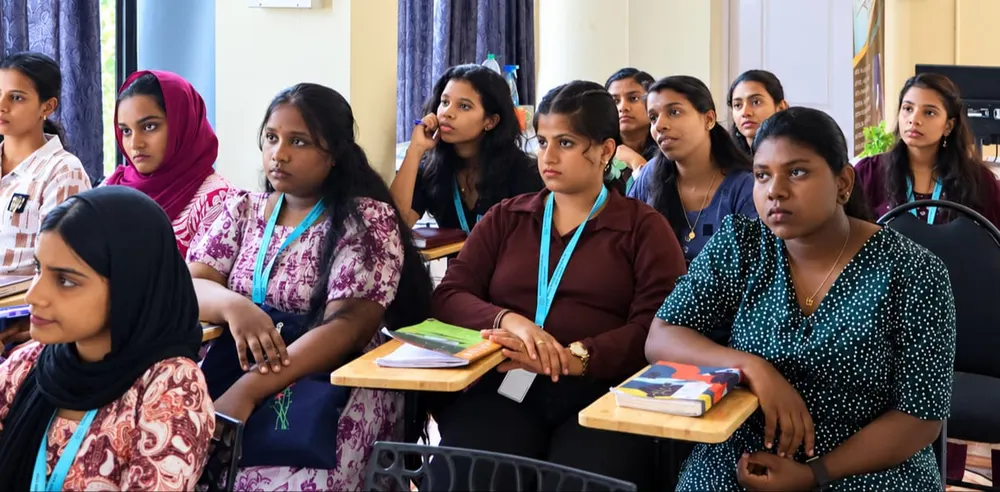
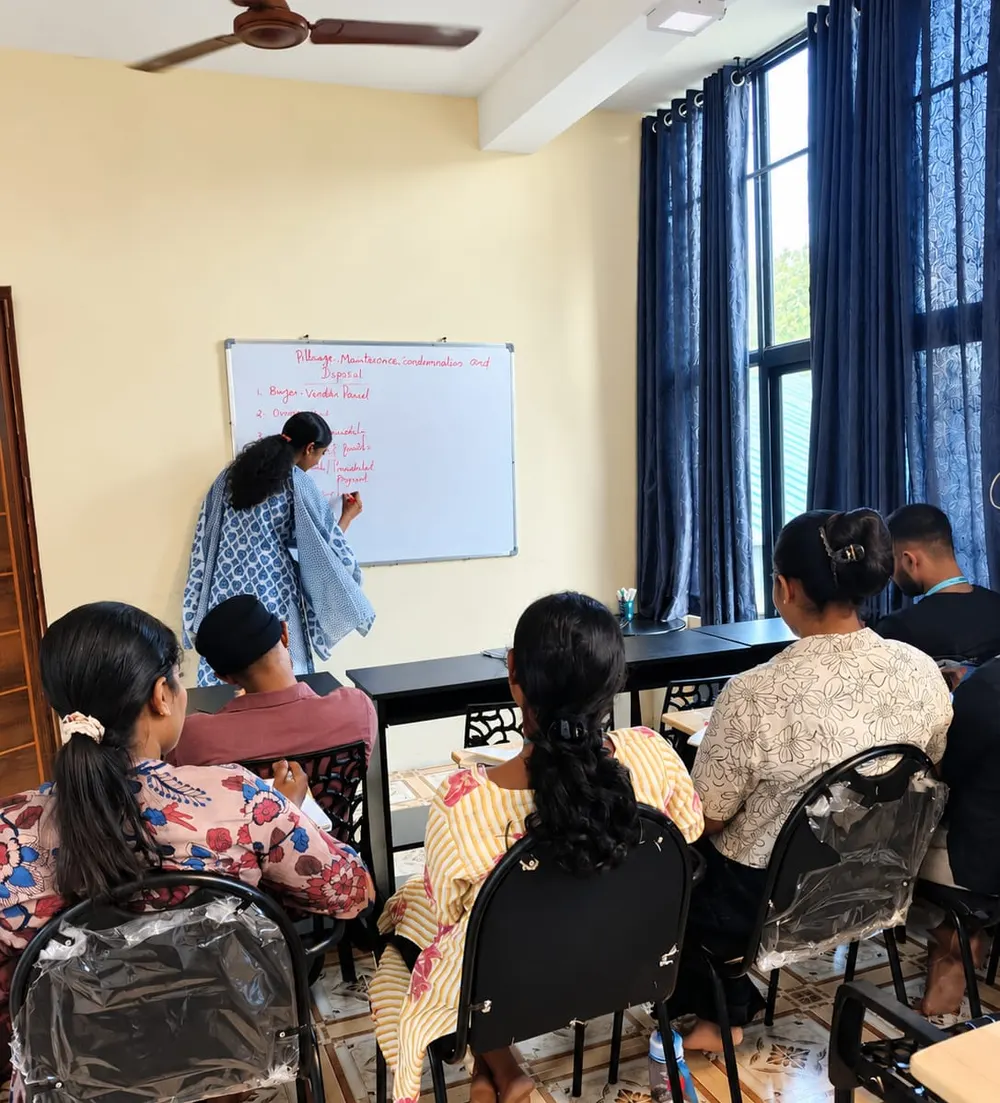
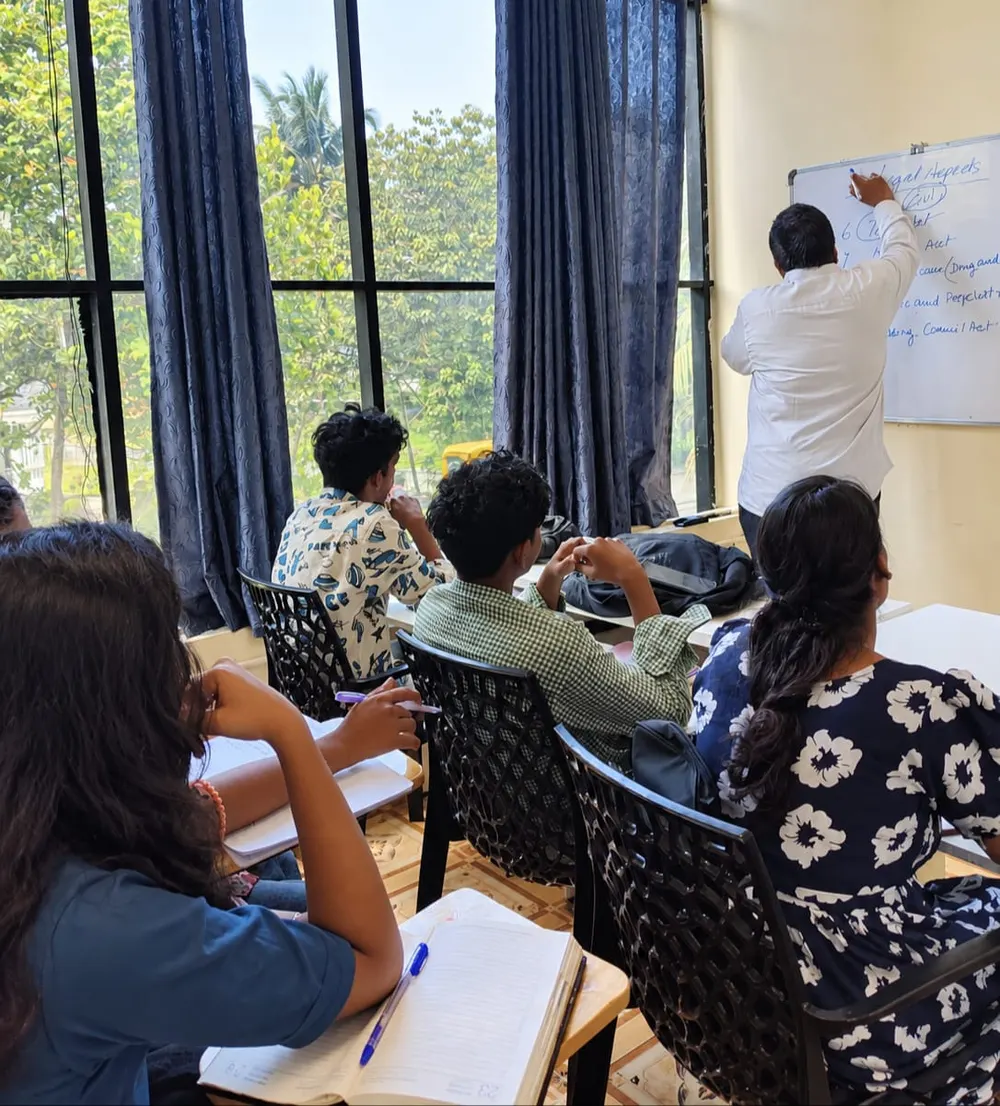
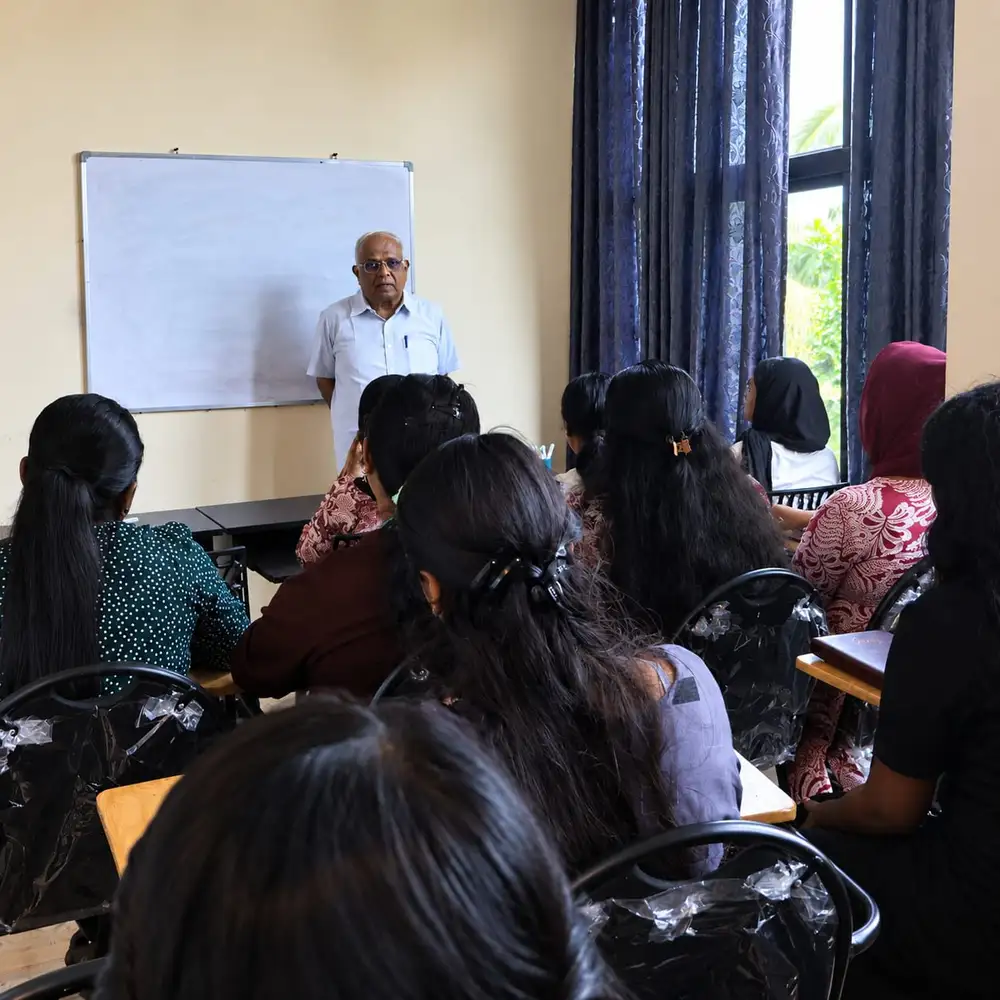
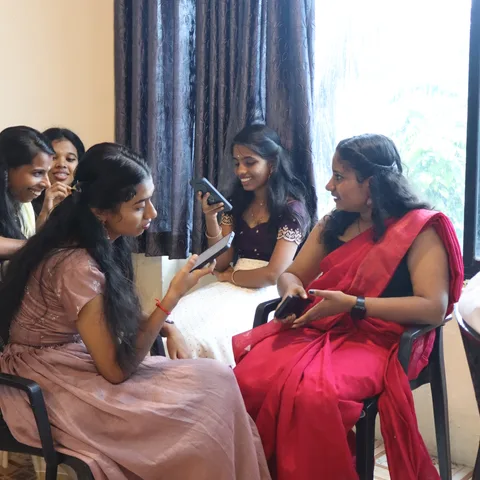
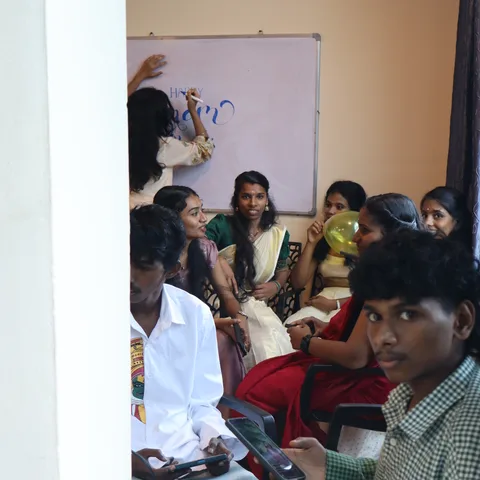
Treneywann Institute of Hospital Administration is a hospital administration training institute at Vyttila, Kochi, teaching inside healthcare and nothing else. For a fresher with no work history, the preparation matters more than anything on the CV.
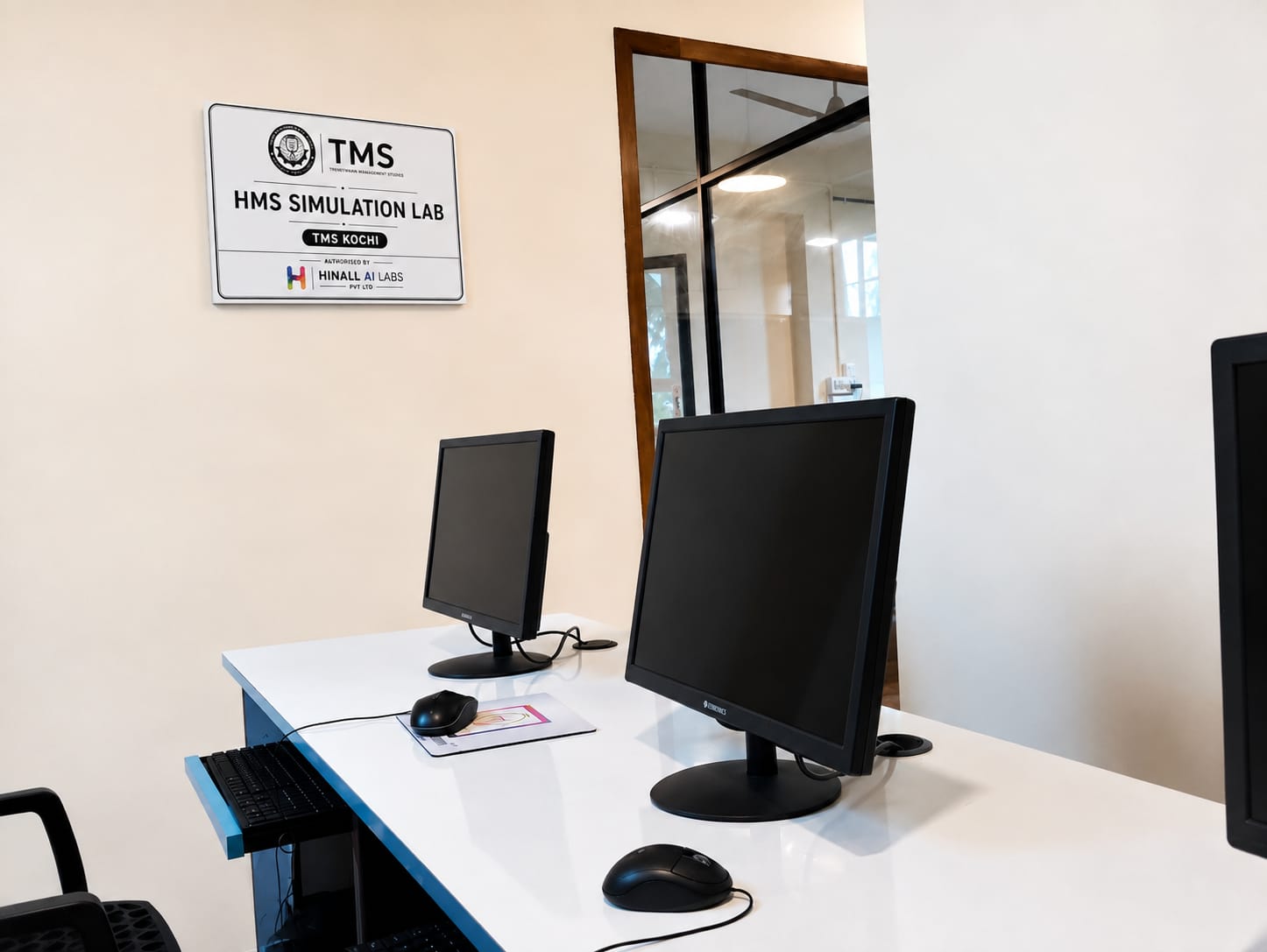
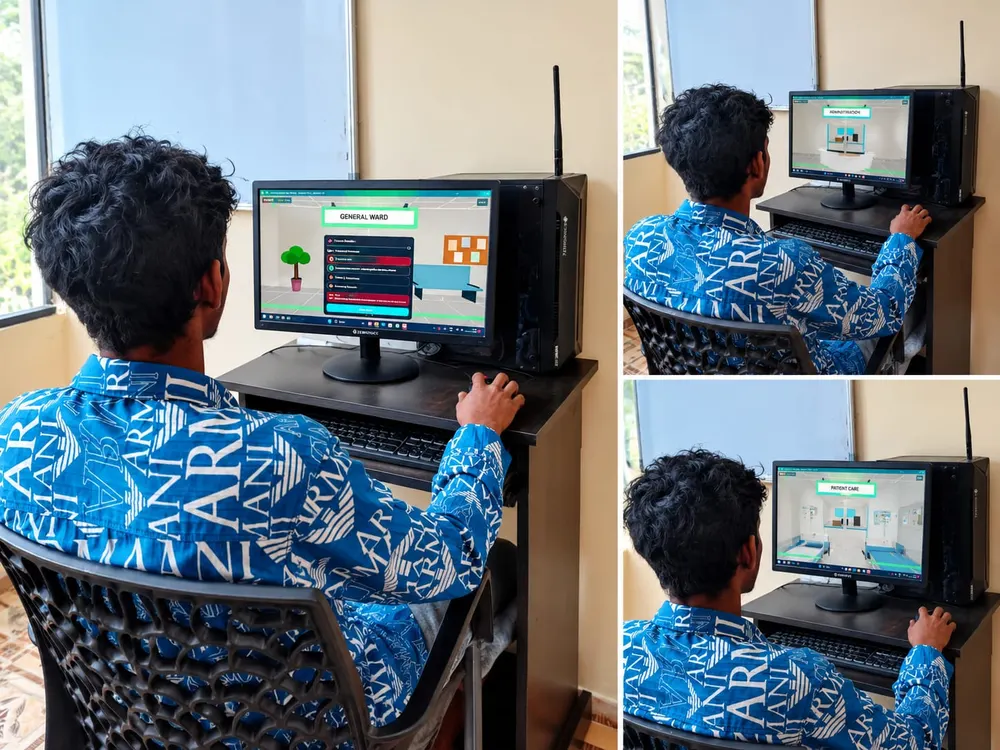
Students work through 48 modules across 16 hospital departments inside the live Hinall HMS lab — Treneywann is India's only authorised training partner of Hinall AI Labs Pvt Ltd, and this is the only live Hinall HMS lab in India. By the end of the course a fresher has registered patients, generated inpatient bills, prepared pre-authorisation requests, closed case sheets and raised store indents in production-grade software. That converts "no experience" into a demonstrable skill.
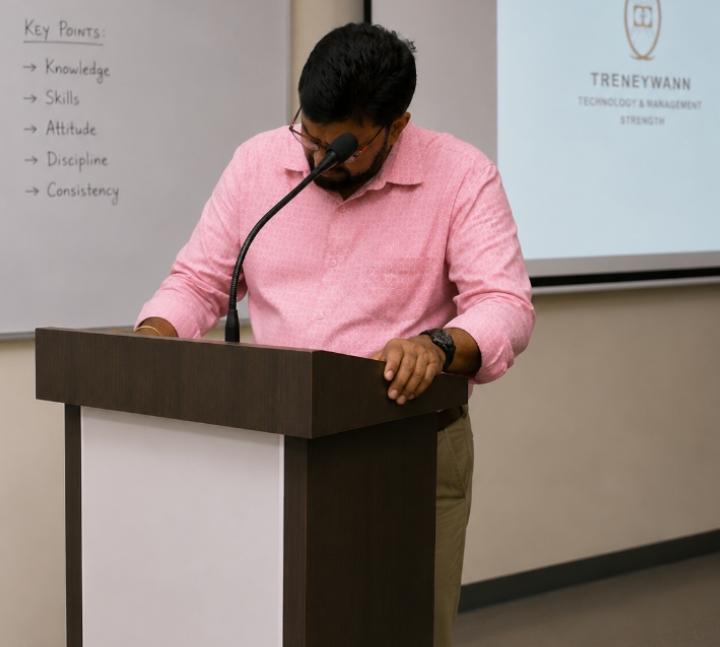
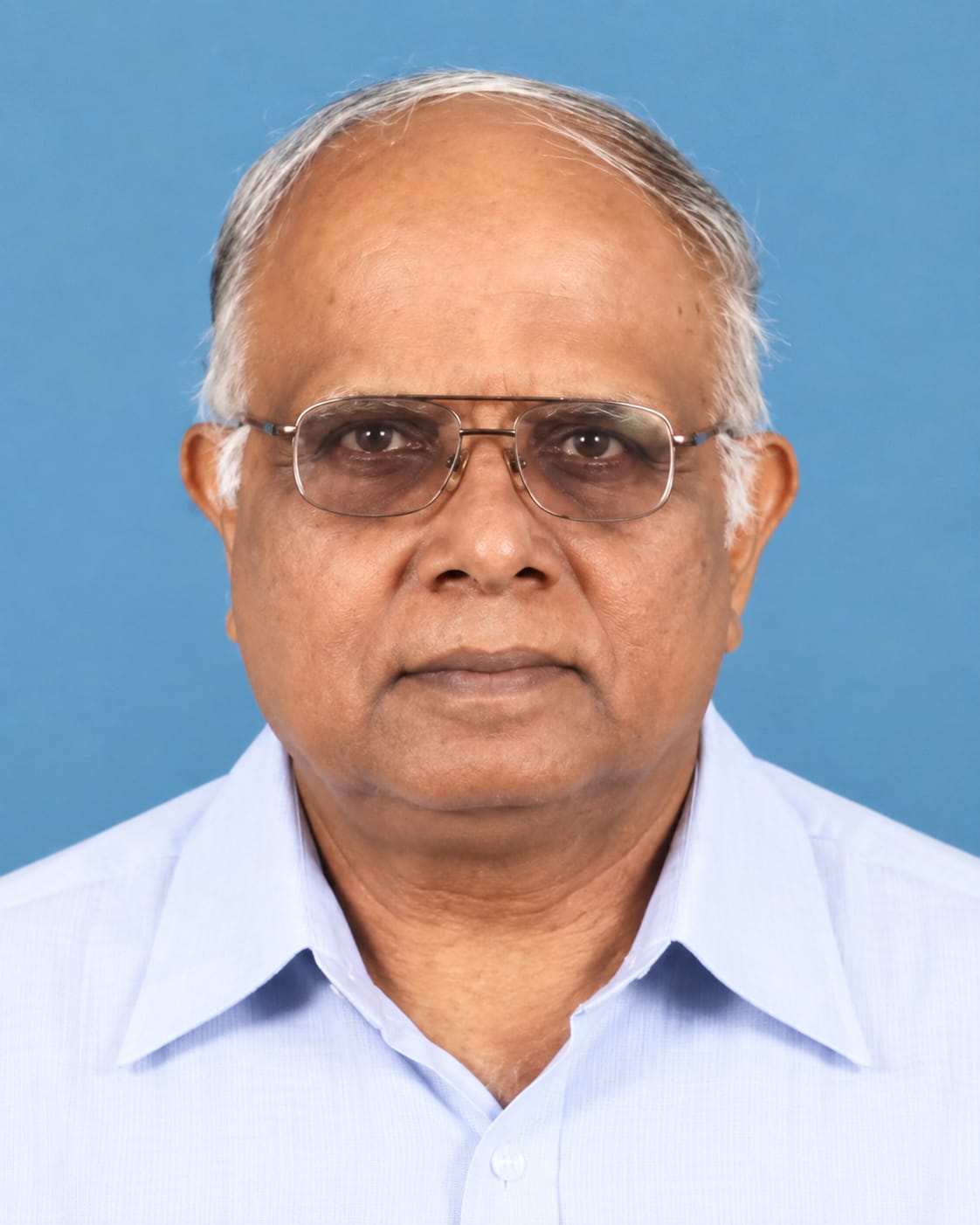
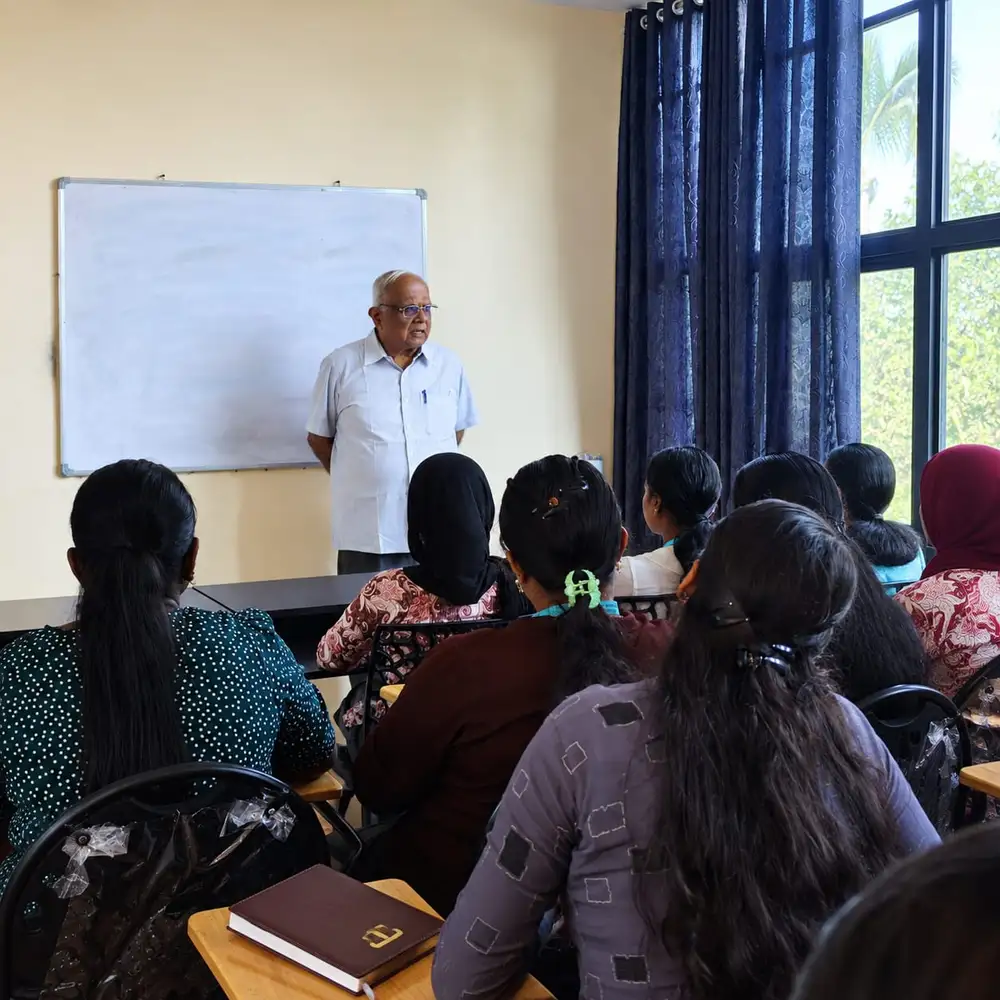
HOD B.V. Kumar (MHA, MBA, MA, PGDPR, PGDJ) has 35+ years in hospital administration across India and the GCC, and runs mock interviews in every batch to the standard he applied when he was the one hiring. Students rehearse the questions Kerala HR teams actually ask, get direct feedback on how they answered, and receive communicative English coaching for healthcare settings — the specific weakness that costs freshers otherwise-winnable interviews.
The outcome is 100% Placement Assurance with 512 graduates placed as of 31 July 2026 at Aster Medcity, Rajagiri, VPS Lakeshore, Amrita, KIMS, Medical Trust, Sunrise, Lisie and GCC hospitals. Every graduate leaves with five certifications — TTMSTRCT Council Trust Diploma, the UGC-approved university credential, AI in Healthcare Administration, Hinall HMS Proficiency and HLP Virtual Hospital — the TTMSTRCT Diploma and UGC-approved university certificate are embassy attestable. The hospital-by-hospital breakdown is in the Treneywann placement report.
6 Months Hospital Administration Course — ₹42,000 all-inclusive · 1-Year PG Diploma — ₹64,000, all-inclusive. Open to Plus Two in any stream or any degree. No NEET, no entrance exam.
Next batch: 9 November 2026 — three slots: 9–11 AM (limited seats), 11 AM–1 PM, 2–4 PM. Office 49/A, Creative Tower, 2nd Floor, Near Kaniyampuzha Road, Eroor South, Vyttila, Ernakulam, Kerala 682306. Call +91 90379 86219, WhatsApp +91 90379 86220, or enroll now. Also see hospital administration jobs across Kerala.