.png)



Front Office Executive Interview at a Kerala Hospital. What They Actually Ask.
The front office is the first face of the hospital — and interviews for it are practical: HMS patient registration, NABH front office standards, document collection, queue management and difficult-patient handling. This guide lists the real questions Kerala hospitals ask front office executive candidates, with model answers you can defend at a live registration terminal.
Hospital front office executive interviews in Kerala test HMS patient registration skills, NABH front office standards, communication, queue management, and situational handling of difficult patients. Common questions include: 'Register a new patient in the HMS', 'What are NABH standards for the front office?', 'How do you handle an angry patient?', and 'What documents must be collected at registration?' Candidates with live HMS registration experience from Treneywann's Hinall lab answer the software questions with confidence.
What a Hospital Front Office Executive Actually Does
The front office executive is the first contact point for every patient who walks into the hospital. Every question in the interview maps to one of these daily responsibilities:
- Patient registration — new registrations and returning-patient visits in the HMS
- Appointment booking — doctor slots, department scheduling, confirmations
- OP file management — OP cards, file retrieval, visit records
- Token / queue system — keeping the waiting area moving and informed
- Patient guidance — directing patients to the right department, escorting when needed
- Billing coordination — routing patients between consultation, investigations and the billing counter
- Visitor management — visitor passes, visiting-hour enforcement, visitor log
- Emergency triage support — directing emergencies to casualty immediately (directing, not clinical)
- NABH front office compliance — patient rights display, signage, waiting time targets
HMS Registration Questions — With Model Answers
The software questions that separate trained candidates from everyone else
What they watch for: navigate to New Patient Registration → fill demographics (name, DOB, address, mobile, gender) → assign OP number → select department → book doctor slot → print OP card. Speed and accuracy matter — some hospitals sit the candidate at a live terminal. Candidates who have practised on a live lab do this naturally instead of describing it vaguely.
Model answer: Verify the Aadhaar, update the name in the HMS with a note recording the correction, and flag to the supervisor if the discrepancy is major. The line interviewers want to hear: never deny treatment for a name mismatch — resolve the record, don't block the patient.
Model answer: Search by OP number, mobile number, or name; verify the patient's identity before opening the file; then create a new visit under the existing registration — never a new registration. Duplicate registrations fragment the medical record, and mentioning that unprompted signals real HMS understanding.
NABH Front Office Standards Questions
NABH-accredited hospitals expect the front desk to know the standards it works under
Model answer: The patient rights charter must be displayed; the appointment system must be functional; waiting time targets apply (typically 30 minutes for OP); staff must be trained in patient communication; signage in the local language is required; and a grievance mechanism must be visible. Listing all six shows the candidate has worked in — or trained for — an accredited environment.
Model answer: Patient rights and responsibilities, the hospital facilities map, estimated wait time, the name of the attending doctor, and appointment confirmation. This is a standard NABH expectation — and a favourite quick-fire question.
Communication and Situational Questions
The front desk is a pressure desk — interviewers test for calm, structured responses
The frame: gently ask for the referral slip or the complaint, identify the department from the context, escort the patient personally if possible or arrange an escort, and document it in the visitor log. The interviewer is scoring patience and initiative — not just process.
The frame: switch to manual token issue as a backup, inform patients of the delay, prioritise emergency cases, call the IT desk, and keep the queue calm with regular updates. A systems answer — backup process first, escalation second, communication throughout.
The frame — empathy + action: approach calmly, take them aside from the queue, acknowledge the wait, check their status in the HMS, give a specific expected time, escalate to the supervisor if needed, and document the interaction. Never argue in front of the queue; never give a vague "soon".
Document Collection and OP vs IP Questions
Quick-fire knowledge questions with exact expected answers
Model answer: ID proof (Aadhaar/PAN/Passport), referral letter if any, previous hospital records if it is a follow-up, insurance card if cashless, and emergency contact details. Reciting the list quickly signals real desk experience.
Model answer: OP (Outpatient): the patient visits for consultation, no admission. IP (Inpatient): the patient is admitted. IP registration requires additional documents — admission form, advance deposit, next-of-kin details, and insurance pre-authorisation if applicable.
The Emergency Question Every Front Office Interview Includes
The front desk supports emergencies by directing — not by giving clinical care
Model answer: Immediately call the emergency/casualty extension; do not move the patient; clear space around them; begin IP registration if the patient carries ID; notify the duty doctor; keep the family calm; and document the time of arrival. The interviewer is checking two things — that you act instantly, and that you know the front desk's role is directing and documenting, not clinical intervention.
Smart Questions to Ask the Interviewer
Ending the interview with informed questions signals genuine interest in the role:
- "What is the average daily OP footfall?" — shows you think about workload and queue design
- "Does the hospital use Hinall HMS or another system?" — shows software awareness and adaptability
- "What is the NABH accreditation status?" — shows you understand the compliance environment you would work in
How Treneywann Prepares Front Office Candidates
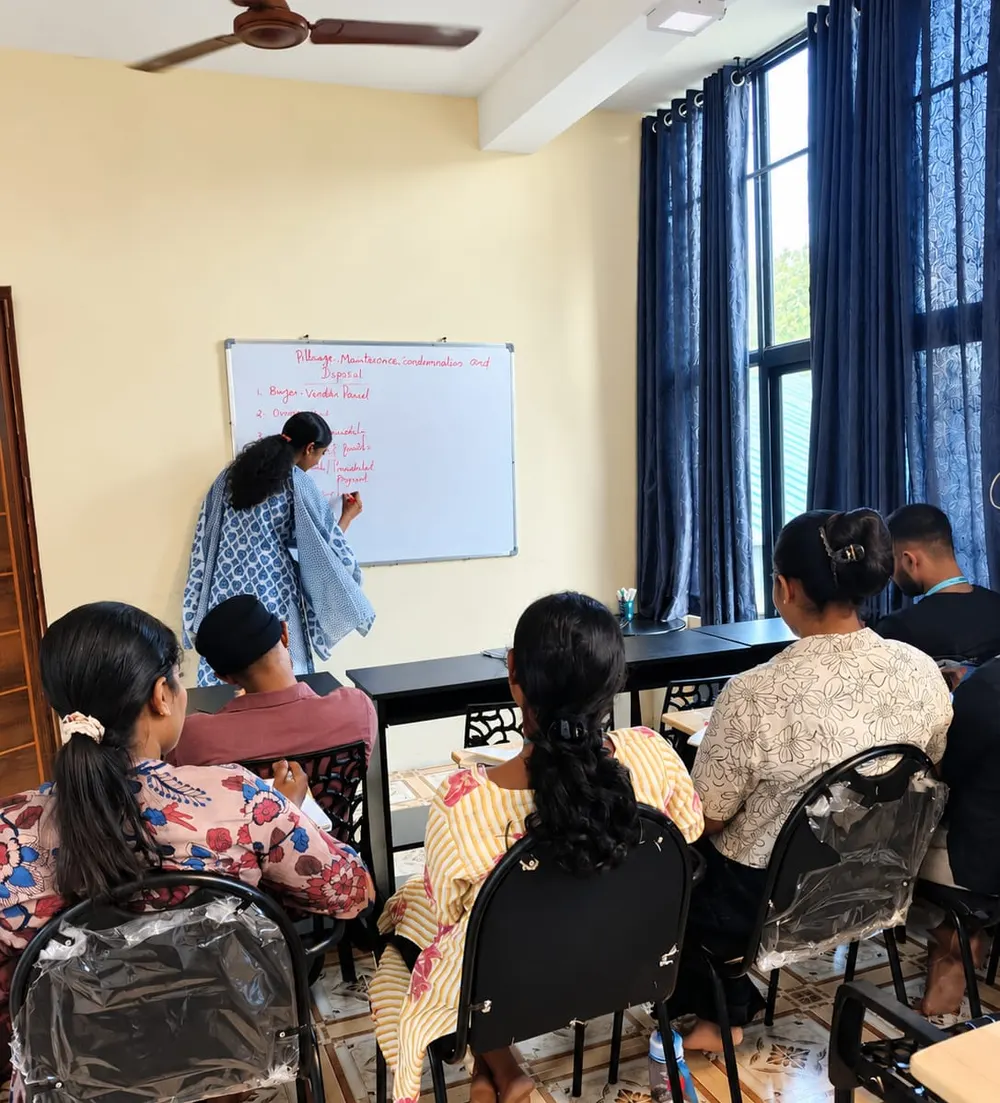
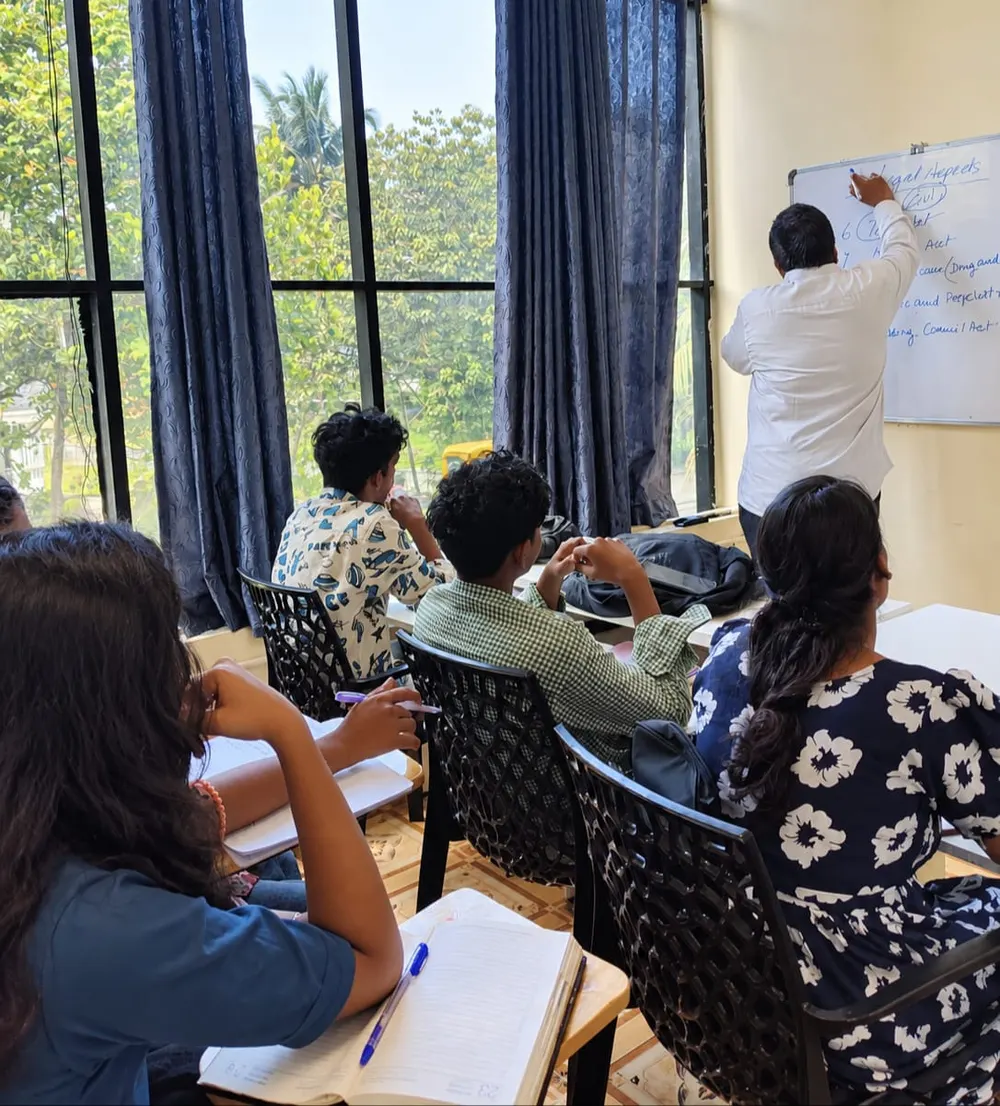
At Treneywann Institute of Hospital Administration, 2nd Floor Creative Tower, Near Kaniyampuzha Road, Eroor South, Vyttila Junction, Kochi, Kerala 682306, front office preparation is hands-on:
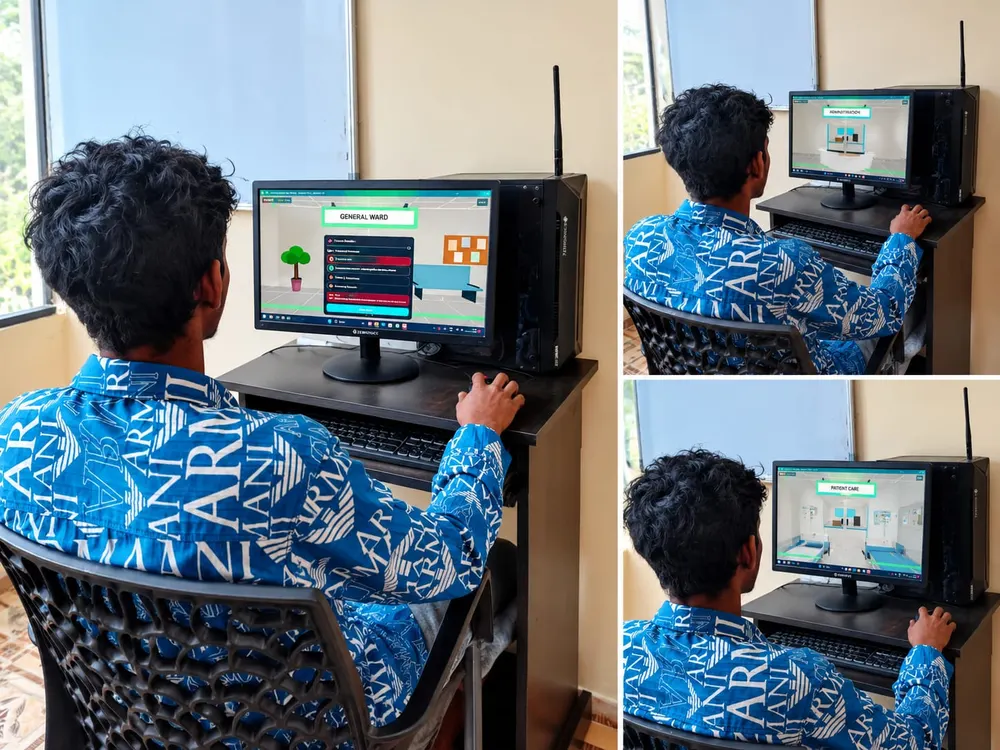
- Live HMS patient registration — multiple scenarios practised on India's only live Hinall HMS lab
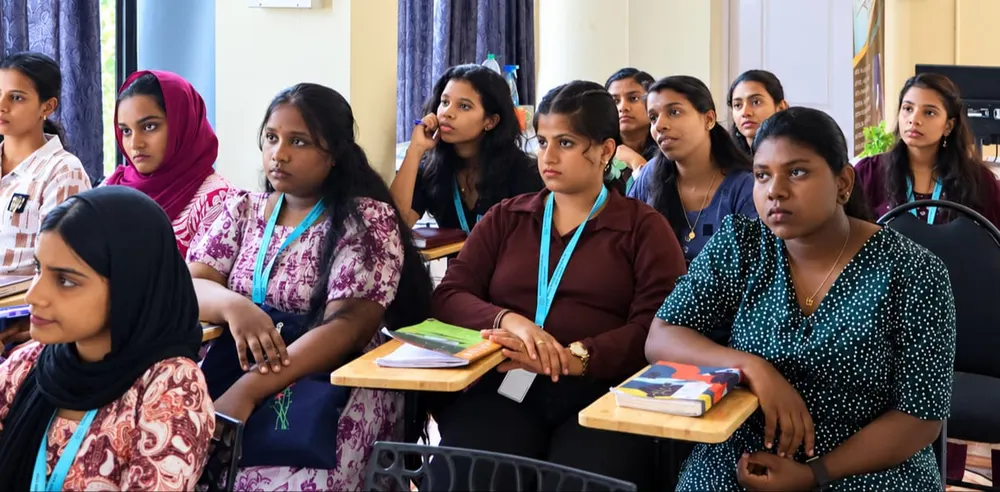
- Mock difficult-patient scenarios — the exact situational questions on this page, rehearsed aloud
- NABH front office module — standards, signage, waiting-time targets, grievance mechanism
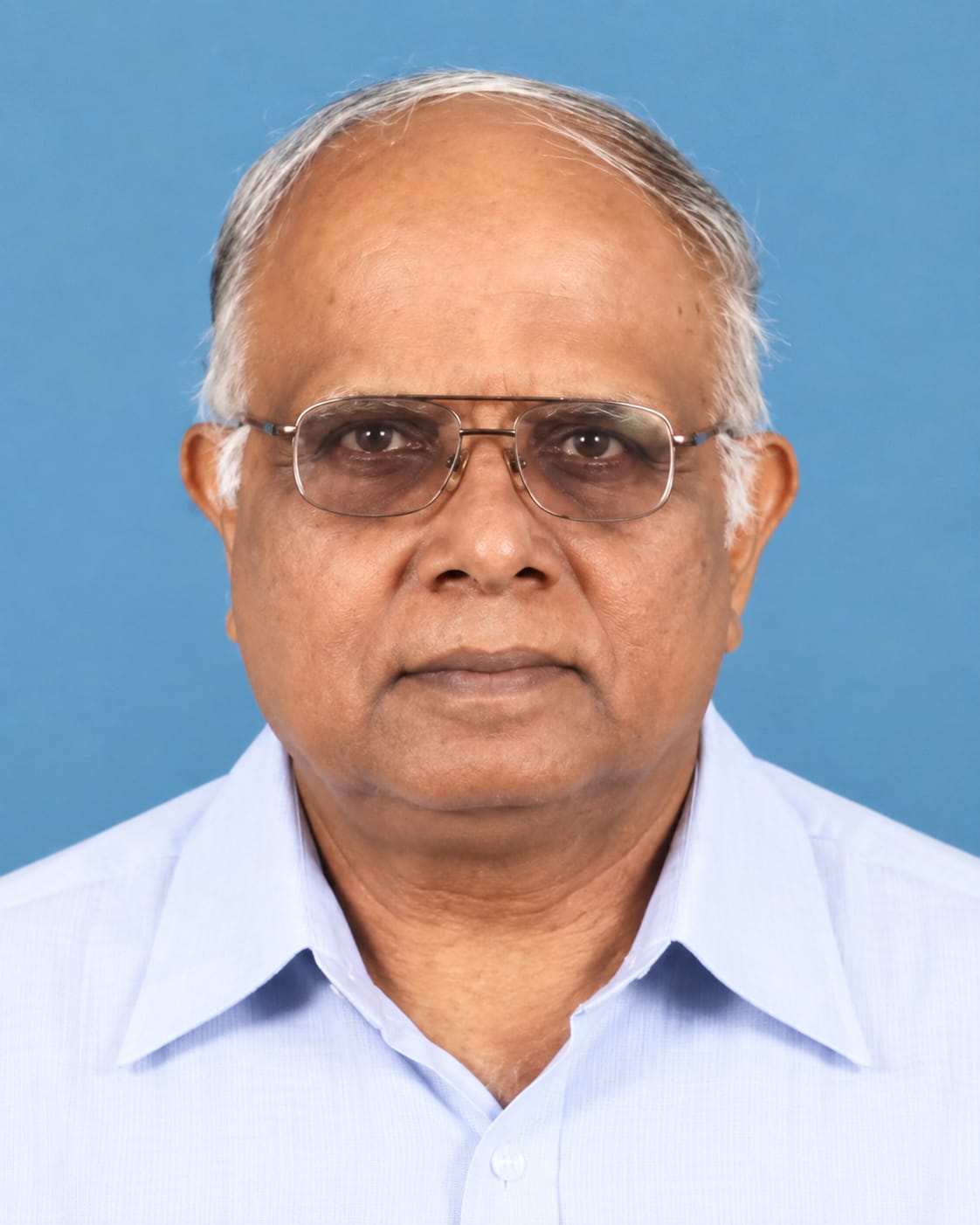
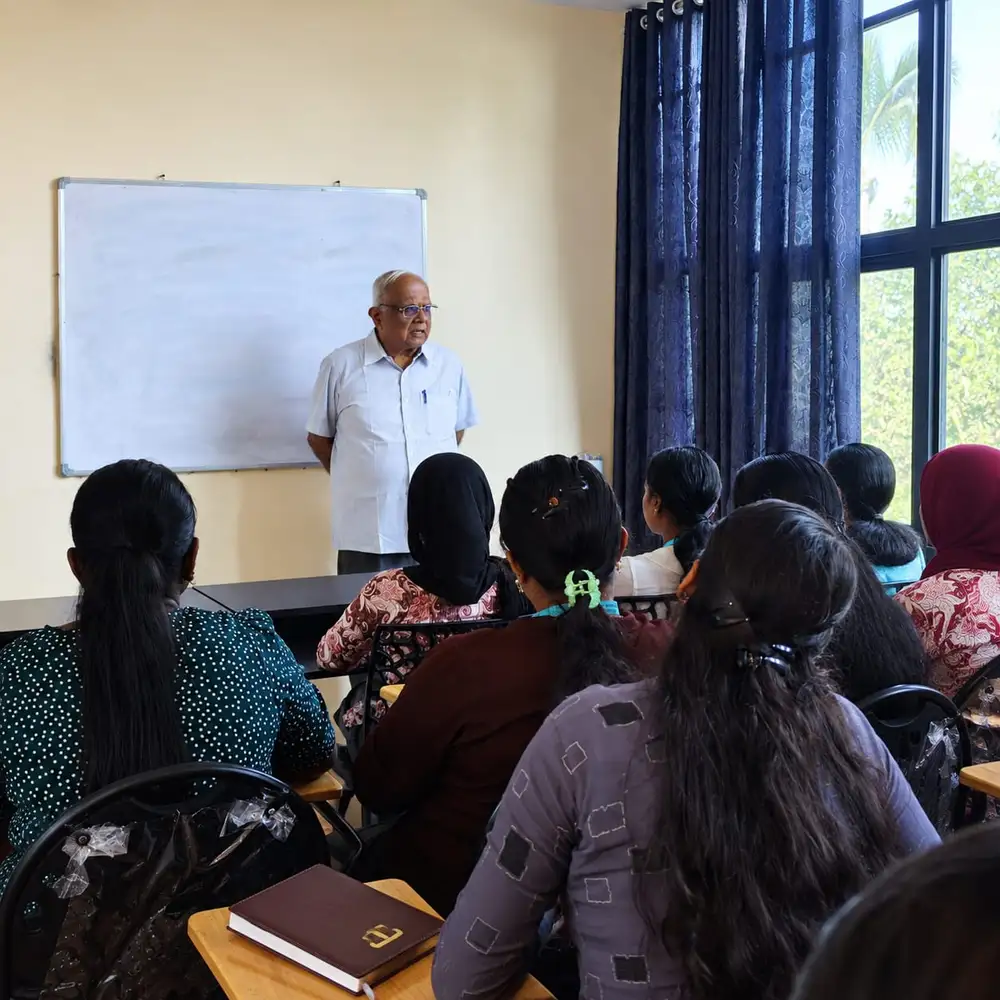
- Communication training — drawing on senior faculty B.V. Kumar's 35+ years as a hospital administrator
- Placement assurance — 512 graduates placed as of 31 July 2026
FAQs — Hospital Front Office Interview Preparation Kerala
What front office candidates search for most
What is asked in hospital front office interview in Kerala?
HMS patient registration ("Register a new patient in the HMS"), returning-patient search, NABH front office standards, document collection at registration, OP vs IP differences, and situational questions — the angry patient who has waited 2 hours, the confused elderly patient, the slow computer with 15 in queue, and the unconscious patient at the front desk.
How do I prepare for front desk executive interview in hospital?
Practise the registration workflow until it is automatic — demographics, OP number, department, doctor slot, OP card. Learn the document list, the OP vs IP difference and NABH front office requirements, and rehearse calm situational answers. Treneywann's live Hinall HMS lab at Vyttila, Kochi lets you practise real registration screens before the interview.
What HMS questions are asked in front office interview?
"Register a new patient in HMS" (navigation, demographics, OP number, department, slot, OP card), "How do you search for a returning patient?" (OP number/mobile/name, verify identity, new visit — never a duplicate registration), and "A patient's name doesn't match their Aadhaar — what do you do?" (verify, update with a note, flag major discrepancies, never deny treatment).
What NABH standards should front office staff know?
Patient rights charter displayed, functional appointment system, waiting time targets (typically 30 minutes for OP), staff trained in patient communication, signage in the local language, and a visible grievance mechanism. At registration: rights and responsibilities, facilities map, estimated wait time, attending doctor's name, and appointment confirmation.
Does Treneywann have training for hospital front office roles?
Yes — live HMS patient registration across multiple scenarios, mock difficult-patient interviews, a NABH front office module and communication training, inside the 6-month course (₹42,000) at Vyttila, Kochi. 512 graduates placed as of 31 July 2026 with placement assurance. Call +91 90379 86219.
Visit the Kochi Campus — Vyttila
Treneywann Institute of Hospital Administration, Office 49/A, Creative Tower, 2nd Floor, Near Kaniyampuzha Road, Eroor South, Vyttila, Ernakulam, Kerala 682306
Front Office Training with Live HMS Registration. ₹42,000. Vyttila Kochi.
6-month course — walk into the front office interview having already run the registration screens.