.png)


Hospital Administration Course in Kerala — Best Institute, Fees & Placement 2026
Reviewed by B.V. Kumar, MHA, MBA, MA, PGDPR, PGDJ — 35+ years hospital administration, India & GCC · Updated 2 August 2026
Treneywann Institute of Hospital Administration hospital administration course fee: ₹64,000 for the flagship 1-Year Hospital Administration Course (5 certifications) and ₹42,000 for the 6 Months Hospital Administration Course (3 certifications) — all-inclusive, no hidden charges.
Whether you are looking for a hospital administration course or comparing hospital administration courses in Kerala, Treneywann Institute of Hospital Administration is Kerala's only exclusive hospital administration training institute. Treneywann, Kochi, offers Kerala's best hospital administration course — the only institute in India with a live Hinall HMS lab (48 NABH-aligned modules across 16 hospital departments). Study from anywhere in Kerala through live online weekday classes plus monthly Kochi lab practicals. Choose the flagship 1-Year Hospital Administration Course (₹64,000, 5 certifications; awarded as a PG Diploma or Advanced Diploma by qualification) or, for healthcare professionals, doctors, nurses and paramedical holders, the 6 Months Hospital Administration Course (₹42,000, 3 certifications), earn embassy attestable certificates including a UGC-approved university credential, and enrol with a 100% placement assurance. Next batch: 9 November 2026 (9–11 AM (limited seats), 11 AM–1 PM, 2–4 PM) — admission open now.
Start for ₹6,000 (1-year) or ₹7,000 (6-month) — regular batch 9 November 2026, three slots.
Regular batch 9 November 2026: 9–11 AM (limited seats) · 11 AM–1 PM · 2–4 PM
Hospital administration is the management of every non-clinical function in a hospital — patient registration, billing, TPA and insurance, medical records, human resources, NABH quality compliance, pharmacy, IT and hospital management software. Hospital administration at Treneywann Institute of Hospital Administration, Kochi is a 1-year course (₹64,000) that requires only a completed Plus Two in any stream (a 6-month course at ₹42,000 is for healthcare professionals, doctors, nurses and paramedical holders), and lead to roles paying ₹18,000–₹25,000 per month at entry level in Kerala, with substantially higher pay in GCC countries.
What Do Hospital Administration Graduates Earn in Kerala?
Treneywann graduates start at ₹18,000–₹25,000/month in Kerala hospitals (front office, billing, TPA, MRD). Salaries rise with experience and responsibility, and the same roles in the GCC (UAE, Qatar, Saudi Arabia, Oman) pay substantially more — tax-free. The course fee is typically recovered within the first two months of employment.
| Role | Kerala (Fresher) | Kerala (Senior) | GCC |
|---|---|---|---|
| Front Office Executive | ₹18,000–₹22,000 | ₹30,000–₹45,000 | AED 2,500–4,500 |
| TPA / Billing Executive | ₹20,000–₹26,000 | ₹35,000–₹55,000 | AED 3,000–6,000 |
| MRD Officer | ₹18,000–₹24,000 | ₹32,000–₹48,000 | AED 2,800–5,000 |
| NABH Quality Executive | ₹22,000–₹28,000 | ₹40,000–₹65,000 | AED 4,000–8,000 |
| Hospital Administrator / Manager | ₹25,000–₹35,000 | ₹55,000–₹1,00,000 | AED 6,000–12,000 |
Choose Your Route
- 1-year hospital administration course
₹64,000 · 5 certifications - 6 Months Hospital Administration Course
₹42,000 · 3 certifications · for healthcare professionals - Hospital administration online course
live online + monthly weekday lab day - Course for working professionals
evening online batches, 7–8 or 8–9 PM - Hospital administration after 12th
any stream, no NEET - Hospital administration course fees
all-inclusive, zero-interest EMI - Hospital administration salary in Kerala
what graduates earn - MHA vs hospital administration diploma
which suits you - NABH training
quality and accreditation module - Nursing administration course for nurses
3 or 6 months, BSc and GNM nurses
What is Hospital Administration?
Hospital administration is the management of a hospital's non-clinical operations — patient registration, billing, TPA and insurance, medical records, healthcare HR, NABH quality compliance and the Hospital Management System (HMS) software that connects every department.
Every hospital in Kerala — from a 20-bed clinic in Thrissur to a 1,000-bed corporate hospital in Kochi — needs trained administrators. They ensure patients are registered and admitted correctly, insurance claims are processed without billing errors, medical records stay filed, coded and retrievable, staff rosters comply with labour laws, and the hospital passes its NABH accreditation audit.
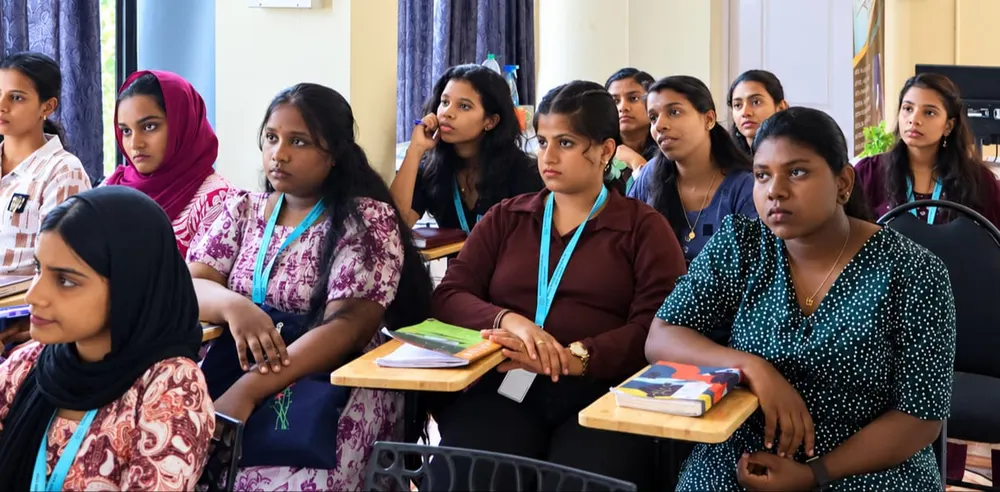
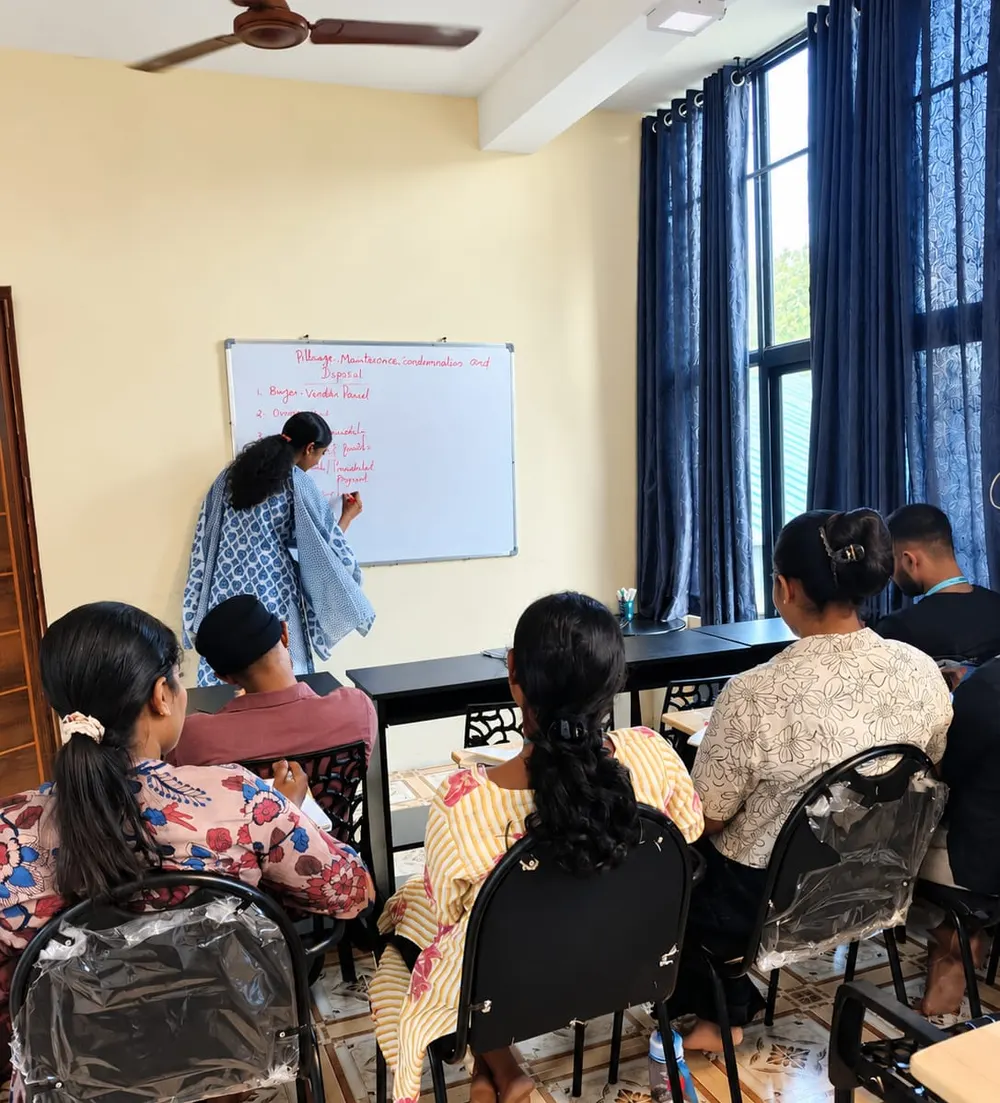
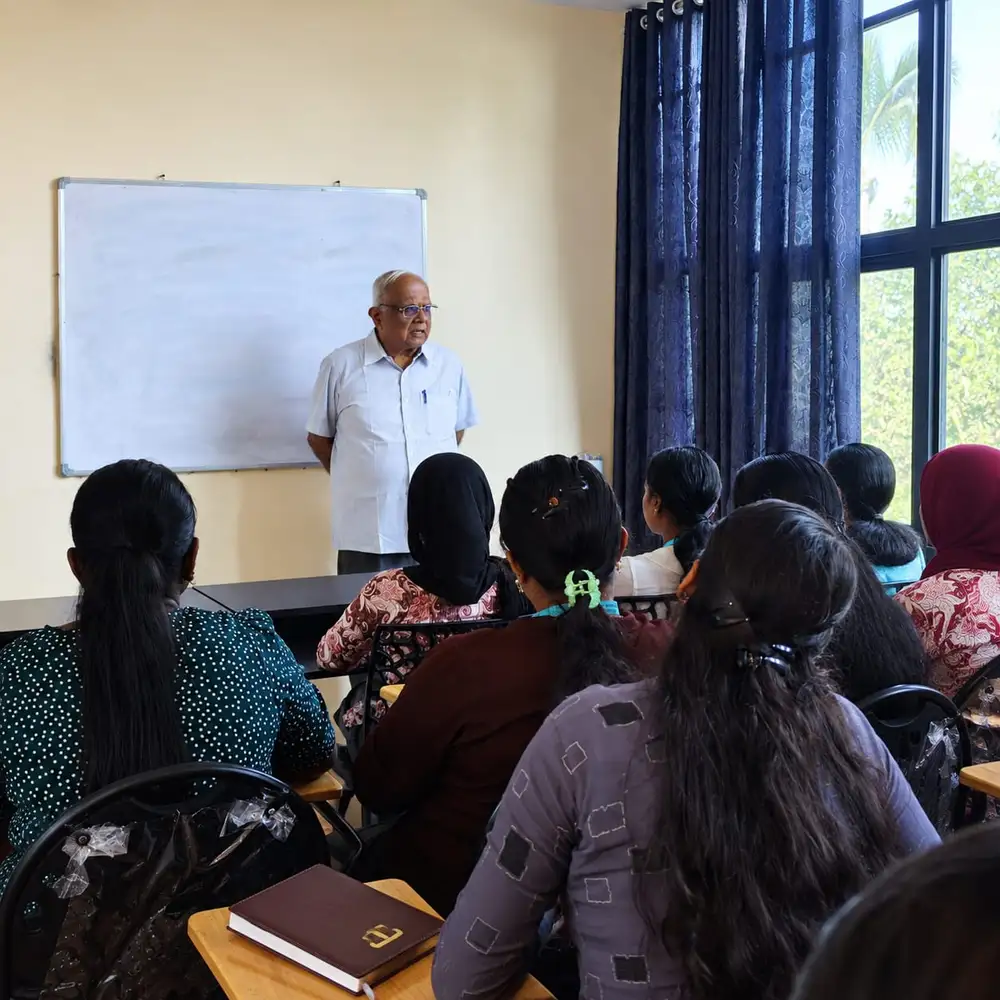
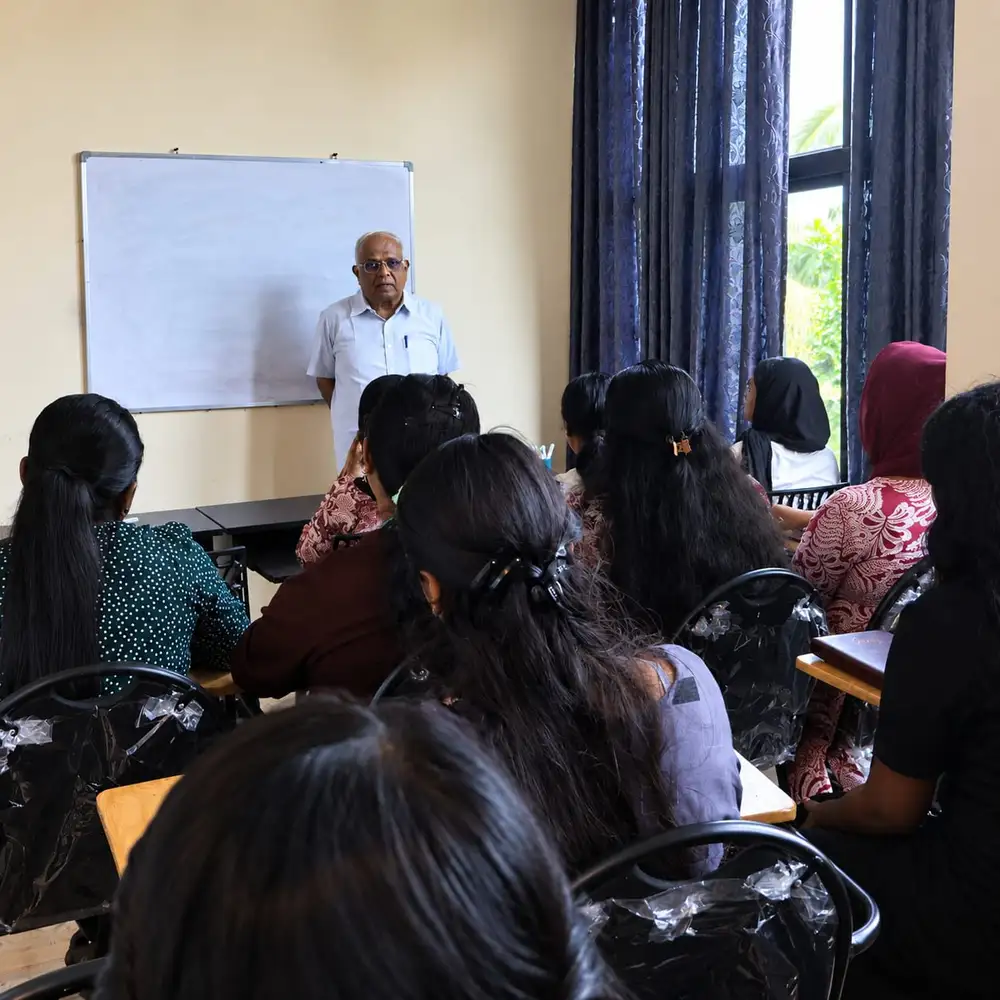
Classes are held in person at our Vyttila campus. See the hospital administration course in Kochi for classroom photos, map and batch timings, or the hospital administration course in Ernakulam if you are coming from elsewhere in the district.
A hospital administrator never treats patients, yet without one the hospital cannot function. In modern Kerala hospitals every one of these functions runs inside HMS software — which is why live HMS training, the core of the Treneywann Institute of Hospital Administration curriculum, is the single most critical practical skill a hospital administration course can deliver.
Front Office & OPD Management
Registration, appointments, queue management, patient flow from arrival to discharge. The first impression of every hospital visit is created and managed by a trained hospital administrator.
Billing, TPA & Insurance
Revenue cycle management, cashless claim processing, insurance eligibility checks, pre-authorisation, and settlement with TPA companies for corporate and government health schemes.
Medical Records Department (MRD)
Patient record lifecycle from admission to post-discharge, ICD coding for diagnosis, medicolegal record handling, and retrieval for insurance or legal proceedings.
NABH Quality & Compliance
Preparing hospitals for NABH accreditation — documenting Standard Operating Procedures (SOPs), conducting internal audits, maintaining patient safety records and nursing care documentation.
Healthcare HR & Staffing
Duty rosters, staff recruitment, statutory compliance (PF, ESI, labour laws), leave management, and maintaining the HR records of a hospital's full clinical and non-clinical workforce.
HMS Software Operations
Running the Hospital Management System — the integrated software platform that manages every hospital transaction, from patient registration and pharmacy to billing, analytics and discharge summaries.
Why Kerala is the best place to build a hospital administration career: Kerala has India's highest hospital density — 1,200+ hospitals, 100+ NABH-accredited — and a healthcare culture that actively exports trained administrators to the GCC. UAE, Qatar, Saudi Arabia and Oman hospitals recruit Kerala-trained hospital administrators specifically because of this NABH and HMS background. Salaries in the GCC are 3–5× Kerala rates. The combination of high local demand and GCC export demand makes hospital administration one of the highest-return non-clinical healthcare careers available to a Plus Two graduate in Kerala today.
Why Do Kerala Students Choose Hospital Administration?
Kerala students choose hospital administration because it is a non-clinical healthcare career with no NEET, no night duty and Plus Two eligibility in any stream, starting at ₹18,000–₹25,000 per month with a direct pathway to GCC hospital jobs.
Kerala has India's highest hospital density — 1,200+ hospitals, including 100+ NABH-accredited facilities — creating constant demand for trained administrators in every district, while the state's NABH accreditation drive adds thousands of quality and documentation roles. UAE, Qatar, Saudi Arabia and Oman hospitals actively recruit Kerala-trained administrators at 3–5× local salaries. Treneywann Institute of Hospital Administration is a Hospital Administration Training Institute in Kochi that makes this career accessible statewide — live online weekday classes, monthly HMS lab practicals in Kochi, and job-readiness in as little as 6 months for ₹42,000, a fraction of the time and cost of an MBA.
🏥 1,200+ Hospitals in Kerala
Kerala has the highest hospital density in India — 1,200+ hospitals — creating constant demand for trained administrators, front-office staff, billing and TPA executives across every district.
📋 NABH Accreditation Drive
Kerala's hospitals are racing to gain and maintain NABH accreditation, creating thousands of quality, documentation and administration jobs for NABH-literate graduates.
🩺 Non-Clinical Career
No NEET, no science background and no night duty. Hospital administration offers office-style hours and a clear management career ladder open to any Plus Two graduate.
🌍 Gateway to GCC Jobs
UAE, Qatar, Saudi Arabia and Oman hospitals actively recruit Kerala-trained administrators. Attestable certifications turn a Kerala course into a Gulf career paying 3–5× local salaries.
💻 Study From Anywhere
Treneywann delivers live online weekday classes accessible from every corner of Kerala, with monthly HMS lab practicals in Kochi — so you can train without relocating.
⚡ Fast, Affordable Entry
Become job-ready in 6 months for ₹42,000 — a fraction of the time and cost of an MBA — with live HMS software skills most MBA graduates never acquire.
What Will You Learn in the Hospital Administration Course?
You will learn OPD/IPD management, hospital billing, TPA and insurance claims, medical records (MRD), healthcare HR and NABH documentation across a 48-module curriculum covering 16 hospital departments — practised hands-on in the live Hinall HMS software lab with NABH-aligned modules.
Treneywann Institute of Hospital Administration is a Hospital Administration Training Institute whose hospital administration course curriculum mirrors how a real hospital runs, department by department. You do not watch demonstrations — you perform real registration, billing, pharmacy and discharge workflows on production hospital software in the only live HMS lab in India.
Modern electives include AI in healthcare administration and a virtual hospital simulation that builds leadership and decision-making. Every concept is taught by B.V. Kumar (MHA, MBA, MA, PGDPR, PGDJ) — 35+ years of India and GCC hospital administration experience — and then reinforced hands-on in the HMS lab, so you graduate able to do the job, not just describe it.
Hospital Information Systems
Run the full HMS backbone — registration, dashboards, integration and analytics — on the live Hinall HMS lab.
OPD & IPD Management
Outpatient flow, admissions, bed allocation, ward transfers, discharge planning and inpatient billing.
Billing, TPA & Insurance
Cash and cashless billing, revenue cycle, eligibility checks, pre-authorisation and claim settlement.
Medical Records (MRD)
File lifecycle, ICD coding, discharge summaries and medicolegal record handling.
Healthcare HR & NABH
Duty rosters, staff records, statutory compliance, accreditation documentation and audit preparation.
AI & Virtual Hospital Simulation
How AI is reshaping hospital operations, plus a virtual hospital simulation that builds administrator-level leadership.
How the 6-Month Programme is Structured
The 6 Months Hospital Administration Course is built around four phases — not classroom theory alone. The flagship 1-Year Hospital Administration Course extends every phase and adds a deeper hospital internship and a dedicated GCC placement track.
Months 1–3
Live Online Classes
NABH standards, hospital billing, TPA process, MRD, HR, front office management — 48 modules taught live by B.V. Kumar.
Months 3–5
Live HMS Lab — Kochi Campus
Monthly Kochi sessions on India's only live Hinall HMS software — real patient simulation across 16 hospital departments.
Month 5–6
Hospital Internship
4-week placement in a partner hospital — real department rotation across OPD, billing, MRD, TPA, and quality. Graded and certificated.
After Completion
Placement Support
Resume prep, mock hospital HR interviews, direct hospital introductions — active support until placed. 512 placed. 100% Placement Assurance.
Can I Attend Hospital Administration Classes Online from Anywhere in Kerala?
Yes. Treneywann delivers the hospital administration course in blended / hybrid mode — live online weekday classes from your home (Trivandrum, Calicut, Thrissur, Kannur, Kottayam, or any Kerala district) plus monthly Kochi campus sessions for the live HMS lab practicals. You do not need to relocate or stay in a hostel. The only in-person element is the monthly lab visit to Vyttila, Kochi — on a weekday that outstation students can combine with other Kochi commitments.
Kochi-based students attend the full morning batch in person daily — the Vyttila campus is 300 m from Vyttila Metro Station and beside the KSRTC Mobility Hub. Students from Edapally, Aluva, Kakkanad, Tripunithura, Kalamassery, and MG Road reach the campus in under 30 minutes.
What Are the Fees for Hospital Administration Courses in Kerala?
The hospital administration course fee at Treneywann Institute of Hospital Administration, Kochi is ₹64,000 for the flagship 1-Year Hospital Administration Course and ₹42,000 for the 6 Months Hospital Administration Course — both all-inclusive, covering tuition, the live HMS lab, every certification for your chosen plan (5 on the 1-year, 3 on the 6-month) and placement support.
- Live online weekday classes — all Kerala
- Monthly Hinall HMS lab practicals in Kochi
- embassy attestable certificates included
- 100% placement assurance
- Hospital internship included
- Dedicated GCC placement track
Certificate name depends on your entry qualification — PG Diploma (degree holders) or Advanced Diploma (Plus Two/SSLC).
- Live online weekday classes — all Kerala
- Monthly Hinall HMS lab practicals in Kochi
- embassy attestable certificates included
- 100% placement assurance
- Study materials & uniform included
There are no hidden charges and no separate exam or certificate fees. Zero-interest EMI is available: 6 Months Hospital Administration Course — ₹7,000 initial + 5 monthly instalments of ₹7,000; 1-year course — ₹6,000 initial + 10 monthly instalments of ₹5,800. Classes are delivered live online on weekdays across Kerala, with monthly Hinall HMS lab practicals at the Kochi campus, so the fee also covers statewide access without relocation. The 1-year course adds a hospital internship and a dedicated GCC placement track, and both tracks carry the 100% Placement Assurance and award the same embassy attestable certifications. Full breakdown on the Course Fees page.
What Certifications Do You Get from the Hospital Administration Course?
The 1-year course awards 5 certifications in one fee: TTMSTRCT Council Trust Advanced Certification Diploma, UGC-approved university skill course (NEP 2020), AI in Healthcare Administration, Hinall HMS Proficiency Certification, and HLP — Healthcare Leadership Program. The 6 Months Hospital Administration Course awards 3 of these: the TTMSTRCT Diploma, the UGC-approved university skill course and Hinall HMS Proficiency. The TTMSTRCT Diploma and UGC-approved university certificate are embassy attestable.
At Treneywann Institute of Hospital Administration, a Hospital Administration Training Institute in Kochi, there are no separate certificate or exam fees — the ₹42,000 6-month fee includes all 3 of its credentials, and the ₹64,000 1-year fee includes all 5. The UGC-approved university credential is a university certificate issued under the NEP 2020 framework — the certificate government and Gulf employers verify — while the Hinall HMS Proficiency Certification documents hands-on skill across 48 modules of live hospital software. Because the TTMSTRCT Diploma and UGC-approved university certificate are attestable through the Ministry of External Affairs and Embassy attestation, graduates meet the documentation requirement for hospital work visas in the UAE, Saudi Arabia, Qatar and Oman.
TTMSTRCT Council Trust Advanced Certification Diploma
The core hospital administration credential — proof of complete diploma training across all hospital departments.
UGC-approved university skill course (NEP 2020)
A nationally recognised, UGC-approved university credential issued under the NEP 2020 framework — the certificate government and Gulf employers verify.
AI in Healthcare Administration
Training in how artificial intelligence is reshaping hospital operations, analytics and administration — a future-proofing credential.
Hinall HMS Proficiency Certification
Documented proof of hands-on proficiency across 48 modules on live hospital software — the credential hospitals value most at hiring.
HLP — Healthcare Leadership Program (Virtual Hospital Simulation)
Earned by managing hospital scenarios as an administrator inside a virtual hospital simulation — proof of leadership and decision-making skill.
Embassy attestable
The TTMSTRCT Diploma and UGC-approved university certificate are attestable through Embassy attestation and the Ministry of External Affairs — the attestation required for UAE, Saudi, Qatar and Oman work visas.
Who Can Join the Hospital Administration Course?
Anyone with a Plus Two (10+2) pass in any stream — Science, Commerce or Humanities — can join the hospital administration course in Kerala. There is no NEET, no entrance exam, no upper age limit and no medical background required.
At Treneywann Institute of Hospital Administration, Kochi, batches typically include recent Plus Two graduates, degree holders from any discipline, nurses, pharmacists, DMLT and BPT holders moving into management roles, working professionals attending morning or evening batches, and Gulf returnees re-entering the GCC hospital job market with attestable certifications. Most students come from Commerce or Arts backgrounds — no biology is needed anywhere in the curriculum. Admission is open and straightforward: choose the 6 Months Hospital Administration Course (₹42,000; for healthcare professionals, doctors, nurses and paramedical holders) or the 1-year course (₹64,000), pay a first instalment (₹6,000 for the 1-year course, ₹7,000 for the 6-month course) to secure your seat, and join the next batch starting on 9 November 2026.
🎓 Plus Two / 12th Pass
Anyone who has passed Plus Two (10+2) in any stream — Science, Commerce or Humanities. No biology or science background required.
📜 Degree Holders
Graduates of any discipline — BA, BCom, BSc, BBA, BCA and more — add strong hospital software and administration skills to their qualification.
🩺 Healthcare Backgrounds
Nurses, pharmacists, DMLT and BPT holders move into administrative and management roles with office-style hours.
💼 Working Professionals
Morning and evening flexibility lets working professionals upskill into hospital administration without leaving their current job.
🌍 Gulf Returnees
Gulf returnees seeking a career change use attestable certifications and HMS skills to re-enter the GCC hospital job market. See our Gulf returnee guide →
✅ No NEET, No Entrance
There is no NEET, no entrance exam and no upper age limit. Admission is open and straightforward.
How Does Hospital Administration Compare to Nursing, Medical Coding and MBA Healthcare?
Hospital administration is the most affordable healthcare management route in Kerala — one year at ₹64,000, Plus Two eligibility in any stream, no patient contact and no night duty, versus 3–4 years for nursing or ₹3–15 lakh for an MBA.
| Aspect | Hospital Administration (Treneywann) | Nursing (BSc/GNM) | Medical Coding | MBA Healthcare |
|---|---|---|---|---|
| Eligibility | Plus Two — any stream | Plus Two with Biology | Any graduate | Graduate + entrance exam |
| Duration | 6 months or 1 year | 3–4 years | 3–6 months | 2 years |
| Typical fee (Kerala) | ₹42,000–₹64,000 (Treneywann) | ₹2–5 lakh+ | ₹20,000–₹50,000 | ₹3–15 lakh+ |
| Patient contact | None — management role | Yes — direct patient care | None — desk role | None |
| Night duty | No | Yes — rotational shifts | No | No |
| Live HMS lab training | ✓ Hinall HMS — 48 NABH modules (Treneywann only) | Not covered | Not covered | Rarely covered |
| GCC demand | High — HMS + HA profiles | High — clinical | Moderate — remote coders | Moderate — management |
| Starting Kerala salary | ₹18,000–₹25,000/month | ₹12,000–₹20,000/month | ₹15,000–₹22,000/month | ₹25,000–₹40,000/month |
Nursing requires Plus Two with Biology, 3–4 years of training costing ₹2–5 lakh+, direct patient care and rotational night shifts. Medical coding is a single-desk specialisation within medical records, while MBA Healthcare takes 2 years, costs ₹3–15 lakh and rarely includes software training. A Treneywann hospital administration course includes live Hinall HMS proficiency across 48 NABH-aligned modules — a practical skill none of the other paths deliver — plus strong GCC demand for combined HA and HMS profiles. The table above compares eligibility, duration, fees, working conditions and starting salaries side by side for Kerala students choosing their path after Plus Two or graduation.
What Is the Salary and Career Scope After a Hospital Administration Course in Kerala?
Fresh hospital administration graduates in Kerala earn ₹18,000–₹25,000 per month in roles such as Patient Relations Executive, HMS Operator, Billing/TPA Executive and Medical Records Officer. The same roles in GCC countries pay substantially more — which is why the embassy-attestable TTMSTRCT and UGC-approved certificates matter for Gulf-bound graduates.
| Role | Starting Salary (Kerala) | GCC Salary |
|---|---|---|
| Patient Relations Executive | ₹18,000–₹22,000 | ₹80,000–₹1,00,000 |
| HMS Operator | ₹20,000–₹25,000 | ₹85,000–₹1,20,000 |
| Billing/TPA Executive | ₹18,000–₹24,000 | ₹75,000–₹1,10,000 |
| Medical Records Officer | ₹20,000–₹30,000 | ₹90,000–₹1,30,000 |
| OPD Coordinator | ₹20,000–₹28,000 | ₹85,000–₹1,20,000 |
| Hospital HR Executive | ₹22,000–₹38,000 | ₹90,000–₹1,50,000 |
Kerala's 1,200+ hospitals and 100+ NABH-accredited facilities keep demand for trained administrators strong in every district, and every graduate of Treneywann Institute of Hospital Administration — a Hospital Administration Training Institute in Kochi — is covered by the 100% Placement Assurance, with 512 graduates placed as of 31 July 2026. With live HMS proficiency and embassy-attestable credentials (TTMSTRCT Diploma and UGC-approved university certificate), graduates typically work 1–2 years in Kerala before moving to GCC roles in the UAE, Qatar, Saudi Arabia and Oman that pay several times Kerala salaries. Career progression runs from executive roles into supervisory and department-management positions. See the Salary in Kerala page for a full breakdown.
GCC Employment — Embassy Attestation & NORKA/MEA Process
For Kerala students planning to work in UAE, Qatar, Saudi Arabia, Oman, Kuwait, or Bahrain, certificate attestation is the key. Two of the 1-year course's five certifications — the TTMSTRCT Advanced Certification Diploma and the UGC-approved university skill course certificate — are embassy attestable through the standard India-to-GCC attestation chain: Notary → State HRD → MEA (Ministry of External Affairs) → Respective Embassy.
Kerala Pravasi Welfare Board (NORKA-ROOTS) also supports attestation and credential verification for Pravasi Keralites entering GCC healthcare employment. Treneywann's certificates are compatible with this process. GCC hospital administration roles pay AED 2,500–12,000/month depending on role and seniority — equivalent to ₹55,000–₹2,75,000/month tax-free.
Students from Malappuram, Kannur, Kasaragod, Kozhikode, and Thrissur with existing Gulf networks are among Treneywann's strongest placement candidates — they combine the qualification with community connections already in place in UAE and Qatar hospitals.
Where Do Treneywann Graduates Work — Kerala & GCC?
512 Treneywann Institute of Hospital Administration graduates are placed as of 31 July 2026 at hospitals including Aster Medcity, Rajagiri, VPS Lakeshore, Amrita and KIMSHEALTH in Kerala, plus GCC hospitals in the UAE, Qatar, Saudi Arabia and Oman.
Every placement is covered by the Treneywann 100% Placement Assurance — structured support with resume preparation, hospital-style mock interviews and direct introductions to hiring hospitals until you are placed. These hospitals regularly hire Treneywann graduates as Patient Relations Executives, HMS Operators, Billing/TPA Executives, Medical Records Officers and OPD Coordinators, because graduates arrive with live Hinall HMS software proficiency on the same systems Kerala hospitals already use. Beyond the named hospitals below, 500+ small, mid-size and specialty hospitals across all 14 Kerala districts recruit through the placement programme, and the 1-year course adds a dedicated GCC placement track for Gulf-bound candidates.
🏥 Aster Medcity — Kochi
JCI and NABH-accredited, one of Kerala's largest multi-specialty hospitals. Treneywann alumni placed in billing/TPA, patient relations and HMS operations roles.
🏥 Rajagiri Hospital — Aluva
Top-ranked NABH-accredited hospital in Ernakulam district. Treneywann alumni placed in OPD coordination, medical records and front-office management.
🏥 VPS Lakeshore Hospital — Kochi
A premier multi-specialty hospital in Maradu, Kochi. Treneywann graduates placed in HMS operations and billing/TPA coordination roles.
🏥 Amrita Institute of Medical Sciences — Kochi
NABH and JCI-accredited super-specialty hospital in Kochi. Treneywann alumni placed in patient services and administrative coordination.
🏥 KIMSHEALTH — Thiruvananthapuram
Kerala Institute of Medical Sciences — one of Kerala's largest hospital groups. Treneywann graduates placed in front-office, MRD and TPA roles across KIMS facilities.
🏥 Ernakulam Medical Centre — Kochi
A leading multi-specialty hospital in Kochi. Treneywann alumni placed in billing, patient relations and HMS operations positions.
🌍 GCC Hospitals — UAE, Qatar, Saudi Arabia, Oman
Treneywann graduates with attestable UGC credentials and live HMS proficiency are placed in GCC hospitals. The 1-year course includes a dedicated GCC placement track.
🏥 500+ More Across Kerala
Small, mid-size and specialty hospitals across every Kerala district — from Kasaragod in the north to Thiruvananthapuram in the south — hire Treneywann graduates through the Placement Assurance programme.
Placement records represent alumni placed since 2020 through the Treneywann Placement Assurance programme. Roles include Patient Relations Executive, HMS Operator, Billing/TPA Executive, Medical Records Officer, OPD Coordinator and Healthcare HR Executive.
India's Only Live HMS Simulation Lab
Hands-On HMS Training — Real Software, Not Screenshots
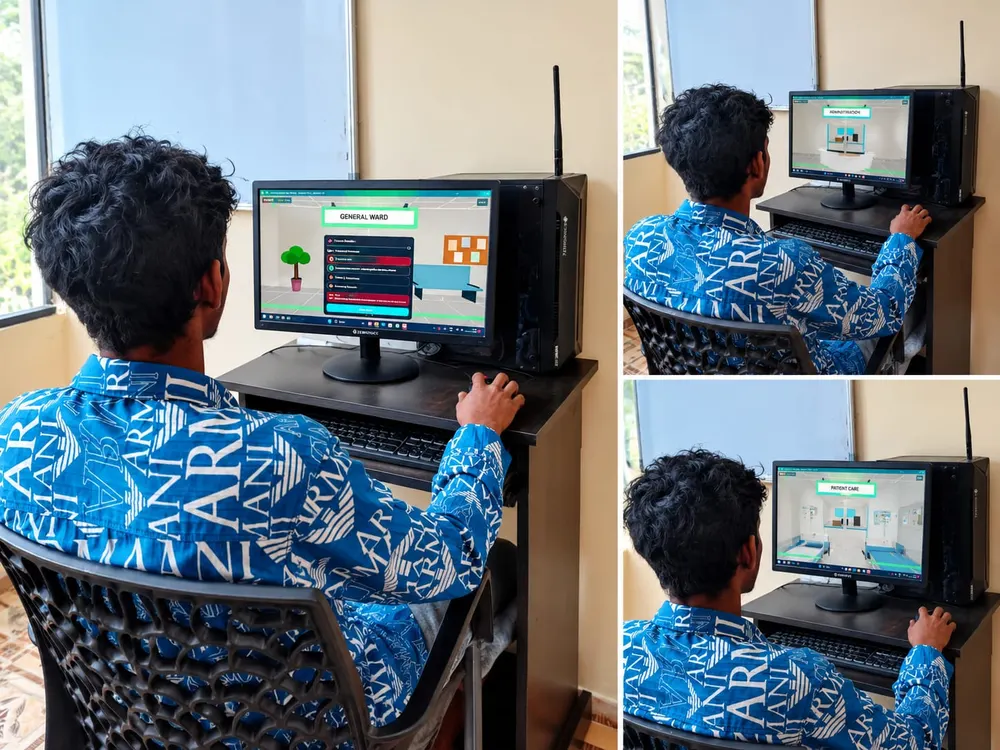
Every student logs into live Hinall HMS — 48 NABH-aligned modules across 16 hospital departments. OPD, IPD, billing, TPA, pharmacy, MRD, OT — all practised on the same software running in Kerala's top hospitals before your first day at work.
Authorised by Hinall AI Labs Pvt Ltd — the only institute in Kerala officially authorised to run live HMS simulation training.
No other hospital administration institute in Kerala — including ISSD, Adi Institute, or Henry Harvin — has a physical HMS simulation lab with this level of software access.
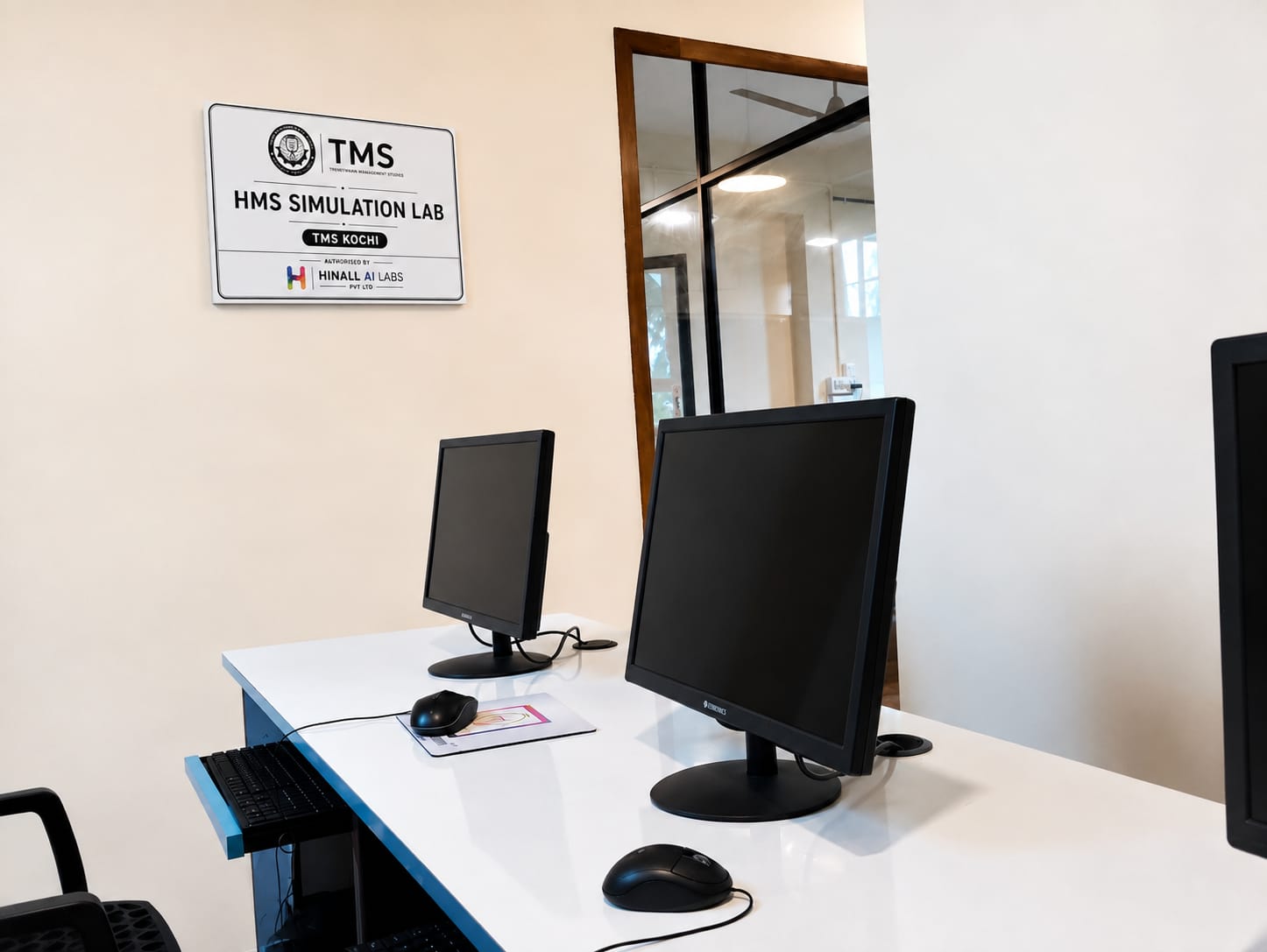
Treneywann HMS Simulation Lab · Vyttila, Kochi · Authorised by Hinall AI Labs Pvt Ltd
Who Teaches You
Kerala’s only dedicated hospital administration institute — every course we run is a hospital course. Hospital administration, and nursing administration for BSc Nursing and GNM nurses. India’s gateway to Kerala-standard hospital administration training.

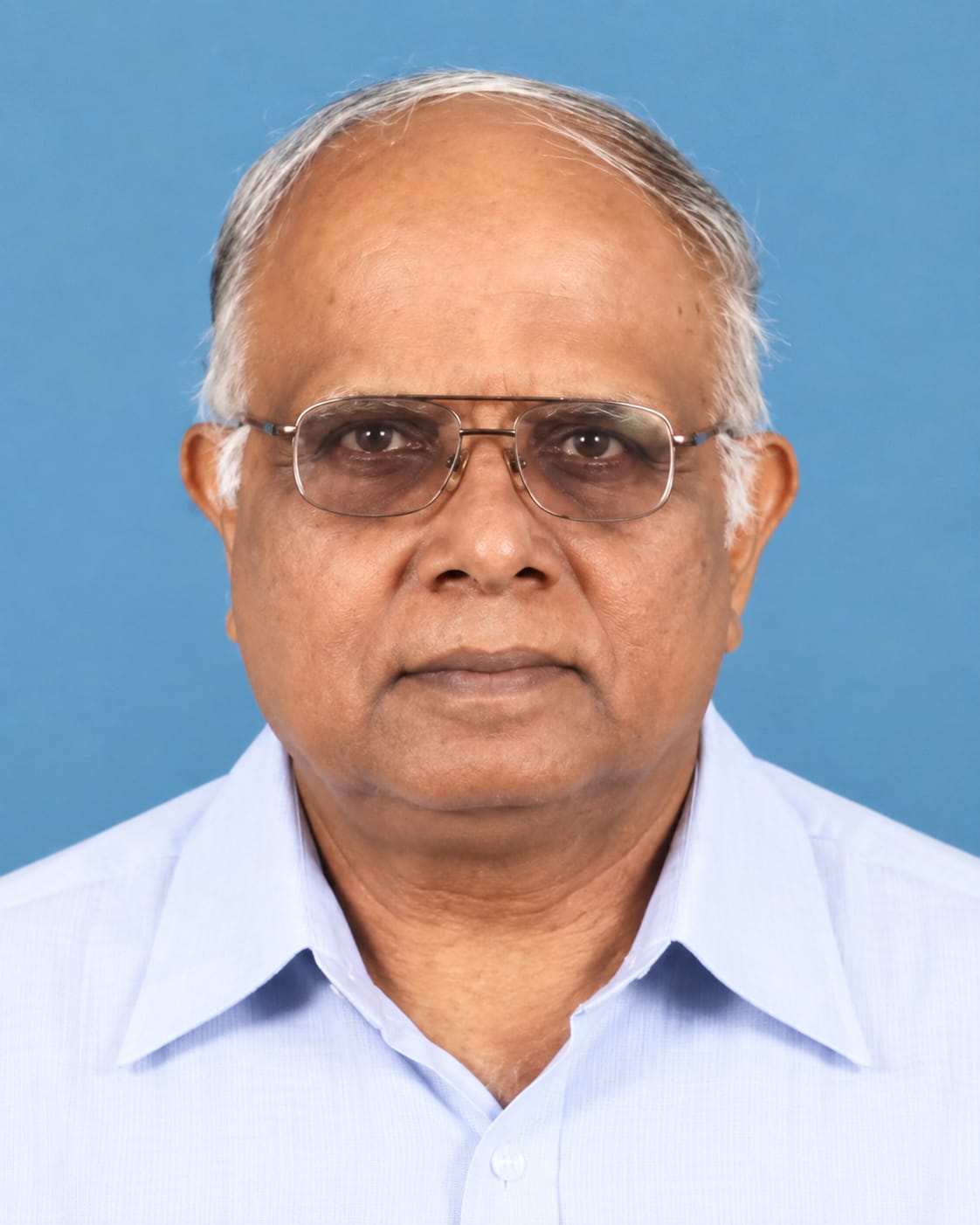
Plus a full faculty team of senior lecturers under B.V. Kumar — meet the whole team.
Why Choose Treneywann Institute of Hospital Administration for Hospital Administration in Kerala?
Treneywann Institute of Hospital Administration is a Hospital Administration Training Institute in Kochi with seven strengths no other Kerala institute combines — from India's only live HMS lab and exclusive hospital administration focus to embassy attestable certificates and a 100% Placement Assurance.
Each strength reinforces the others. Because Treneywann teaches hospital administration exclusively, every faculty member, lab hour and placement partner serves one field. Because the institute is managed by retired hospital administrators with India and GCC experience, the curriculum reflects what hospitals actually need. Classes are taught by B.V. Kumar (MHA, MBA, MA, PGDPR, PGDJ — 35+ years across India and the GCC), practised on the live Hinall HMS lab, certified through embassy attestable credentials including a UGC-approved university certificate, and priced transparently at ₹42,000 (6 months) or ₹64,000 (1 year) all-inclusive — with placement support that continues until you are placed.
Every student trains hands-on inside live Hinall HMS software — 48 NABH-aligned modules across 16 hospital departments. Real production software, not screenshots or demos.
Kerala's only institute dedicated solely to hospital administration — no nursing, coding or other courses share its faculty, labs or placement network. Specialisation means depth.
The institute is run by people who have actually administered hospitals in India and the GCC — so the curriculum reflects what hospitals truly need, not textbook theory.
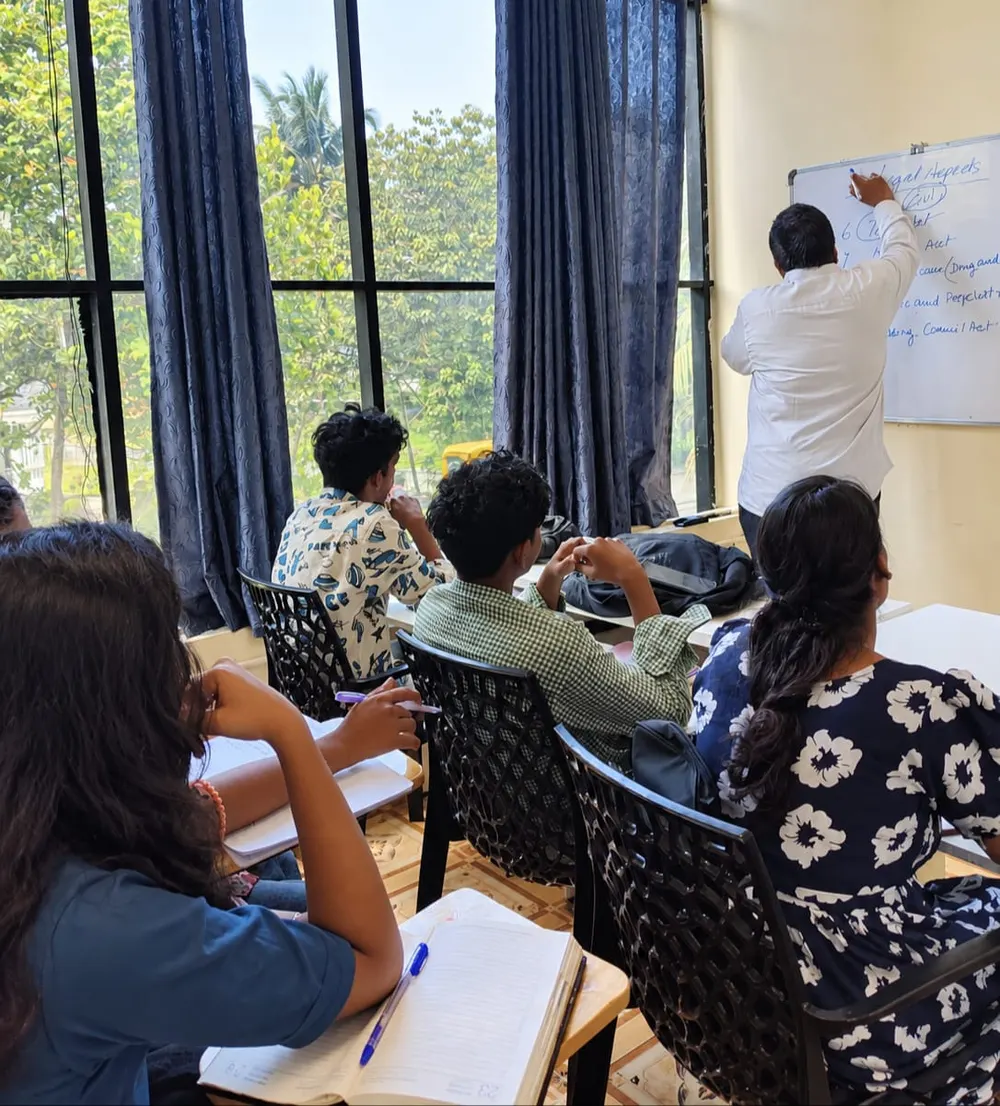
Classes are taught by B.V. Kumar — MHA, MBA, MA, PGDPR, PGDJ, 35+ years of India and GCC hospital administration — combining theory with live HMS practical simulation in every session.
The 1-year course awards five certifications — TTMSTRCT Council Trust, a UGC-approved university certificate, AI in Healthcare, Hinall HMS Proficiency and HLP. The 6 Months Hospital Administration Course awards three: TTMSTRCT, the UGC-approved university certificate and Hinall HMS Proficiency. The TTMSTRCT and UGC-approved university credentials are Embassy attestable for Gulf employment, all in one fee.
₹42,000 for 6 months and ₹64,000 for 1 year — published openly, all-inclusive, with zero-interest EMI: 6-month starts at ₹7,000 then 5 × ₹7,000; 1-year starts at ₹6,000 then 10 × ₹5,800. No hidden charges.
Structured, ongoing placement support — resume preparation, hospital-style mock interviews and direct introductions to hiring hospitals across Kerala and the GCC — until you are placed. This is a placement assurance, not vague "assistance."
Which Kerala Districts Can You Join the Hospital Administration Course From?
Treneywann Institute of Hospital Administration serves students from all 14 districts of Kerala — Kochi, Trivandrum, Calicut, Thrissur, Kollam, Kannur, Malappuram, Palakkad, Kottayam, Wayanad, Pathanamthitta, Kasaragod, Idukki and Alappuzha — through live online weekday classes plus monthly HMS lab practicals in Kochi.
No relocation is required at any stage of the 6-month or 1-year course. Students attend live classes from home, travel to the Vyttila, Kochi campus roughly once a month for hands-on Hinall HMS practicals, and receive the same certifications for their chosen plan (3 on the 6 Months Hospital Administration Course, 5 on the 1-year course) and 100% Placement Assurance regardless of home district. Admissions, fee payment and placement support are handled online or by phone, so a student in Kasaragod gets exactly the same programme as a student in Ernakulam. Dedicated pages for major towns — including Tirur, Thalassery, Vatakara, Perinthalmanna, Manjeri, Aluva, Thiruvalla and Changanacherry — are linked below with local batch and travel details.
Northern Kerala
Kozhikode Calicut City Malappuram Kannur Kasaragod Tirur Thalassery Vatakara Perinthalmanna Manjeri Ponnani Payyannur Kanhangad Wayanad KalpettaCentral Kerala
Kochi (Ernakulam) Thrissur Palakkad Kottayam Irinjalakuda Guruvayur Aluva Edapally Kakkanad Kalamassery Tripunithura Ernakulam Vyttila Chalakudy Cherthala PalaSouthern Kerala
Thiruvananthapuram Trivandrum City Kollam Alappuzha Pathanamthitta Idukki Thiruvalla Changanacherry Kayamkulam Karunagappally Thodupuzha ChanganasseryFAQ — Hospital Administration Course in Kerala
Treneywann Institute of Hospital Administration, Kochi is Kerala's leading hospital administration training institute. It is the only institute in India with a live Hinall HMS lab (48 NABH-aligned modules across 16 hospital departments), taught by B.V. Kumar (MHA, MBA, MA, PGDPR, PGDJ) with 35+ years of India and GCC hospital administration experience. Students earn 5 certifications on the flagship 1-year course (₹64,000; awarded as a PG Diploma or Advanced Diploma by qualification) — including the UGC-approved university certificate, AI in Healthcare Administration and HLP — or 3 certifications on the 6 Months Hospital Administration Course (₹42,000, incl. the UGC-approved certificate), and every student is covered by a 100% placement assurance.
At Treneywann Institute of Hospital Administration the fees are all-inclusive: ₹64,000 for the flagship 1-year course (awarded as a PG Diploma or Advanced Diploma by qualification) and ₹42,000 for the 6-month course course. Both fees cover the live Hinall HMS lab, every certification for your chosen plan (3 on the 6-month, 5 on the 1-year), study materials and placement support under the 100% placement assurance, with zero-interest EMI available.
The minimum eligibility is a Plus Two (10+2) pass in any stream — Science, Commerce or Humanities. No NEET, no entrance exam and no medical background is required. Degree holders, nurses, pharmacists, DMLT and BPT holders, working professionals and Gulf returnees also join to add hospital administration and HMS software skills.
Treneywann Institute of Hospital Administration offers two durations: a 1-year course for everyone joining after Plus Two or a degree, and a 6-month course (₹42,000) for healthcare professionals, doctors, nurses and paramedical holders. The 1-year course is (₹64,000; awarded as a PG Diploma or Advanced Diploma by qualification) with extended HMS lab hours, a hospital internship and a dedicated GCC career track. Both cover all 16 hospital departments on the live HMS lab. The 6 Months Hospital Administration Course awards 3 certifications and the 1-year course awards 5 — both plans include the UGC-approved university credential.
The 1-year course at Treneywann Institute of Hospital Administration awards 5 certifications: (1) TTMSTRCT Council Trust Advanced Certification Diploma; (2) UGC-approved university skill course under NEP 2020; (3) AI in Healthcare Administration; (4) Hinall HMS Proficiency Certification; and (5) HLP — Healthcare Leadership Program earned through a Virtual Hospital Simulation. The 6 Months Hospital Administration Course awards 3 of these: the TTMSTRCT Diploma, UGC-Approved University Skill Course (NEP 2020) and Hinall HMS Proficiency Certification. The TTMSTRCT Diploma and UGC-approved university certificate are embassy attestable for Gulf employment.
Fresh hospital administration graduates in Kerala typically earn ₹18,000–₹25,000 per month in roles such as patient relations, HMS operator, billing/TPA and medical records. In the GCC (UAE, Qatar, Saudi Arabia, Oman) the same roles pay substantially more, which is why Treneywann certifications — including embassy-attestable credentials (TTMSTRCT Diploma and UGC-approved university certificate) — are so valuable for GCC employment.
Treneywann Institute of Hospital Administration runs a hybrid programme, so a hostel is not needed. You attend live online weekday classes from anywhere in Kerala and travel to the Kochi campus only about once a month for HMS lab practicals. For students who prefer to stay near the Vyttila campus, the admissions team helps arrange safe, affordable PG accommodation.
Yes. Treneywann Institute of Hospital Administration delivers live online weekday classes that are accessible from anywhere in Kerala or India — Trivandrum, Calicut, Thrissur, Kannur and every district in between. The only in-person element is the monthly HMS lab practical in Kochi, where you operate the live Hinall HMS software hands-on.
HMS software training means learning to operate a Hospital Management System — the software that runs a hospital's daily operations. Treneywann trains every student on Hinall HMS across 48 NABH-aligned modules with live patient simulation. It is the only live HMS lab in India, so graduates can run OPD, IPD, billing, TPA, pharmacy and MRD workflows from day one and are shortlisted by hospitals first.
Treneywann Institute of Hospital Administration serves students across all of Kerala through live online classes plus monthly Kochi lab practicals — including Kochi, Trivandrum, Calicut, Thrissur, Kollam, Kannur, Malappuram, Palakkad, Kottayam, Wayanad, Pathanamthitta, Kasaragod, Idukki and Alappuzha. Each city has a dedicated Treneywann page — see the full list above.
No. Treneywann Institute of Hospital Administration offers exclusively one programme: Hospital Administration. No logistics, no HR, no medical coding, no computer courses, no MBA — hospital courses only. Every faculty member, every lab session, every placement partner, and every curriculum module is dedicated solely to this one field. This is why Treneywann is Kerala's only dedicated hospital administration training institute.
Yes — hospital administration is one of the highest-demand non-clinical healthcare careers in Kerala. With 1,200+ hospitals including 100+ NABH-accredited facilities, Kerala has India's densest hospital network. Every NABH-accredited hospital employs trained administrators for quality documentation, HMS operations, billing and patient relations. Salaries start at ₹18,000–₹25,000/month in Kerala and rise to ₹80,000–₹2,20,000/month in GCC countries. For a Plus Two graduate seeking a healthcare career without NEET, clinical duties or night shifts, hospital administration offers the fastest and most affordable entry available.
Both are solid healthcare careers, but they suit different preferences. Nursing requires direct patient care, rotational shifts including nights, Plus Two with Biology, and 3–4 years of training costing ₹2–5 lakh+. Hospital administration requires any Plus Two stream, takes one year and costs ₹64,000 at Treneywann, involves no patient contact and no night duty. Both offer strong GCC demand. If you prefer management, coordination and technology over bedside care, hospital administration is the faster and more affordable path — especially with live HMS software training, which nursing programmes do not include.
Yes. At Treneywann Institute of Hospital Administration, the only eligibility requirement is a Plus Two (10+2) pass in any stream — Commerce, Arts, or Science. No biology background is needed, no NEET, no entrance exam. Commerce students often excel in billing, TPA and revenue cycle modules, while Arts and Humanities students bring strong communication skills to patient relations and front-office management. Hospital administration is designed to be accessible from all educational streams, and most Treneywann batch members come from Commerce or Arts backgrounds.
Kerala's government healthcare sector employs hospital administrators in roles such as Medical Records Technician (MRT), Health Inspector, Patient Service Centre staff, and Hospital Management Information System (HMIS) operator across Government Medical College Hospitals, District Hospitals and Community Health Centres. NABH accreditation drives in government hospitals also create demand for quality and documentation staff. A UGC-approved credential like the university certification from Treneywann strengthens eligibility for government hospital positions, as UGC recognition is a common verification criterion in government hiring.
NABH — National Accreditation Board for Hospitals & Healthcare Providers — is India's quality accreditation body for hospitals, equivalent internationally to JCI. NABH accreditation means a hospital meets rigorous safety, quality and patient care standards. For hospital administrators, NABH matters because: (1) NABH-accredited hospitals require trained administrators who understand quality documentation, SOPs and audit preparation; (2) the Treneywann curriculum is built around 48 NABH-aligned modules, so graduates are immediately useful in accredited hospital environments; and (3) Kerala has 100+ NABH-accredited hospitals — more than most Indian states — creating permanent, strong demand for NABH-literate administrators.
Hospital administration covers the full management and operations of a hospital — registration, billing, TPA, medical records, HR, NABH quality, and HMS software. It is a broad management career with roles across all hospital departments. Medical coding is a specific, specialised function within medical records — assigning ICD diagnosis codes and CPT procedure codes for insurance billing purposes. Medical coders work in one area; hospital administrators manage multiple departments and functions. Treneywann hospital administration includes MRD and coding concepts as one module among many, giving graduates broader career options rather than a single-desk specialisation.
Yes. Treneywann Institute of Hospital Administration is specifically designed to accommodate working professionals. Live weekday classes are delivered online so you attend from your home or workplace — no relocation needed. The only in-person requirement is a monthly HMS lab practical in Kochi. Morning and evening batch options let you arrange your schedule around existing work commitments. Many Treneywann students have completed the course while employed as nurses, pharmacists, receptionists or in unrelated fields, and have transitioned into hospital administration management roles after qualifying.
GCC hospital administration demand is high and growing. UAE, Saudi Arabia, Qatar, Oman, Kuwait and Bahrain are expanding their private hospital sectors — Dubai Healthcare City, Saudi Vision 2030 and Oman's healthcare investment plans all generate sustained demand for trained hospital administrators. GCC hospitals specifically recruit Kerala-trained candidates because of Kerala's NABH and HMS software background. The critical requirement is Embassy attestation — the TTMSTRCT Diploma and UGC-approved university certificate are embassy attestable, which is the legal requirement for a GCC hospital work visa. GCC salary: AED 3,000–8,000/month (approximately ₹85,000–₹2,20,000/month) depending on role, country and employer.
Yes. Treneywann Institute of Hospital Administration is an ISO certified institute and is managed by a registered educational Trust listed on NITI Aayog's NGO Darpan portal (Government of India). These registrations confirm Treneywann operates as a genuine, accountable educational body. The institute's partner university holds UGC recognition, which can be verified directly on ugc.gov.in.
Yes. Both the 6 Months Hospital Administration Course and the 1-year course at Treneywann Institute of Hospital Administration include a 4-week hospital internship as part of the programme structure. Students are placed in a partner hospital for department rotation across OPD, billing, MRD, TPA, and quality. The internship is graded, certificated, and counts toward the placement record. The 1-year course includes an extended internship with deeper NABH audit practice.
Yes. Two of the five 1-year course certificates — the TTMSTRCT Advanced Certification Diploma and the UGC-approved university skill course certificate — are embassy attestable through the standard India-to-GCC chain: Notary → State HRD → MEA (Ministry of External Affairs) → respective GCC Embassy. This attestation is required by UAE, Qatar, Saudi Arabia, Oman, Kuwait, and Bahrain hospitals for credential verification. NORKA-ROOTS (Kerala Pravasi Welfare Board) supports the attestation process for Pravasi Keralites.
Treneywann graduates start at ₹18,000–₹25,000 per month in Kerala hospitals in roles such as Front Office Executive, Billing/TPA Executive, MRD Officer, and Patient Relations Executive. Salaries rise with experience and responsibility, and GCC hospital roles pay substantially more than Kerala equivalents — which is why the embassy-attestable TTMSTRCT Diploma and UGC-approved university certificate matter for Gulf-bound graduates. The course fee is typically recovered within the first two months of employment.
The 6 Months Hospital Administration Course at Treneywann Institute of Hospital Administration covers approximately 360 contact hours — including live online weekday classes, monthly Hinall HMS lab practicals at the Kochi campus (covering 48 NABH-aligned modules across 16 hospital departments), and a 4-week hospital internship. The 1-year course covers approximately 720 hours with extended lab hours, deeper NABH audit training, and an extended hospital placement. All content is taught by B.V. Kumar (MHA, MBA, MA, PGDPR, PGDJ — 35+ years).
Yes. Treneywann's partner university holds UGC recognition, which can be verified on the official UGC portal at ugc.gov.in. The university's Skill Course offered through Treneywann is structured under NEP 2020 (National Education Policy), making it a government-framework credential. This UGC-approved certificate is embassy attestable and carries a formal university credential — distinct from private institute diplomas that have no university affiliation.
Placement Assistance (used by most institutes) means the institute will help you look for a job — sharing your resume, conducting interviews, providing contacts. It does not imply a commitment to your outcome. Treneywann's 100% Placement Assurance is a documented institutional commitment backed by its record since 2020: every graduate receives active, hands-on support from the Treneywann placement cell — resume preparation, mock hospital HR interviews modelled on real rounds, direct hospital introductions, and follow-through until placement is confirmed. 512 graduates placed as of 31 July 2026 at hospitals including Aster Medcity, Rajagiri, VPS Lakeshore, Amrita, KIMS, and GCC hospitals.
Enrol Now — 9 November 2026 Regular Batch, Vyttila, Kochi
Kerala's best hospital administration course. Flagship 1-Year Course ₹64,000 | 6 Months Hospital Administration Course ₹42,000. 100% placement assurance.
1-Year: ₹6,000 to start · 6-Month: ₹7,000 to start · Regular batch 9 Nov: 9–11 AM (limited seats) · 11 AM–1 PM · 2–4 PM
WhatsApp: 9037986220Explore More Hospital Administration Resources
Dive deeper into fees, HMS training, attestation, salary and how Treneywann compares.
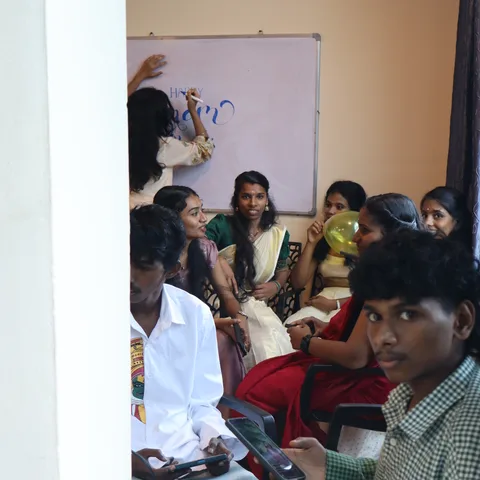
Life at Treneywann
Real students. Real celebrations. Real careers in hospital administration.





What Our Students Say
Real reviews from students currently enrolled and recently placed — copied directly from Google.
"The Hospital Administration lab sessions with the Hinall HMS are excellent. This was one of the main reasons I joined the course. The hands-on training makes it easy to understand how hospital management systems work, and it has definitely been worth it."
"Our HOD for Hospital Administration is the most experienced and knowledgeable. He genuinely cares about our career and always motivates us to do our best. We have learned a lot from his classes and guidance."
"Super happy with my decision to join Treneywann Vytilla. The Hospital Administration 1-year course is practically oriented and industry-focused. The internship component really helped me gain confidence before joining work."
"Amazing institute! The Hospital Administration 6 months course at Vytilla campus changed my career path completely. From classroom sessions to hospital visits, everything was perfectly planned. Worth every rupee spent."
"If you're looking for a Hospital Administration course in Kochi, Treneywann at Vytilla is the best option. I compared many institutes before joining and this one stands out for its practical approach and placement support."
"Enrolled in the 1-year Hospital Administration course at Vytilla campus. The course fee is reasonable compared to the quality of education provided. Good infrastructure and experienced faculty. Strongly recommend!"
"Staffs and teachers are really helpful at Treneywann. My Hospital Administration course is ongoing. Their virtual Hospital Management simulation system software is like really working at a hospital."
"Treneywann provides a good learning environment with excellent facilities. The classrooms are comfortable, staff are friendly, and teaching quality is very good. Kumar Sir is an experienced lecturer who explains every topic clearly and makes learning easy."
"I had a wonderful learning experience at Treneywann. Along with the Hospital Administration course, the AI in Healthcare certification gave me valuable insights into the future of healthcare technology."
Our Graduates
Convocation Ceremony
Every batch. Real graduates. Real hospitals.

Convocation ceremony — graduates of our hospital administration training programmes, Vyttila, Kochi.
More Hospital Administration Guides for Kerala
- Part-Time Hospital Administration Course in Kerala
- 6-Month Courses with Placement Assurance in Kerala
- Best Course After 12th Commerce in Kerala
- Hospital Administration After a Polytechnic Diploma
- Is the Course Recognised? Certification and Recognition Explained
- 9 November 2026 Regular Batch — Three Slots
- Studying from Other Kerala Districts
- Admission Policy
- Hospital Management Course in Kerala — the 1-Year Management Track
- Medical Administration Course in Kerala
- Elder Care Management Course in Kerala
- MHA College vs the Treneywann 1-Year Programme